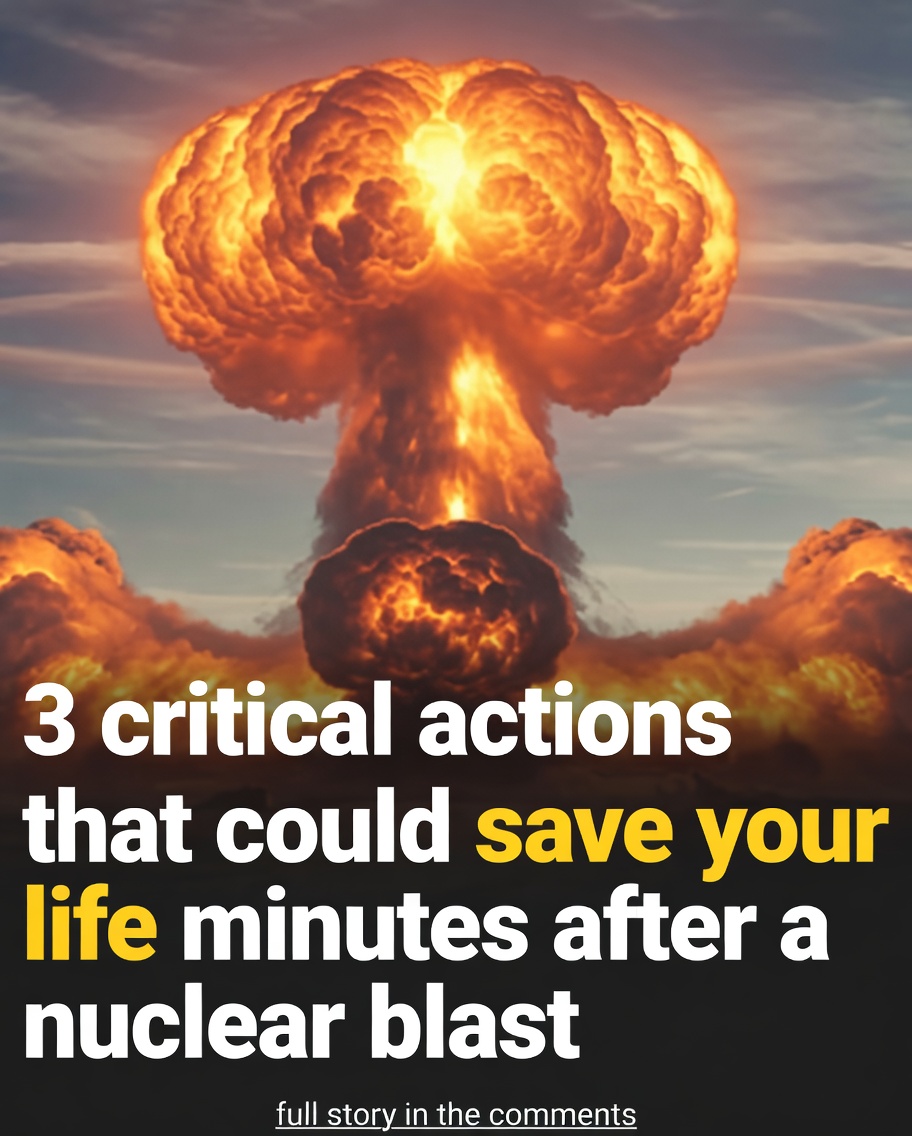
You hear a sudden, blinding flash that lights up the sky brighter than anything you have ever seen, and in that split second your heart races as you realize this could be the moment you have only read about in safety guides or seen in movies. The world around you feels eerily still for a brief instant before the reality sinks in that something serious has happened, and your survival may depend on how quickly and calmly you respond in the critical minutes that follow. Nuclear emergencies are extremely rare, yet knowing exactly what to do can make the difference between staying as safe as possible and facing unnecessary risk. This is not about panic, but about having clear, practical steps ready so you can act with confidence if the unthinkable ever occurs.
Why Immediate Action Matters
The first few minutes after a nuclear event are the most dangerous because of the intense light, the incoming shockwave, and the potential for radioactive fallout. Every second counts, and the right actions can protect your eyes, your body, and your long-term health. Experts emphasize that preparation and calm decision-making are your strongest tools in these situations.
1. Avoid Looking at the Flash
A nuclear detonation produces an incredibly bright burst of light that can cause serious and permanent eye injury, even from many miles away. If you notice a sudden, unusually intense flash, turn away immediately. Shield your eyes with your hands or any available object and drop down to the ground or behind the nearest solid cover. Windows are especially dangerous because the shockwave that follows can shatter glass and send shards flying in every direction.
2. Get to Shelter Quickly
Once the initial flash has passed, a powerful shockwave may arrive within seconds. Your priority is to put as many solid barriers as possible between yourself and the outside. Move into the nearest sturdy building right away. If a basement is available, head there immediately. If not, stay in the center of the structure, as far away from windows and exterior walls as you can. Materials like concrete, brick, and thick earth provide the best protection.
3. Stay Inside and Minimize Exposure
After reaching shelter, remain indoors and avoid going outside until officials say it is safe. Close all doors and windows, turn off fans or air conditioners that pull in outside air, and stay in an interior room. This helps reduce your exposure to any radioactive particles that may be carried on the wind. Listen to emergency broadcasts for updates and instructions specific to your area.
The Science Behind These Steps
These actions are based on how nuclear events unfold. The initial flash can damage eyes instantly. The shockwave can destroy buildings and cause injuries from flying debris. Radioactive fallout is most dangerous in the first hours and days after the event, so staying sheltered and minimizing contact with outside air is crucial for safety.
Why Preparation Makes All the Difference
Having these steps in mind ahead of time prevents hesitation when every second matters. Panic can lead to poor decisions, but knowing what to do gives you a clear path forward. Simple awareness turns fear into focused action.
Common Myths That Can Cause Harm
Many people believe they should run toward the flash or try to outrun the event. In reality, these actions increase danger. The safest response is almost always to take cover immediately and stay put until authorities provide guidance.
How to Prepare Before Anything Happens
Keep a small emergency kit with water, non-perishable food, a battery-powered radio, and basic first aid supplies. Know the location of sturdy buildings near your home, work, and school. Talk with your family about these steps so everyone knows what to do.
The Hopeful Lesson That Resonates
While nuclear emergencies are rare, being informed empowers you to protect yourself and your loved ones. The most important thing you can do is stay calm, act quickly using these simple steps, and remember that preparation is the best defense against uncertainty.
As you go about your day and think about the safety of your family, ask yourself this: have you taken a few minutes to discuss these basic steps with the people you care about, so that if the unthinkable ever happens, you are all ready to respond together?
Most Popular!
-
 The Ultimate Wedding Revenge: When the Mother Who Abandoned Her Six Daughters Showed Up with Her Millionaire Boss, the Bride Opened a Box That Destroyed Lives Forever
-
The Beach Shaming Disaster: What My 8-Year-Old Said to the Prying Stranger Left Everyone Speechless
-
My Husband Abandoned Me With Twin Babies for a Luxury Fishing Trip — When He Returned, I Had Already Packed His Bags
-
The Three-Dollar Miracle: How a Dust-Covered Vase Revealed a Heartbreaking Decades-Old Secret
-
The $80,000 Battle to Erase a Birthmark: Why One Mother Risked Everything for Her Daughter’s Future
-
The Silent Thief: Why Millions of Men Are Living with a Time Bomb They Can’t See
-
The Final Curtain Falls: Beloved Sanford and Son Legend Hal Williams Gone at 91
-
Found at a Yard Sale: This “Useless” Vintage Contraption Is Actually a Forgotten Piece of Human History