There are mornings that begin like any other — the clink of coffee cups, the sizzle of bacon on the grill, and the low murmur of familiar conversations — and then quietly turn into moments people talk about for years. This particular morning unfolded in a small-town diner in rural Ohio, where an 81-year-old Navy veteran named Walter sat in his usual booth by the window. He wore his faded Navy cap with quiet pride, the kind earned through decades of service rather than boastfulness. Most regulars greeted him with respect. Some simply nodded, acknowledging the silent weight he carried from years spent defending a country most of them had never truly understood.
Walter had come to the diner almost every morning for the past twelve years since his wife Margaret passed away. The routine gave him purpose. Two eggs over easy, black coffee, and a side of toast. He read the newspaper slowly, sometimes sharing a story from his service days with anyone patient enough to listen. He never asked for sympathy. He simply showed up, day after day, carrying the kind of steady dignity that comes from surviving battles most people only see in movies.
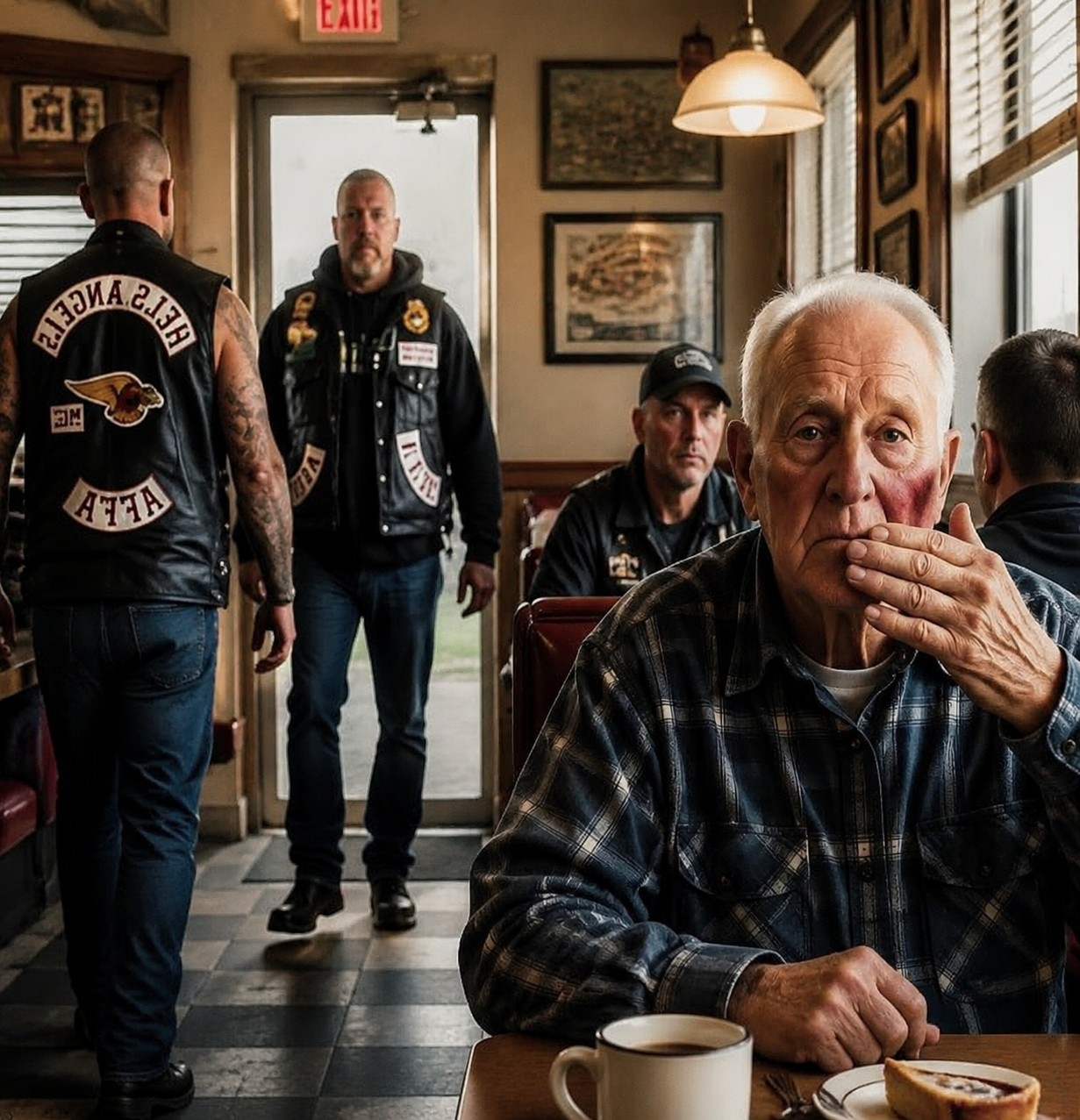
On this particular morning, the air felt heavier than usual. A man in his thirties stumbled through the door, clearly intoxicated even though it was barely past nine. His eyes were glassy, his movements unsteady. He scanned the room and fixed his gaze on Walter. Without provocation, he began muttering insults about “old timers who think they own the place.” Walter, ever calm, simply lowered his coffee cup and replied softly, “Just trying to enjoy my breakfast, son.”
That should have been the end of it. But the drunk man’s anger escalated. In one sudden, ugly motion, he slapped Walter hard across the face. The sound echoed through the diner like a crack of thunder. Forks dropped. A waitress gasped and covered her mouth. The entire room froze in stunned silence. Walter didn’t raise his hand. He didn’t shout. His weathered hands simply trembled slightly — not from fear, but from the deep restraint that only years of discipline and wisdom can teach a man.
What happened next became the kind of story that spreads far beyond the diner walls.
The bell above the door jingled again. A tall, imposing figure stepped inside, followed by several others. They wore leather vests marked with the unmistakable emblem of a well-known motorcycle club. At first, the drunk man smirked, perhaps thinking he had backup. That smirk vanished the moment he saw the lead biker’s face harden with recognition and fury.
It was Walter’s son, Marcus.
Marcus had taken a very different path in life. After his own struggles with anger and rebellion in his teenage years, he had found structure and brotherhood in the motorcycle club. Many in town judged him harshly based on appearances alone. They saw the tattoos, the vest, and the rough exterior and assumed the worst. What they didn’t see was the man who called his father every single day, who quietly paid for Walter’s groceries when money was tight, and who had spent years trying to become someone his father could be proud of.
Marcus rushed to his father’s side, gently touching the red mark on Walter’s cheek. The other bikers formed a protective circle around the booth without a word. The drunk man’s arrogance melted into visible fear. He tried to back away, mumbling weak apologies, but the tension in the room had reached a breaking point. Everyone expected violence. In situations like this, that’s usually what happens — especially when bikers are involved.
But then something remarkable unfolded.
Marcus turned to the waitress, his voice steady despite the anger burning in his eyes. “Ma’am, can you please bring my father a fresh plate? And while you’re at it, put everyone’s meal on our tab today. Breakfast is on us.”
The other bikers nodded in agreement. One by one, they pulled up chairs and sat down around Walter, transforming what could have been a scene of chaos into something almost sacred. The drunk man slipped out the door unnoticed, irrelevant in the face of what was happening inside.
Walter reached out and placed a trembling hand on his son’s arm. His voice, weathered by age but still carrying the authority of a man who had commanded respect in uniform, cut through the silence. “Easy, son. We’ve fought bigger battles. The real strength isn’t in swinging back. It’s in choosing a better way.”
Those simple words hung in the air long after they were spoken. The diner, which had been frozen in shock moments earlier, slowly came back to life. People wiped tears from their eyes. The cook stepped out from the kitchen to watch. Even the waitress, still shaken, smiled as she brought fresh plates to the table.
What made this moment so powerful wasn’t just the protection the bikers offered. It was the restraint they showed. These were men who could have easily handled the situation with force. Instead, they chose compassion. They chose dignity. They chose to honor Walter not with fists, but with presence and kindness. In doing so, they challenged every stereotype people in that town had carried about men who wear leather vests and ride motorcycles.
As the group ate together, Walter shared stories from his time in the Navy. He spoke about the importance of loyalty, not just to country, but to family. He looked at Marcus with misty eyes and said something the entire diner would remember for years: “I spent my life serving something bigger than myself. But seeing you take care of me today, son — that’s the proudest moment of my life.”
Marcus, the tough biker with scars on his knuckles and tattoos covering his arms, had tears in his eyes as he hugged his father. It was a rare public display of emotion from a man who usually kept his feelings guarded. In that embrace, years of complicated father-son history seemed to find some measure of healing.
The story didn’t end when they left the diner. Word spread quickly through the small town. People who had once crossed the street to avoid Marcus and his friends now stopped to shake their hands. The diner became a gathering place where veterans, bikers, and regular townsfolk shared meals and stories. What began as an ugly incident of disrespect toward an elderly veteran transformed into a powerful reminder of what community, loyalty, and quiet strength really look like.
Walter continued visiting the diner every morning until his health no longer allowed it. When he eventually passed away two years later, the entire town showed up for his funeral. Marcus rode at the front of the procession with dozens of bikers, their engines rumbling like thunder in honor of the man who had taught them all what real courage looks like.
This story touches something deep in all of us because it challenges our assumptions. We live in a world quick to judge people by appearances — the veteran dismissed as just another old man, the biker assumed to be dangerous and violent. Yet on that ordinary morning, those stereotypes crumbled in the face of something far more powerful: love, loyalty, and the choice to respond to hate with dignity rather than more hate.
It also reminds us of the often-invisible battles our veterans continue to fight long after they leave service. The physical scars may fade, but the emotional weight of what they carried — the memories, the losses, the sense of duty that never fully leaves — remains. Walter’s quiet strength wasn’t loud or flashy. It was steady. Consistent. The kind of strength built over decades of choosing duty over comfort.
For adult children of aging parents, stories like this carry special resonance. They remind us that our parents’ generation often carries burdens we can barely imagine. They teach us that showing up consistently — whether through a shared meal, a helping hand, or simply being present — matters more than grand gestures. Marcus could have chosen revenge that day. Instead, he chose honor. In doing so, he gave his father something even more valuable than protection: the knowledge that his life’s lessons had taken root in the next generation.
The diner itself became a character in this story. What was once just a place for coffee and eggs transformed into sacred ground where compassion won over cruelty. Years later, people still talk about that morning. Newcomers to town hear the story and understand something essential about the community they’ve joined. It became more than local legend. It became a living example of what happens when good people refuse to let darkness dictate the response.
In our fast-paced, often divided world, stories like Walter and Marcus’s feel like a much-needed reminder. They show us that real strength isn’t always about being the loudest or the toughest. Sometimes it’s about showing up when it matters most. Sometimes it’s about choosing kindness when every instinct screams for something else. And sometimes, the most powerful lessons come wrapped in the simple setting of a neighborhood diner, over plates of eggs and cups of coffee.
Walter’s legacy lives on not just in the stories people tell, but in the way that community learned to see beyond appearances. The bikers who once inspired fear became symbols of protection and loyalty. The veteran who sat quietly in his booth became a symbol of the quiet dignity so many in his generation carried without fanfare.
If there’s one lesson we can all carry from that morning, it’s this: never underestimate the power of choosing compassion over revenge. Never assume you know someone’s full story based on how they look. And never forget that the greatest strength often reveals itself not in moments of glory, but in the quiet decision to protect what matters most — even when it would be easier to strike back.
That single morning in a small-town diner didn’t just change the lives of those who witnessed it. It reminded an entire community — and now, through stories like this one, perhaps many more — that love, loyalty, and quiet strength still have the power to overcome hate. And in a world that sometimes feels short on such examples, that truth feels more important than ever.
Most Popular!
-
 Eggs, Cholesterol, and Timing: What Actually Matters for Most People
-
When a Partner Leaves With More Than a Suitcase: Protecting Yourself From Financial Betrayal
-
When Financial Support Meets Contempt: Recognizing Exploitation Inside a Marriage
-
Why Some Sensory Toys and Household “Hacks” Do Not Belong in the Microwave
-
When Grief Clouds Judgment: Misreading Silence and the Quiet Ways People Show Care
-
When One Partner Does All the Hosting: Recognizing Imbalance Before Resentment Takes Over
-
How Many Holes Are in a T-Shirt? What a Simple Puzzle Reveals About How We See
-
The Quiet Stories Inside Secondhand Objects: When a Thrift-Store Find Carries Someone Else’s History