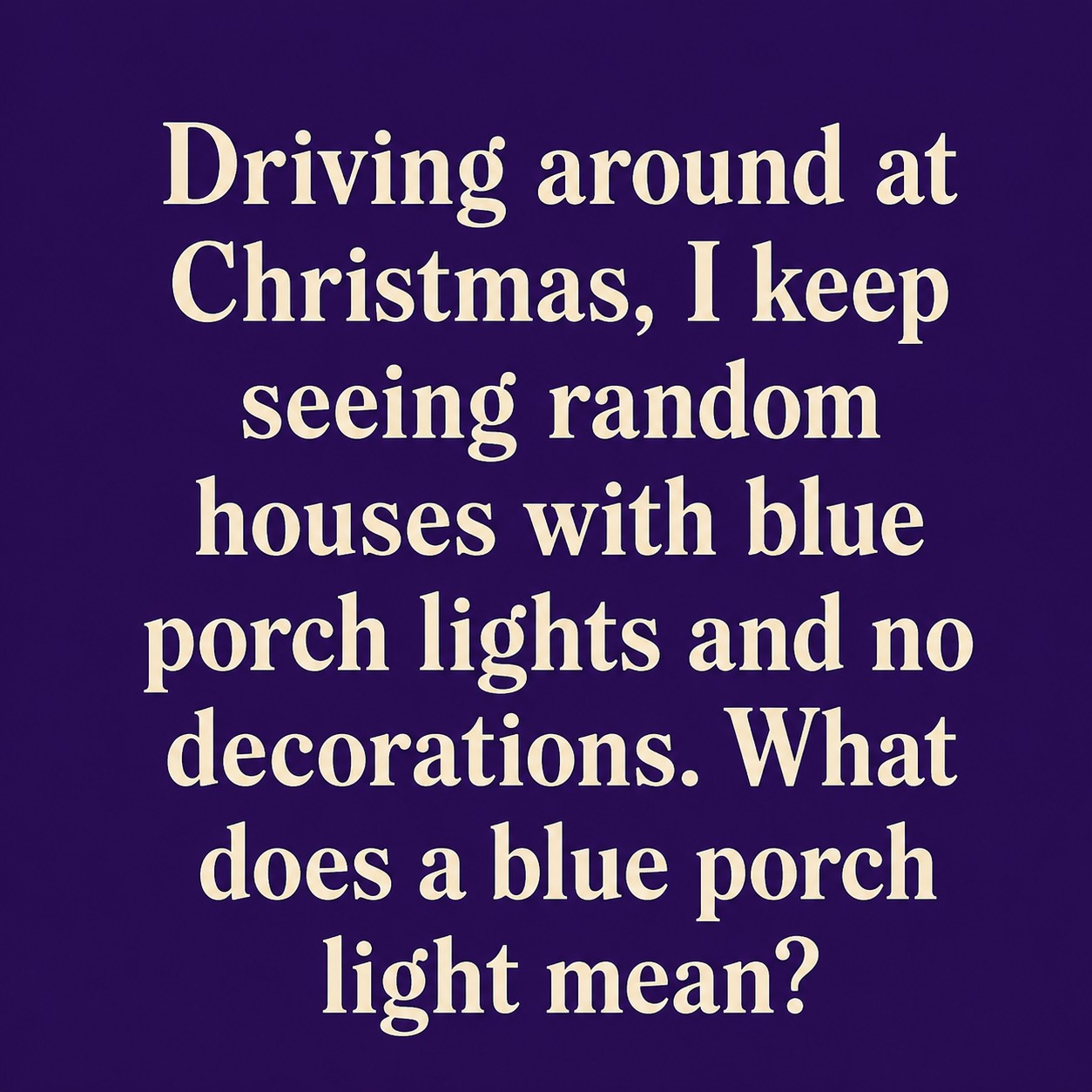
There’s something quietly striking about driving through neighborhoods at dusk and noticing more and more houses glowing with soft blue lights on their porches. What started as an occasional sight a few years ago has become a noticeable trend across suburbs, small towns, and even some urban areas. At first glance, it might seem like a simple aesthetic choice or a new decorative fad. But the story behind blue porch lights runs much deeper than color preference. For many homeowners, installing these lights carries personal, emotional, and social significance that goes far beyond illuminating the front steps.
One of the most common reasons people choose blue porch lights is to show support for law enforcement officers and their families. The “Thin Blue Line” movement has adopted blue as its symbolic color, representing the idea that police officers form a thin line between order and chaos. Families of officers, retired law enforcement personnel, and community supporters often leave their porch lights blue as a quiet but visible sign of respect and solidarity. In communities that have experienced tragedy involving police officers, blue lights can also serve as a memorial and a daily reminder that someone in that home honors those who serve.
Beyond law enforcement, blue porch lights have taken on powerful meaning in the autism community. Many families choose blue lighting to raise awareness for autism spectrum disorders. Blue is the official color of autism awareness campaigns, and lighting a porch in this hue has become a gentle way for families to signal support, understanding, and acceptance. Parents of children on the spectrum often say that displaying a blue light helps them feel less isolated and creates a subtle connection with other families walking the same path. It transforms an ordinary porch into a beacon of solidarity.
Another growing reason for the trend is personal safety and peace of mind. Some homeowners install blue lights after experiencing break-ins or feeling uneasy in their neighborhoods. The distinct color makes their home easier to identify quickly for police or neighbors in case of emergency. Others simply find that blue lighting creates a calming atmosphere that makes them feel more secure. Unlike harsh white security lights that can feel intrusive to neighbors, blue lights offer a softer, more welcoming glow while still providing visibility.
Interestingly, there’s also a practical benefit that many people discover after switching to blue. Certain insects are less attracted to blue light than to traditional white or yellow bulbs. This means fewer bugs swarming around the front door on summer evenings, which makes sitting on the porch or entering the house much more pleasant. For families who enjoy outdoor time but hate dealing with mosquitoes and moths, this small change can make a surprising difference in daily comfort.
The aesthetic appeal of blue porch lights should not be underestimated either. In an era where people spend more time curating their homes for both comfort and visual impact, blue offers a refreshing alternative to standard warm white or bright security lighting. It creates a serene, almost coastal or modern minimalist feel that pairs beautifully with gray, white, or navy house colors. Many interior designers now recommend blue porch lights as part of a cohesive outdoor design scheme that extends the personality of the home beyond the front door.
Social media has played a significant role in accelerating this trend. Platforms like Pinterest, Instagram, and TikTok are filled with beautifully photographed homes featuring blue porch lights, often accompanied by personal stories about why the homeowners made the switch. What begins as one person sharing their reason for choosing blue can quickly inspire dozens or hundreds of others to do the same. The visual impact of these lights at night creates stunning photography that spreads rapidly, turning a meaningful choice into a shareable trend.
Of course, not everyone who installs blue lights does so for symbolic reasons. Some simply like how the color looks against their landscaping or brickwork. Others may have seen it in a neighbor’s yard and decided to try it themselves without knowing the deeper meanings. This mix of personal, practical, and symbolic motivations has helped the trend grow organically rather than feeling forced or commercialized.
There are also deeper emotional stories behind some blue lights. Families dealing with depression, anxiety, or mental health challenges sometimes choose blue as a quiet signal that their home is a safe space for anyone struggling. Blue has long been associated with calmness and emotional healing in color psychology. For people living with invisible battles, seeing a blue light on a neighbor’s porch can provide a small but meaningful sense of connection and reduced isolation.
The installation process itself has become easier and more affordable over time. LED blue bulbs are now widely available, energy-efficient, and long-lasting. Many homeowners opt for smart lighting systems that allow them to change colors for different occasions while keeping blue as their default. This flexibility means families can honor specific causes on certain days while maintaining their primary message the rest of the time.
Critics sometimes argue that blue porch lights create unnecessary division or that the trend has become diluted as more people adopt it without understanding its origins. While it’s true that any symbol can lose some power when it becomes widespread, the overall effect seems largely positive. Blue lights have opened up conversations between neighbors who might otherwise never speak. They’ve created opportunities for people to share personal stories and build community connections that extend beyond casual hellos.
For those considering adding blue lights to their own homes, the decision often comes down to a simple question: what message do I want my home to send when the sun goes down? Whether it’s support for first responders, autism awareness, personal peace, or simply a beautiful aesthetic choice, blue offers a versatile way to express something meaningful without saying a word.
As neighborhoods continue to evolve and people look for ways to stand for something larger than themselves, blue porch lights have found a special place in modern home design. They represent both individuality and connection — a way to say “this home believes in something” while creating beauty in the darkness. In a world that can sometimes feel divided, these small glowing beacons offer a gentle reminder that many of us are searching for the same things: safety, understanding, community, and hope.
The next time you notice a house with blue lights glowing softly on the porch, take a moment to consider the story behind it. It might belong to a police officer’s family showing quiet pride. It might represent a household navigating autism with love and determination. Or it might simply be someone who wanted their home to feel calmer and more welcoming after dark. Whatever the reason, these lights have become more than decoration. They’ve become a modern way for ordinary people to express values, offer support, and create small moments of beauty and meaning in their everyday lives.
In the end, the growing popularity of blue porch lights shows how something as simple as choosing a different bulb color can carry layers of personal and cultural significance. It reminds us that our homes are more than shelters — they are statements about who we are and what we care about. And sometimes, the softest lights can send the strongest messages.
Most Popular!
-
 Eggs, Cholesterol, and Timing: What Actually Matters for Most People
-
When a Partner Leaves With More Than a Suitcase: Protecting Yourself From Financial Betrayal
-
When Financial Support Meets Contempt: Recognizing Exploitation Inside a Marriage
-
Why Some Sensory Toys and Household “Hacks” Do Not Belong in the Microwave
-
When Grief Clouds Judgment: Misreading Silence and the Quiet Ways People Show Care
-
When One Partner Does All the Hosting: Recognizing Imbalance Before Resentment Takes Over
-
How Many Holes Are in a T-Shirt? What a Simple Puzzle Reveals About How We See
-
The Quiet Stories Inside Secondhand Objects: When a Thrift-Store Find Carries Someone Else’s History