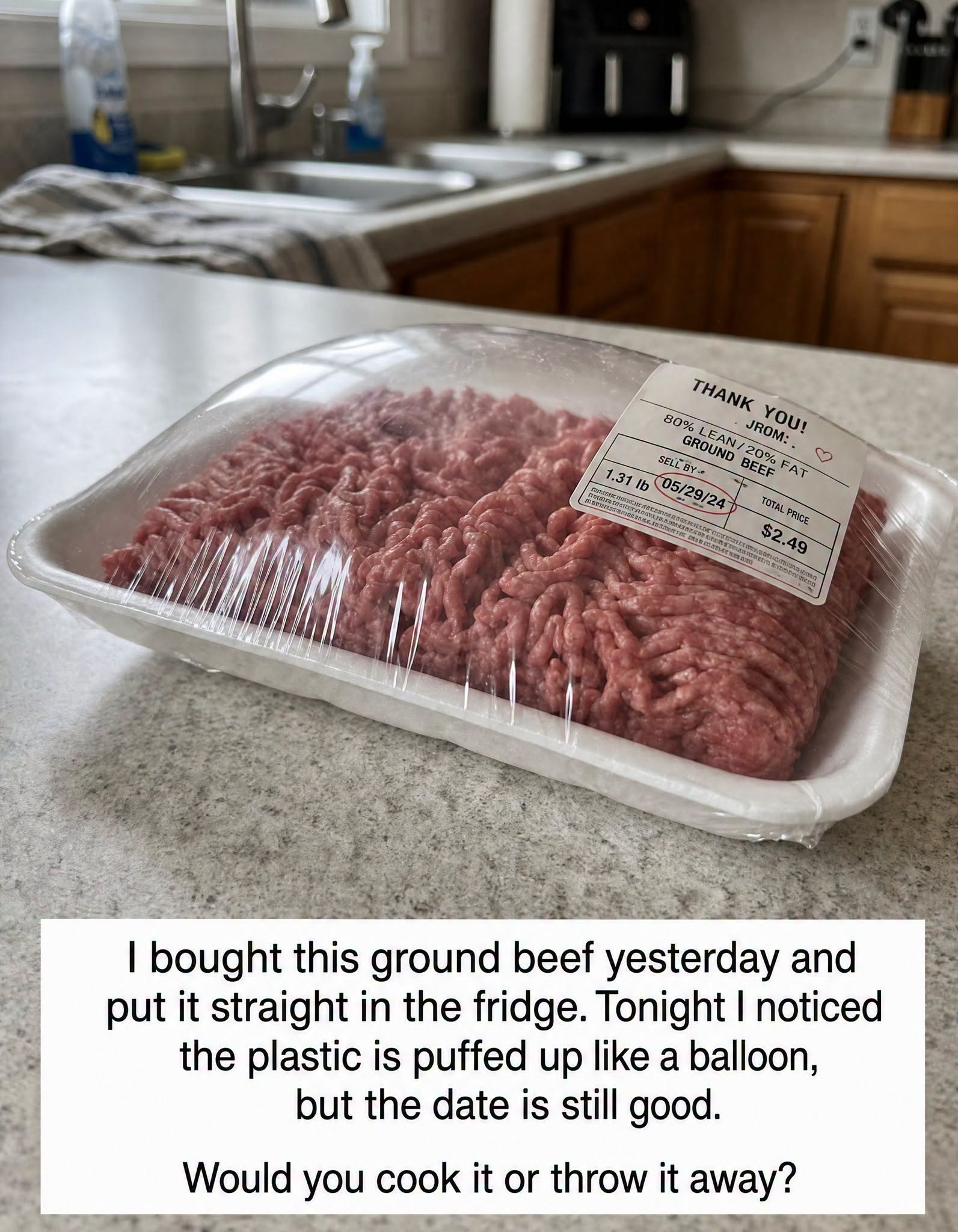
Most shoppers move through the grocery store focused on prices, expiration dates, and the items on their list. Few pause to examine the shape of the packaging itself. Yet a swollen or puffy package can be one of the clearest warning signs that something inside has begun to spoil in a dangerous way. What looks like a minor manufacturing quirk is often evidence of active microbial growth producing gas.
When bacteria, yeast, or mold begin breaking down the contents of a sealed package, they release gases such as carbon dioxide as byproducts of their metabolism. In airtight containers that gas has nowhere to escape. The result is a package that balloons outward, loses its original firm shape, or develops a soft, pillow-like feel. This process is especially common in moisture-rich foods such as deli meats, soft cheeses, fresh sausages, prepared salads, and certain seafood products.
Canned goods present a more serious version of the same problem. A can that bulges at the top, bottom, or sides may indicate the presence of anaerobic bacteria capable of producing botulinum toxin. Botulism is rare in modern commercial food supplies, but it remains one of the most dangerous forms of foodborne illness because the toxin affects the nervous system and can be fatal without prompt medical treatment. Any can that shows swelling, leakage, or unusual pressure should be treated as unsafe.
It is important to distinguish intentional inflation from spoilage. Many bags of chips and snack foods are flushed with nitrogen gas during packaging to displace oxygen and keep the product crisp. That controlled inflation is uniform and expected. Spoilage gas, by contrast, usually appears unevenly, often accompanied by other signs such as liquid separation, discoloration, or an off odor once the package is opened.
Simple inspection habits catch most problems before they reach the kitchen. Turning a package over and examining it from multiple angles reveals tears, pinholes, or soft spots that might otherwise go unnoticed. Refrigerated items that feel warmer than they should or that have been stacked in a way that blocks cold air deserve extra scrutiny. Placing perishable foods in the cart last and moving them into a refrigerator or cooler as soon as possible after shopping further reduces the chance that temperature abuse will accelerate bacterial growth.
Once home, proper storage continues the protection. The coldest parts of the refrigerator — typically the lower shelves and the back — are the safest locations for high-risk items. Labels that specify “keep refrigerated” or “use within X days of opening” exist for a reason. Ignoring those instructions allows even properly packaged food to become hazardous over time.
Sensory checks remain valuable even after a package passes the visual test. An unpleasant or unusually strong odor, visible mold, slimy texture, or unexpected bubbling after opening are all reasons to discard the product without tasting it. The familiar advice “when in doubt, throw it out” is especially relevant with items that support rapid bacterial growth.
Certain populations face higher risk from contaminated food. Young children, older adults, pregnant women, and people with weakened immune systems can experience more severe consequences from the same pathogens that might cause only mild illness in healthy adults. Extra caution with high-risk foods is warranted in households that include these individuals.
Commercial food safety systems have improved dramatically over recent decades, yet the final line of defense is still the person standing in the grocery aisle or the home kitchen. Manufacturers cannot control every step of transportation, storage, and handling after the product leaves the facility. A few seconds of careful observation can prevent an entire household from becoming sick.
Understanding the science behind a bloated package removes much of the mystery and most of the exaggerated fear. Gas production is a natural consequence of microbial activity in a sealed environment. Recognizing that activity early allows the problem to be stopped before anyone consumes the food. The package itself is not the enemy; the invisible growth inside it is.
Most of the time the swollen container is simply an inconvenient reminder that food is a perishable biological product. On the rare occasions when the swelling signals something more dangerous, the same simple habit — refusing to buy or open the package — provides effective protection. Paying attention to the shape of what we bring home remains one of the easiest and most reliable ways to keep the kitchen safe.
Most Popular!
-
 The Three-Dollar Miracle: How a Dust-Covered Vase Revealed a Heartbreaking Decades-Old Secret
-
The $80,000 Battle to Erase a Birthmark: Why One Mother Risked Everything for Her Daughter’s Future
-
The Silent Thief: Why Millions of Men Are Living with a Time Bomb They Can’t See
-
The Final Curtain Falls: Beloved Sanford and Son Legend Hal Williams Gone at 91
-
Found at a Yard Sale: This “Useless” Vintage Contraption Is Actually a Forgotten Piece of Human History
-
The Hidden Danger at the Funeral: Why a Viral Doctor Is Asking People to Rethink Kissing the Deceased
-
Behind the Spotlight: The Hidden Illness That Challenged Justin Bieber’s Life and Career
-
The Final Heartbeat: A Mother’s Devastating Goodbye That Will Leave You Shattered