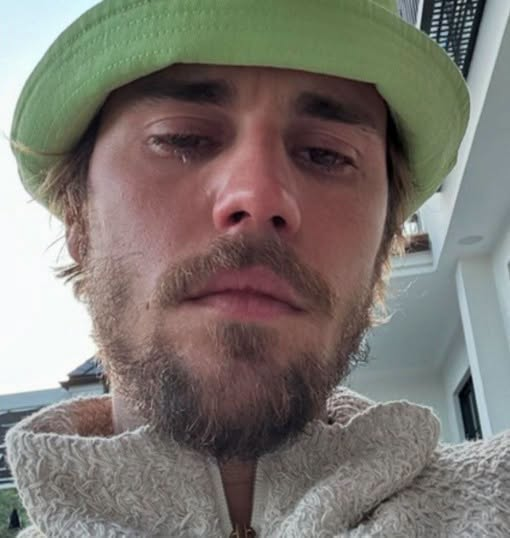
For years the public watched Justin Bieber move between record-breaking success and sudden withdrawals from the spotlight. Tours were postponed, appearances canceled, and speculation filled the gaps. What many fans and critics did not fully understand at the time was that the singer was managing serious health challenges that affected both his body and his ability to maintain the relentless pace of a global career.
In 2020 Bieber spoke openly about living with Lyme disease and ongoing symptoms linked to the Epstein-Barr virus. He described crushing fatigue, joint pain, and periods when even basic daily functioning felt difficult. These conditions are often poorly understood by the public and can be dismissed as vague or exaggerated, especially when the person experiencing them appears young and successful. Bieber’s decision to discuss them publicly helped draw attention to the reality of invisible illness.
Two years later a more visible crisis arrived. In June 2022 he posted a video explaining that he had been diagnosed with Ramsay Hunt syndrome, a neurological condition caused by the reactivation of the varicella-zoster virus. The syndrome produced partial facial paralysis on one side of his face, making it difficult to smile, blink, or move certain muscles. He canceled the remaining dates of his Justice World Tour to focus on treatment and recovery.
Ramsay Hunt syndrome is treatable with antiviral medication and steroids when caught early, yet full recovery of facial nerve function can take months and is not guaranteed in every case. Bieber documented his progress over time, sharing moments when movement began to return. By early 2023 noticeable improvement was already visible, and by 2025 and into 2026 reports and public appearances indicated substantial recovery of facial mobility.
The combined impact of these health issues forced a reevaluation of how he approached work and rest. The music industry often rewards constant output and visibility. Choosing extended periods of recovery meant stepping away from that expectation. Bieber has spoken about the necessity of prioritizing physical and mental health over external pressure, a shift that marked a clear change from the earlier years of his career.
Public reaction to his health disclosures mixed concern with skepticism. Some observers treated the cancellations as unreliability rather than medical necessity. The contrast highlighted a broader cultural tendency to assume that fame and resources somehow exempt people from ordinary biological limits. Bieber’s openness challenged that assumption by showing that serious illness can affect anyone.
In recent years he has returned to performing in selected settings, including major stages, while maintaining a more measured schedule. New music has appeared, and live appearances have demonstrated that he is able to work again, though the intensity of earlier tours has not fully resumed. The focus appears to have shifted toward sustainability rather than maximum output.
His experience has also influenced how he uses his platform. Beyond promoting music, he has spoken about the importance of rest, the reality of chronic symptoms, and the value of seeking proper medical care. For people living with similar conditions, the visibility of a well-known figure acknowledging the same struggles can reduce isolation and encourage earlier attention to their own symptoms.
Recovery from neurological and systemic illnesses is rarely linear. Progress can be interrupted by setbacks, and some residual effects may linger even after major symptoms improve. Bieber’s public timeline reflects that complexity: periods of withdrawal, gradual improvement, and eventual selective return to performance. The narrative is not one of sudden triumph but of steady, imperfect adaptation.
The broader lesson extends beyond any single celebrity. High-profile health disclosures can humanize conditions that are otherwise abstract to the public. They also underscore the importance of distinguishing between personal choice and medical necessity when public figures step back from their work. In Bieber’s case, the decision to pause was driven by the clear limits of his body rather than a lack of ambition.
Today his career continues in a form shaped by those earlier health realities. The polished image of constant availability has given way to a more measured presence. The music remains, but the conditions under which it is created and performed have changed. What once looked like unexplained retreats from the spotlight is now understood as part of a longer effort to remain well enough to keep creating at all.
Most Popular!
-
 The Three-Dollar Miracle: How a Dust-Covered Vase Revealed a Heartbreaking Decades-Old Secret
-
The $80,000 Battle to Erase a Birthmark: Why One Mother Risked Everything for Her Daughter’s Future
-
The Silent Thief: Why Millions of Men Are Living with a Time Bomb They Can’t See
-
The Final Curtain Falls: Beloved Sanford and Son Legend Hal Williams Gone at 91
-
Found at a Yard Sale: This “Useless” Vintage Contraption Is Actually a Forgotten Piece of Human History
-
The Hidden Danger at the Funeral: Why a Viral Doctor Is Asking People to Rethink Kissing the Deceased
-
The Final Heartbeat: A Mother’s Devastating Goodbye That Will Leave You Shattered
-
The Grocery Store Killer: Is That Bloated Package Hiding a Deadly Secret?