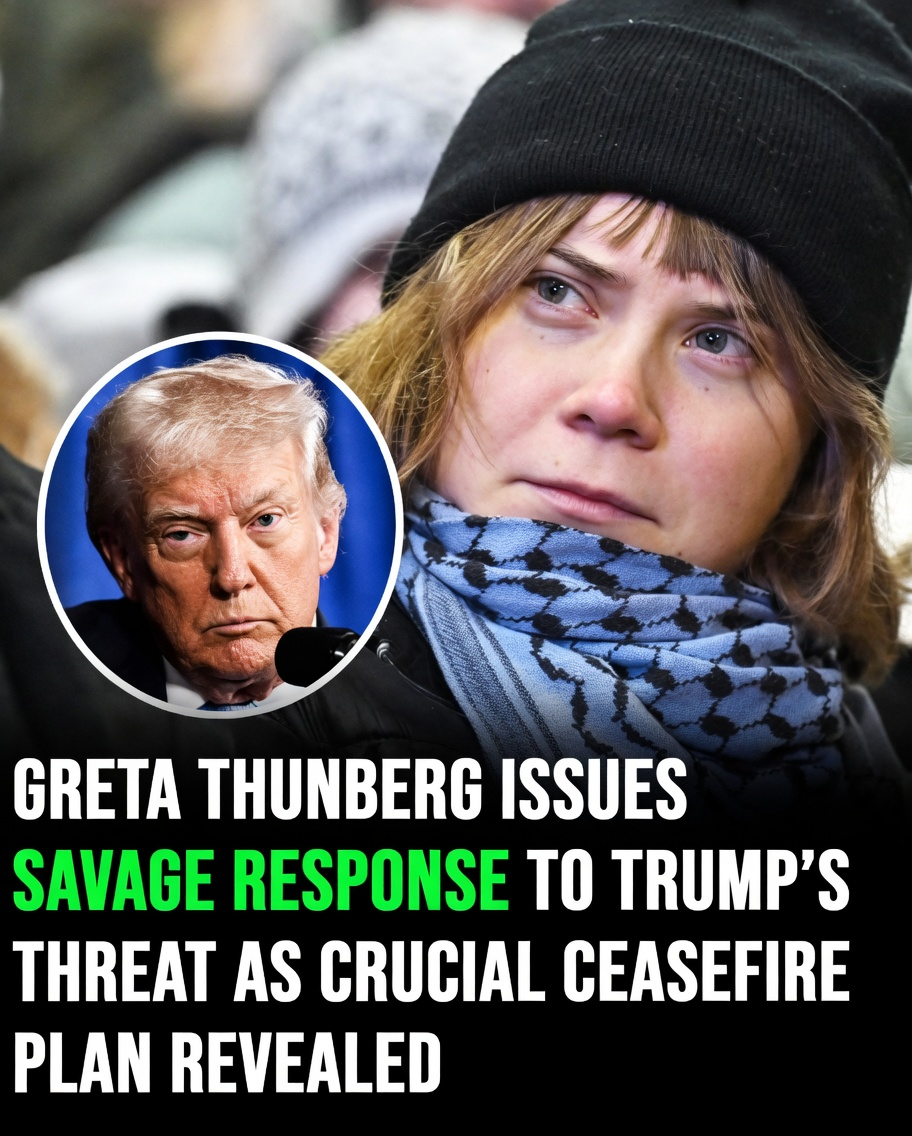
The world watched with a mix of hope and anxiety as fragile ceasefire agreements began taking shape across multiple conflict zones in the Middle East and Eastern Europe. After months of escalating violence, diplomatic channels suddenly showed signs of progress, with key players stepping back from the brink. Yet even as cautious optimism spread, a fiery new confrontation erupted on the global stage — this time not between nations, but between two of the most polarizing figures of our time: climate activist Greta Thunberg and former President Donald Trump. Their latest exchange has ignited fierce debate, exposing deep divisions not just about foreign policy, but about the very soul of international leadership in an increasingly unstable world.
The ceasefire developments came after intense behind-the-scenes negotiations. In the Middle East, long-standing hostilities showed tentative signs of de-escalation, with both sides agreeing to pause major operations for an initial 30-day period. Similar movements emerged in other hotspots, raising hopes that years of bloodshed might finally give way to exhausted negotiations. Markets reacted positively, with oil prices stabilizing and global stocks showing modest gains. For millions of families torn apart by conflict, even a temporary pause brought a fragile sense of relief.
But peace talks have a way of stirring strong emotions, and this round proved no different. As world leaders congratulated themselves on the fragile progress, Greta Thunberg took to social media with a blistering message aimed squarely at Donald Trump, who had been vocal in his criticism of the emerging deals. Trump had called the ceasefires “weak” and “dangerous,” arguing they rewarded aggression and left allies vulnerable. Thunberg’s response was swift, sharp, and deeply personal.
In a widely shared post, the young climate activist accused Trump of undermining global stability through years of policies that prioritized short-term gains over long-term security. She linked his approach to environmental issues with broader failures in international diplomacy, claiming that ignoring climate-driven conflicts — from resource wars to mass migrations — only makes future ceasefires harder to achieve. “You call diplomacy weakness,” she wrote, “but real strength is building a world that doesn’t need constant ceasefires because we finally address the root causes.”
Trump fired back quickly, as expected. In a statement and follow-up posts, he dismissed Thunberg as “a young woman who knows nothing about the real world” and doubled down on his belief that strong military posture and America-first policies prevent wars rather than invite them. The exchange quickly went viral, splitting public opinion along familiar lines. Supporters of Trump praised his blunt realism. Critics of the former president cheered Thunberg’s willingness to challenge power. Meanwhile, diplomats on the ground quietly hoped the public spat wouldn’t derail the delicate negotiations underway.
This clash highlights a deeper tension playing out on the world stage. On one side are those who believe peace comes through strength, deterrence, and clear boundaries. On the other are voices arguing that lasting stability requires addressing climate change, inequality, and resource scarcity as security issues. Both perspectives contain truth, yet finding common ground remains incredibly difficult in today’s polarized climate.
For ordinary people watching from afar, the human cost feels most real. Families in war-torn regions have endured years of fear, displacement, and loss. A ceasefire, even an imperfect one, offers a chance to breathe, rebuild, and perhaps begin healing. Yet many worry that without genuine commitment from all sides, these pauses will simply become preparation for the next round of fighting. The involvement of high-profile figures like Thunberg and Trump ensures the conversation stays loud, but it also risks turning complex diplomatic efforts into another chapter of the culture wars.
What makes this moment particularly significant is the timing. The world faces multiple overlapping crises — climate disruption, economic pressures, migration challenges, and regional conflicts. Traditional power politics alone seems insufficient to address them. At the same time, moral appeals and activist pressure sometimes overlook the hard realities of national interests and security needs. The tension between these worldviews isn’t new, but it feels especially urgent now.
Greta Thunberg has built her platform on demanding urgent action and holding leaders accountable. Her willingness to confront powerful figures directly has earned her both admiration and criticism. Donald Trump, meanwhile, has always positioned himself as a disruptor who rejects what he sees as weak global consensus. Their clash represents more than personal animosity — it embodies competing visions for how the international community should navigate this turbulent era.
As the ceasefire efforts continue, the world will be watching to see whether diplomacy can deliver meaningful results or whether old patterns reassert themselves. For now, the fragile pauses in violence offer a narrow window of hope. Whether that hope expands or collapses may depend less on viral social media battles and more on quiet, determined work happening far from the spotlight.
In the end, perhaps the most important lesson from this moment is that peace is rarely simple or pure. It emerges through messy compromises, uncomfortable conversations, and leaders willing to risk criticism from their own sides. Greta Thunberg and Donald Trump represent passionate poles in a complicated world. The real test will be whether the rest of us — citizens, leaders, and communities — can move beyond the noise to support the fragile work of building something more stable.
For families directly affected by these conflicts, the stakes could not be higher. Every additional day of ceasefire means lives preserved, wounds given time to heal, and futures that remain possible. As the world debates the best path forward, perhaps the most human response is to hope that this time, the pause becomes something more permanent — not because any one side won the argument, but because enough people chose pragmatism and compassion over endless confrontation.
The Lion of Harlem may no longer roar, but new voices continue to shape our understanding of power, responsibility, and what true strength looks like on the global stage. How this latest chapter unfolds will tell us much about where we are headed as a world community.
Most Popular!
-
 My Brother Took the House, But Grandpa’s Cabin Held a Surprising Secret That Changed Everything
-
Before You Throw Away That Tea Bag: Practical and Creative Ways to Reuse It at Home
-
The Surprising Truth Behind Why Dogs Sniff People – And What They’re Really Trying to Tell You
-
Strange Objects in Bedding Turn Out to Have a Surprisingly Simple Explanation
-
She Lost Her Father in a Tragic Family Betrayal and Was Left With Just $300 – Then She Rose to Fame and Changed Everything
-
What Really Happens When You Eat Boiled Eggs Every Morning – A Complete Guide Backed by Nutrition Science
-
Why You Might See Metal Bands Around Tree Trunks – And What They Really Do
-
My 15-Year-Old Daughter Came Home from Her Grandmother’s House and Locked Herself in Her Room – What I Discovered Changed Everything