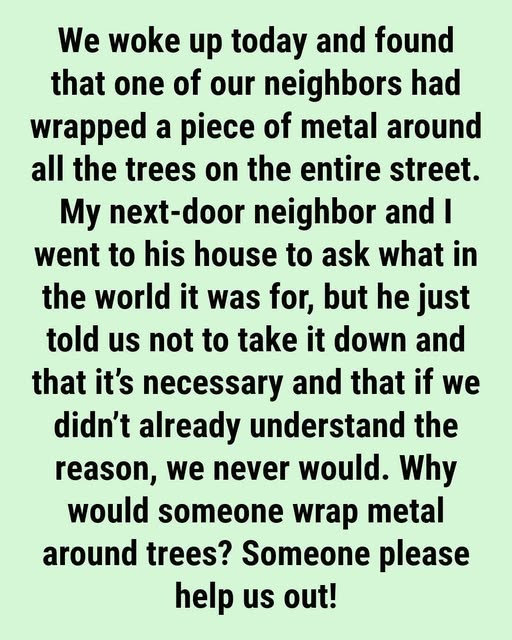
Have you ever been walking through a park, a quiet neighborhood, or along a hiking trail and noticed a shiny metal band wrapped around the trunk of an otherwise ordinary tree? It stands out immediately — a strip of smooth, reflective metal encircling the bark like a strange belt. At first glance, it looks odd, almost like the tree is wearing jewelry or recovering from some kind of injury. Many people assume it’s decorative, a repair job, or part of a scientific study. The real explanation is far more practical and clever than most realize. These metal bands, often called tree baffles, serve a straightforward but highly effective purpose: stopping climbing animals from reaching the upper parts of the tree.
Once you understand what they do, you’ll start spotting them everywhere — in backyards, public parks, orchards, and even along city streets. They’re one of the simplest, most humane tools humans use to live peacefully alongside wildlife while protecting both trees and property.
The Problem These Metal Bands Solve
Trees are natural magnets for animals. Squirrels, raccoons, rats, possums, and even cats find them irresistible for food, shelter, nesting, and easy travel routes. In urban and suburban areas, trees growing near houses become literal highways for these creatures. They can leap from branches onto roofs, raid bird feeders, strip bark, damage fruit crops, or build nests in attics and chimneys. While wildlife has every right to exist, their activities can cause real headaches — chewed wires, contaminated insulation, destroyed gardens, and expensive home repairs.
A smooth metal band creates a barrier animals simply cannot climb. The slick surface offers no grip for claws or paws. When a squirrel or raccoon tries to scramble up, it slides right back down. It’s like trying to climb a greased pole — physics wins every time.
How Tree Baffles Actually Work
Tree baffles are typically made from wide sheets of aluminum, galvanized steel, or similar smooth metal. They are wrapped around the trunk at least 4–6 feet off the ground (high enough that most animals can’t jump over them from the ground). The band is usually 18–36 inches tall and secured loosely enough to allow the tree to grow without girdling or damaging the bark.
There are two main styles:
- Flat bands — Simple cylindrical wraps that create a slippery vertical section.
- Cone-shaped baffles — Wider at the top like an upside-down funnel, making it even harder for animals to get a foothold or reach over.
Both designs rely on the same principle: remove traction, stop the climb. They don’t harm the tree when installed correctly and can last for years with minimal maintenance.
Common Reasons People Install Them
Homeowners and arborists use metal bands for several practical reasons:
- Protecting bird feeders — Squirrels are notorious for raiding feeders. A baffle below the feeder keeps the seed for the birds.
- Preventing roof and attic access — Trees touching or near houses give rodents an easy route onto roofs. A baffle breaks that highway.
- Safeguarding fruit trees and gardens — In orchards or backyard fruit gardens, baffles stop animals from devouring crops before humans can harvest them.
- Reducing bark damage — Constant climbing can strip bark and create entry points for disease or insects.
- Protecting young or special trees — Prized landscape trees, especially in areas with high wildlife activity, benefit from this simple defense.
In many cities and parks, you’ll see them on palms, oaks, maples, and other species that attract climbers.
Are They Safe for Trees?
This is one of the most common concerns. When properly installed, metal baffles are safe. They don’t cut into the bark, restrict growth (if left loose), or block the tree’s ability to breathe. Arborists recommend checking them every couple of years and adjusting as the tree expands. Unlike tight wires or straps that can girdle and kill a tree, these bands are designed to be non-invasive.
DIY vs Professional Installation
Making your own tree baffle is surprisingly easy and affordable. Many homeowners use aluminum flashing from the hardware store, cut it to size, and secure it with wire or clamps. For larger or more valuable trees, consulting a local arborist ensures the best placement and long-term safety.
Why This Simple Solution Matters
In our increasingly crowded world, conflicts between humans and wildlife are common. Tree baffles offer a humane, non-lethal way to manage those conflicts. They don’t trap or harm animals — they simply redirect them to more suitable areas. At the same time, they protect property and help trees stay healthy for decades longer.
The next time you spot a shiny metal band around a tree trunk, you’ll know it’s not mysterious or decorative. It’s a quiet, clever piece of human ingenuity — a small strip of metal quietly solving a big everyday problem.
These unassuming bands remind us that sometimes the best solutions are the simplest. No fancy technology. No chemicals. Just smooth metal, basic physics, and a little foresight.
Have you ever noticed metal bands on trees in your area? What did you think they were for before reading this? Share your observations or experiences in the comments — you might help someone else understand what they’re seeing on their next walk!
Most Popular!
-
 My Brother Took the House, But Grandpa’s Cabin Held a Surprising Secret That Changed Everything
-
Before You Throw Away That Tea Bag: Practical and Creative Ways to Reuse It at Home
-
The Surprising Truth Behind Why Dogs Sniff People – And What They’re Really Trying to Tell You
-
Strange Objects in Bedding Turn Out to Have a Surprisingly Simple Explanation
-
She Lost Her Father in a Tragic Family Betrayal and Was Left With Just $300 – Then She Rose to Fame and Changed Everything
-
What Really Happens When You Eat Boiled Eggs Every Morning – A Complete Guide Backed by Nutrition Science
-
My 15-Year-Old Daughter Came Home from Her Grandmother’s House and Locked Herself in Her Room – What I Discovered Changed Everything
-
The Strange Object Under the Car – When a Small Discovery Raises Unexpected Questions That Changed Everything