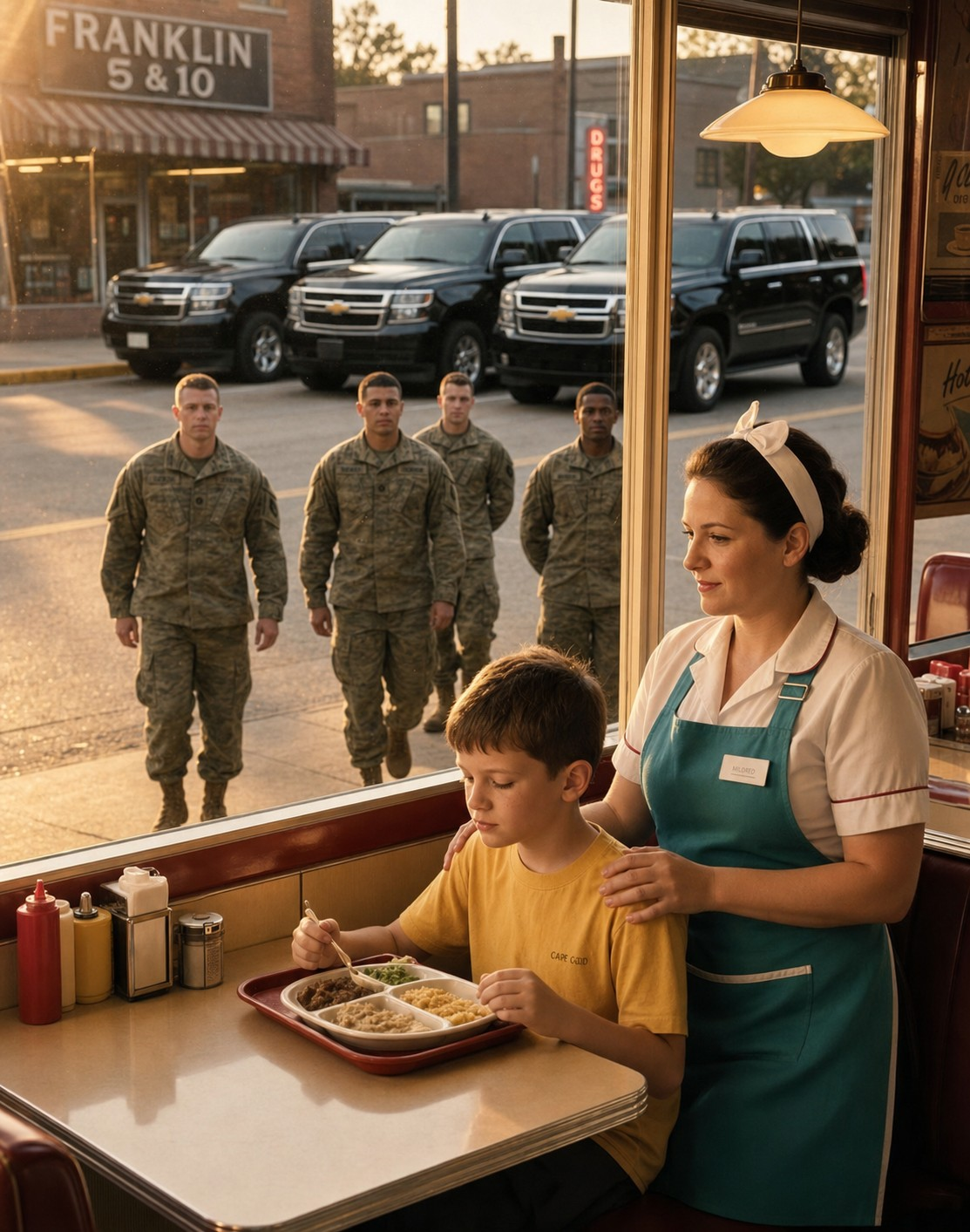
Some of the most powerful connections in life begin with the smallest gestures. A smile across a crowded room. A kind word at the right moment. Or, in this case, a warm plate of pancakes and a patient ear every Saturday morning. For one boy who felt invisible in a noisy world, those quiet moments at a corner cafe became his anchor, his safe place, and eventually the catalyst that changed the entire direction of his life. This is the story of how a woman named Margaret turned an ordinary breakfast ritual into something extraordinary — proving that sometimes the greatest gifts come wrapped in simple, everyday kindness.
Ten-year-old Tommy first wandered into Margaret’s cafe on a rainy Saturday in late autumn. His parents had recently divorced, and the custody arrangement left him bouncing between houses filled with tension and silence. Weekends felt especially lonely. His mother worked double shifts, and his father’s new apartment was still half-unpacked and strangely quiet. With nowhere else to go and a few crumpled dollars in his pocket, Tommy pushed open the door of the small cafe on Maple Street, drawn by the smell of fresh coffee and something sweet baking in the oven. He sat at the counter, ordered the cheapest thing on the menu, and tried to make himself as small as possible.
Margaret noticed him immediately. At sixty-eight years old, she had run the cafe for nearly three decades after losing her husband. She knew what loneliness looked like because she had lived with it herself. Instead of treating Tommy like just another customer, she lingered a moment longer when she brought his plate. “You look like you could use an extra pancake,” she said with a gentle smile. That small act of noticing opened the door. Tommy came back the following Saturday. And the one after that. What started as a simple transaction slowly became something much deeper.
Every Saturday morning, rain or shine, Tommy would slide onto the same stool at the end of the counter. Margaret always had his order ready — pancakes with a side of fresh fruit and a glass of chocolate milk. But the food was only part of what kept him coming back. It was the way Margaret asked about his week, really listened when he talked about school or the latest book he was reading, and never made him feel like a burden. She shared stories from her own childhood, taught him how to flip pancakes on the griddle when the cafe wasn’t busy, and created a space where a lonely boy could simply be seen. For Tommy, that consistent presence became more nourishing than any meal.
As months turned into years, the relationship deepened in beautiful ways. Margaret helped Tommy with his homework at the corner table when school felt overwhelming. She quietly paid for his meals when his pocket money ran short, never making him feel ashamed. When Tommy’s mother lost her job and money became tighter at home, Margaret started packing extra food for him to take home without drawing attention to it. She became the steady grandmother figure he never had, offering wisdom, encouragement, and unconditional acceptance during the turbulent years of adolescence. Tommy started calling her “Gram” without thinking twice, and Margaret’s eyes would light up every time he walked through the door.
The turning point came when Tommy was fifteen and struggling with depression after his father moved across the country. School felt pointless. Home felt empty. One particularly dark Saturday, he confessed to Margaret that he didn’t see the point in continuing. Instead of panicking or dismissing his feelings, Margaret listened carefully, then shared her own story of loss and how she had found purpose again through helping others. She encouraged him to talk to a counselor at school and offered to go with him if he wanted. That conversation planted the first seed of hope. Tommy started seeing the counselor, joined the school newspaper, and slowly began finding his voice through writing.
Years later, Tommy stood on a stage accepting a scholarship to a prestigious journalism program. In his speech, he spoke openly about the woman who had saved him during his darkest years. “Margaret didn’t just feed me breakfast,” he said, his voice thick with emotion. “She fed my soul when I was starving for someone to care. She showed me that kindness isn’t loud or complicated. Sometimes it’s just showing up, week after week, and reminding a lonely kid that he matters.” The audience was moved to tears. Margaret sat in the front row, beaming with pride, her eyes shining with the same gentle love that had first welcomed a scared ten-year-old boy into her cafe.
Today, Tommy is a successful journalist who writes about community, resilience, and the power of small acts of kindness. He visits Margaret every Saturday morning without fail, though now he’s the one bringing breakfast and helping around the cafe. Their relationship has become a beautiful example of how one person’s consistent presence can alter the entire trajectory of another’s life. Margaret’s simple decision to notice a lonely child created ripples that continue to spread outward, inspiring others to pay attention to the quiet struggles happening around them every day.
This story carries important lessons for all of us. In our busy, distracted world, it’s easy to overlook the quiet pain of those around us — the child sitting alone at the counter, the elderly neighbor who rarely gets visitors, the coworker who seems withdrawn. We assume someone else will step in. We tell ourselves we’re too busy or that it’s not our place. But Margaret’s example shows us that showing up consistently, even in small ways, can create profound change. You don’t need grand gestures or perfect words. Sometimes the most powerful thing you can offer is simply your presence and genuine interest in someone else’s story.
For parents and caregivers, this story serves as a gentle reminder about the power of steady emotional availability. Children who feel truly seen and supported develop stronger resilience and self-worth. In a world that often pushes us toward constant achievement and distraction, carving out regular, uninterrupted time to connect with the young people in our lives becomes one of the most important investments we can make. Those consistent moments of attention become the foundation they build their lives upon.
For anyone who feels lonely or invisible right now, know that there are Margarets in the world — people who will see you, value you, and create space for you to heal and grow. Sometimes they show up in unexpected places and wear unexpected faces. Stay open to them. Your own version of Saturday breakfast and gentle conversation might be waiting just around the corner.
The beautiful truth woven through this entire story is that kindness costs very little but creates immeasurable value. A few extra pancakes. A listening ear. A consistent presence week after week. These small investments have the power to save lives, restore hope, and build legacies that outlive us all. Margaret didn’t set out to change a young boy’s destiny. She simply chose to be kind in the moment she was given. The rest unfolded naturally from there.
In our often disconnected world, stories like this one remind us of what truly matters. Not grand achievements or viral moments, but the quiet, consistent ways we show up for each other. The next time you see someone sitting alone, struggling, or simply looking a little lost, remember Margaret and the lonely boy at her counter. A simple breakfast and genuine attention might be exactly what they need to find their way again. And in giving that gift to others, you might just discover how deeply it heals your own heart too.
The woman at the cafe didn’t just serve pancakes. She served hope, belonging, and the powerful message that no one is invisible when someone chooses to truly see them. That legacy continues every Saturday morning when Tommy walks through those familiar doors, no longer as a lonely child, but as a man who learned how to carry forward the same light that once saved him. And in that beautiful cycle of giving and receiving, we find one of life’s most precious truths: the smallest acts of kindness can create the biggest changes of all.
Most Popular!
-
 I’ve Made This Comfort Meal Countless Times — But Never This Delicious
-
The Day a 68-Year-Old Rider Turned a Hospital Ward Into a Family: Compassion, Patient Advocacy, and a Legacy That Keeps Rumbling
-
My Date Picked Up the Tab — Then Sent Me an Invoice: A Modern Dating Red Flag You Shouldn’t Ignore
-
12 Common Traits Seen in Adults Who Grew Up Without Steady Emotional Support — And How Healing Is Still Possible
-
The Night a Biker Became an Angel: A Story of Courage, Compassion, and the Power of Stopping to Help
-
5 Subtle Signs an Older Loved One Needs More Care and Attention — And How to Respond Before It’s Too Late
-
He Fired 37 Nannies in Two Weeks — Then One Domestic Worker Changed Everything for His Six Daughters
-
Healthy Active Mom Shares the Subtle Warning Signs She Ignored Before Her Bowel Cancer Diagnosis — And Why You Shouldn’t Make the Same Mistake