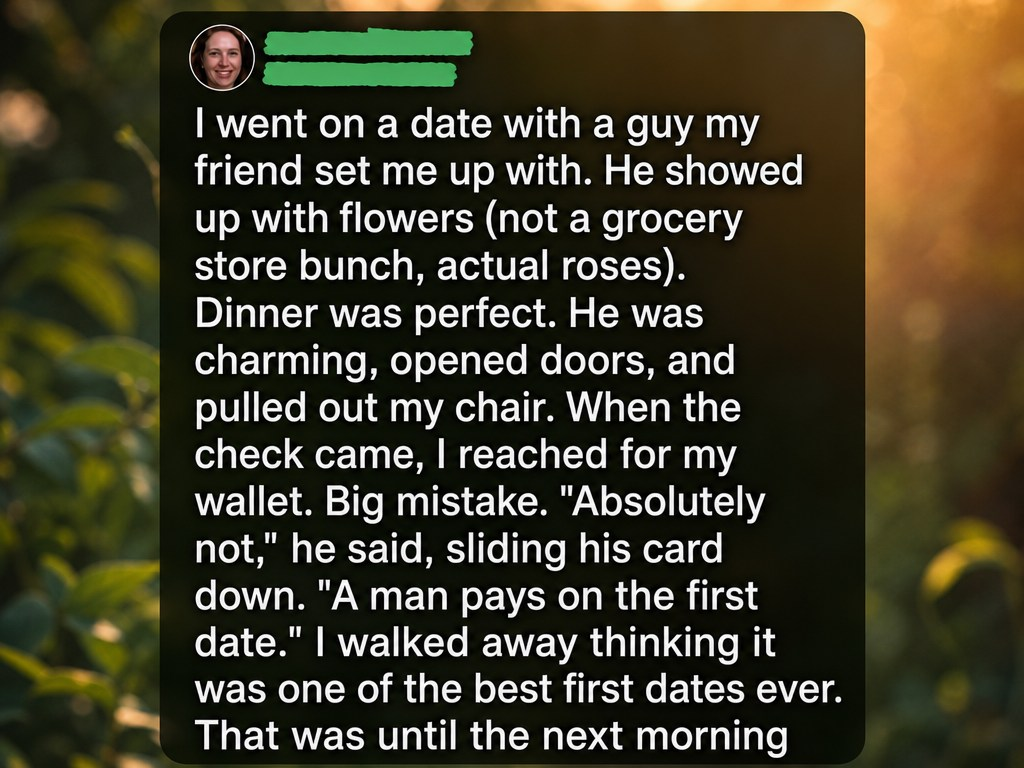
Dating in 2026 can feel like navigating a minefield of mixed signals, hidden expectations, and financial games that no one prepared us for. We swipe, we chat, we meet for coffee or dinner, hoping to find connection in a world that often feels transactional. But what happens when the person who insisted on paying the bill suddenly treats the evening like a business expense? That’s exactly what happened to me on what started as a promising second date with a seemingly successful marketing executive named Derek. He was charming, attentive, and quick to grab the check at the upscale Italian restaurant we chose. I offered to split it, as I always do, but he waved me off with a confident smile. “I’ve got this,” he said. Three days later, a Venmo request appeared in my notifications for exactly half the bill — plus tax and tip. No explanation. No joke. Just a cold invoice for our “shared experience.” In that moment, everything shifted. What I thought was chivalry turned out to be something far more calculated, and it became one of the clearest red flags I’ve encountered in modern dating.
This isn’t an isolated story. Across dating apps and social media, more people are sharing similar experiences — dates who pay upfront only to itemize costs later, expecting reimbursement as if the evening was a business transaction rather than a romantic gesture. The psychology behind it runs deeper than simple frugality. Some use this tactic to test boundaries, gauge financial compatibility, or maintain a sense of control in the early stages of dating. Others have been burned by previous partners and now approach every date with a transactional mindset. Whatever the reason, it reveals important information about character, values, and emotional maturity. When someone turns a generous act into an accounting exercise, it often signals deeper issues around trust, generosity, and how they view relationships.
Financial transparency matters in dating, especially as we get older and have established careers, responsibilities, and financial goals. Splitting bills fairly is perfectly reasonable, particularly in the early stages when you’re still getting to know each other. Many people prefer going Dutch from the first date to avoid any sense of obligation or power imbalance. The problem arises when the approach feels deceptive or manipulative. Offering to pay and then sending an invoice days later creates confusion and erodes trust before it has time to build. It transforms what should feel like mutual enjoyment into a scored transaction, leaving the other person questioning motives and wondering what other hidden expectations might surface later.
This behavior often connects to broader patterns in how someone handles relationships and responsibility. People who nickel-and-dime dates may also struggle with emotional generosity — being present, attentive, and willing to invest time and energy without keeping score. Healthy dating involves give and take that feels natural rather than calculated. When someone tracks every expense with precision while ignoring emotional labor, it suggests an imbalance that rarely improves over time. In my case with Derek, the invoice was just the beginning. Later conversations revealed his tendency to track who texted first, who planned more dates, and who “owed” more effort in the relationship. The financial nitpicking was a symptom of a larger scarcity mindset that left no room for genuine connection.
For women especially, this trend can feel particularly jarring in an era where we’re often still expected to navigate traditional gender roles while maintaining financial independence. Many of us have worked hard to build careers and stability, only to encounter partners who want the benefits of chivalry without the emotional reciprocity. The invoice move puts the recipient in an awkward position — pay up and seem ungrateful, or push back and risk being labeled difficult. Either way, it shifts the dynamic from romantic possibility to uncomfortable negotiation before real trust has formed. This is why so many dating coaches now advise discussing financial expectations early and clearly, preferably before the first bill arrives.
Learning to spot these financial red flags early can save months of confusion and heartbreak. Pay attention to how someone discusses money in general — not just on dates. Do they complain constantly about prices while living beyond their means? Do they make jokes about “gold diggers” that feel pointed rather than playful? Do they seem overly focused on what you earn or own rather than who you are? These patterns often reveal deeper values around partnership, generosity, and fairness. Healthy relationships involve open conversations about money without shame or scorekeeping. Partners who view dating as a collaborative journey rather than a transactional exchange tend to build stronger foundations over time.
After the invoice incident with Derek, I started approaching dating differently. I became clearer about my own expectations and quicker to notice when someone treated connection like a ledger. I learned to split bills comfortably on early dates while watching how people responded to that equality. The men who handled it with grace and humor tended to be more secure and generous in other areas too. The ones who seemed uncomfortable or resentful often revealed controlling tendencies later. This simple shift helped me filter more effectively and protect my energy for people who truly wanted mutual respect rather than power dynamics.
For anyone navigating modern dating, especially after past betrayals or financial stress, remember that how someone handles money early on often predicts how they’ll handle bigger life decisions later. Generosity doesn’t mean extravagance — it means thoughtfulness, fairness, and willingness to invest in the relationship without keeping score. If a date insists on paying but later makes you feel obligated or uncomfortable about it, trust that feeling. Healthy partnerships don’t involve surprise invoices or power plays around who owes what. They involve open communication, shared responsibility, and the understanding that building something real requires both people to show up fully — financially, emotionally, and practically.
My experience with Derek ultimately became a valuable lesson rather than a lasting wound. It taught me to value transparency and to trust actions over grand gestures. The right person won’t make you question basic kindness or turn shared experiences into transactions. They’ll meet you in the middle, communicate clearly, and focus on connection rather than keeping score. Dating will always involve some uncertainty, but recognizing financial red flags early helps you invest your time and heart more wisely.
If you’ve ever received an unexpected invoice after a date or felt uneasy about how money was handled, know that you’re not overreacting. Those moments reveal important information about character and compatibility. Use them as data points rather than dwelling in disappointment. The person who respects your time, energy, and financial reality is far more likely to respect you as a whole person. And in a world full of complicated dating dynamics, that kind of genuine respect remains one of the most attractive qualities of all.
The next time someone offers to pick up the tab, enjoy the gesture while staying observant. True generosity feels light and reciprocal, not like a debt waiting to be collected. Your peace and self-respect are worth far more than any free dinner or surprise invoice could ever provide. Choose partners who understand that — and watch how much simpler and more enjoyable dating becomes when financial games are taken off the table.
Most Popular!
-
 The Woman at the Cafe: How a Simple Breakfast Became a Lifeline for a Lonely Boy
-
I’ve Made This Comfort Meal Countless Times — But Never This Delicious
-
The Day a 68-Year-Old Rider Turned a Hospital Ward Into a Family: Compassion, Patient Advocacy, and a Legacy That Keeps Rumbling
-
12 Common Traits Seen in Adults Who Grew Up Without Steady Emotional Support — And How Healing Is Still Possible
-
The Night a Biker Became an Angel: A Story of Courage, Compassion, and the Power of Stopping to Help
-
5 Subtle Signs an Older Loved One Needs More Care and Attention — And How to Respond Before It’s Too Late
-
He Fired 37 Nannies in Two Weeks — Then One Domestic Worker Changed Everything for His Six Daughters
-
Healthy Active Mom Shares the Subtle Warning Signs She Ignored Before Her Bowel Cancer Diagnosis — And Why You Shouldn’t Make the Same Mistake