The airport terminal buzzed with reunions as Sergeant Marcus Hayes scanned the crowd for familiar faces. After fourteen months in a dusty forward operating base, all he wanted was to wrap his arms around his wife and two children. He had missed birthdays, school plays, and countless bedtime stories, but he carried their photos like a shield through every mission. When he finally spotted his twelve-year-old daughter, Elena, standing alone with her eight-year-old brother, Lucas, clutching her hand, something felt wrong. Where was their mother? Elena’s eyes met his — tired beyond her years — and in that moment, Marcus realized his deployment had cost his family more than he ever imagined. What he discovered in the weeks that followed tested every ounce of strength he thought he had left, forcing him to fight the hardest battle of his life: rebuilding a family that had learned to survive without him.
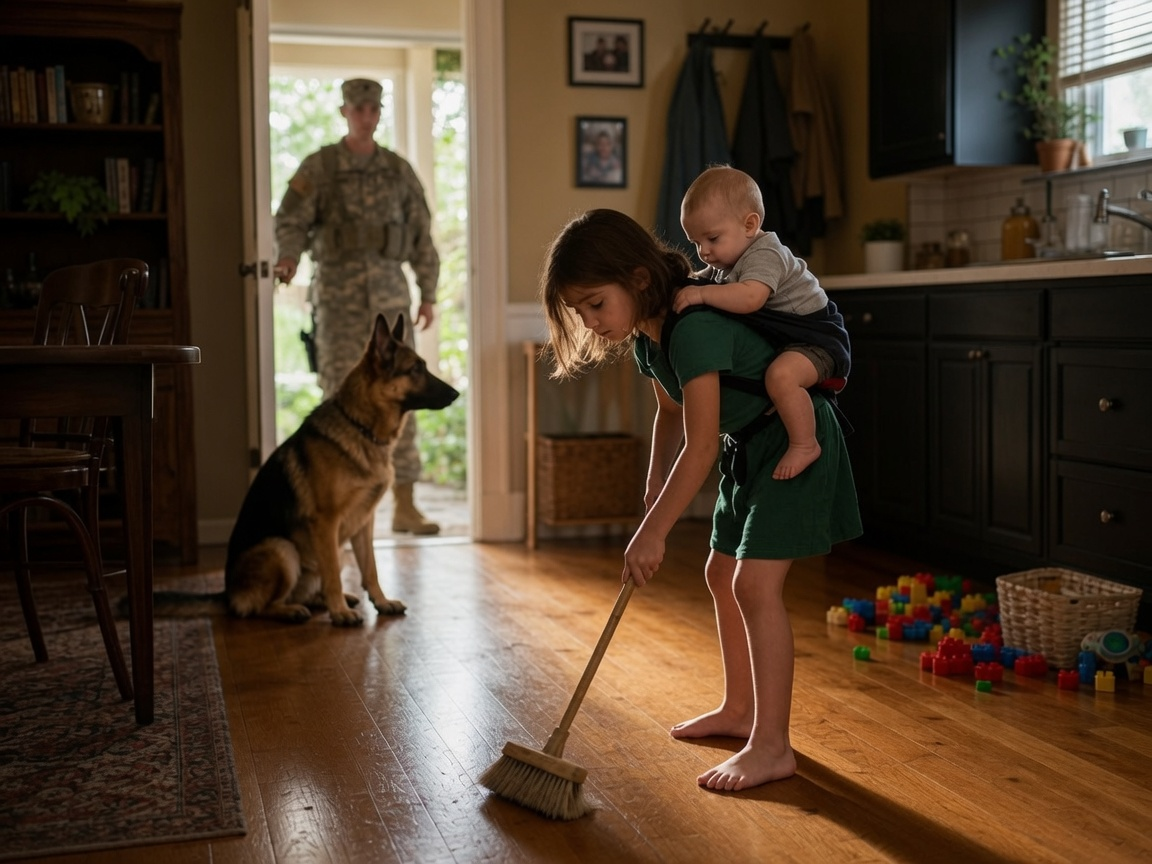
Marcus had always believed his service was for his family’s future. His wife, Sarah, had assured him she could handle things while he was gone. Their last video call before he shipped out had been filled with promises and smiles. But reality at home had crumbled quietly. Sarah had struggled with depression and eventually left, seeking escape from the pressures of solo parenting. Elena stepped up without hesitation. She made lunches, helped with homework, cooked simple meals, and kept Lucas from asking too many questions about where Mommy went. Neighbors assumed the kids were just “independent,” but behind closed doors, Elena carried burdens no child should bear. When Marcus walked through the front door of their modest home, the fridge was nearly empty, Lucas clung to his sister like a lifeline, and the weight of unspoken hardship hung heavy in the air.
The first few days were a blur of emotion. Marcus listened as Elena recounted the nights she stayed awake worrying about bills, the school calls she handled alone, and the way Lucas would cry for their mother in his sleep. Guilt crashed over him like a wave. He had fought for freedom overseas while his children fought for stability at home. Sarah’s departure left a void filled by a young girl who grew up too fast. Marcus spent hours sitting on the floor with Lucas, reading stories and promising he would never leave again. With Elena, the conversations were harder — she had become the parent, and letting go of that role wasn’t easy. The soldier who had led men in combat now felt lost in his own living room, unsure how to reconnect with children who had changed so much.
Rebuilding wasn’t linear or simple. Marcus faced sleepless nights replaying every missed moment. He sought help from veteran support groups and family counseling, learning that many military families carry similar invisible scars. Elena struggled with trusting adults again, while Lucas battled nightmares and separation anxiety. Marcus made practical changes too — securing stable work closer to home, creating new routines, and slowly restoring the sense of security his absence had shaken. He taught Elena it was okay to be a kid again, encouraging her to join soccer and spend time with friends. For Lucas, he became the steady presence at bedtime, chasing away fears with patience and love. The family that had fractured under pressure began piecing itself back together through small, consistent acts of presence.
This experience highlighted the often-overlooked challenges military families face. Deployments create ripple effects that extend far beyond the service member. Children left behind can develop resilience but also deep-seated fears of abandonment. Spouses may crumble under the weight of solo parenting, leading to situations no one anticipates. Marcus’s story mirrors thousands of others where the hero returns only to discover the home front needs just as much courage as the battlefield. It also shows the power of community — neighbors, teachers, and veteran organizations stepped in once the truth emerged, offering meals, childcare help, and emotional support that made rebuilding possible.
Through therapy and honest conversations, Marcus and his children addressed the pain head-on. Elena shared how scared she had felt managing everything alone. Lucas admitted he sometimes believed his father wasn’t coming back. These talks, though difficult, strengthened their bond. Marcus learned to listen without trying to “fix” everything immediately — a skill that proved vital for healing. He also reached out to Sarah, not for reconciliation but for closure and co-parenting clarity, putting the children’s needs first. The soldier who once measured success by missions completed now measured it by bedtime hugs and school drop-offs.
Over time, new traditions formed. Family game nights replaced the silence that once filled evenings. Weekend hikes helped them reconnect with nature and each other. Marcus volunteered with local military family support networks, sharing his story to help others avoid similar heartbreaks. Elena blossomed into a confident young woman who still carried strength from her experiences but no longer bore them alone. Lucas grew playful and secure, his laughter filling the house once more. The family that had been broken apart by duty and hardship emerged stronger, with deeper appreciation for the time they shared.
This powerful journey offers important lessons for any family navigating separation, loss, or crisis. First, children are incredibly resilient but need permission to remain children even when circumstances force them to grow up fast. Second, open communication during and after deployments can prevent emotional distance from becoming permanent. Third, seeking help is a sign of strength, not weakness — whether through counseling, community resources, or veteran programs. And finally, rebuilding takes patience, consistency, and the willingness to face uncomfortable truths together.
For military families currently separated by service, or any parent feeling the strain of solo responsibilities, know that you are not alone. Resources exist — from family readiness groups to mental health support tailored for veterans and their loved ones. Marcus’s story reminds us that coming home is only the beginning. The real mission starts when you walk through that door and choose to fight for the hearts waiting inside. The soldier who returned to find his daughter raising his son alone discovered that true heroism often happens in living rooms, at kitchen tables, and during quiet bedtime talks.
Today, Marcus watches his children thrive with pride and gratitude. Elena is excelling in school and dreaming of college. Lucas talks excitedly about joining Little League. Their home feels warm and full of life again. The man who once carried heavy gear through dangerous territory now carries groceries and school backpacks, cherishing every ordinary moment. The family he fought to protect overseas became the family he fought even harder to rebuild at home. And in that rebuilding, they all found something beautiful — a love made stronger by the storms they weathered together.
If you’re carrying the weight of family separation or watching someone you love struggle with reintegration, remember that healing is possible. It starts with showing up, listening deeply, and choosing connection over guilt or resentment. Marcus’s journey from battlefield to broken home to renewed family proves that even after the deepest fractures, love and determination can create something whole again. The daughter who raised her brother alone and the soldier who came home to fight for them both now stand as testaments to resilience and the enduring power of family. Sometimes the hardest deployments are the ones that happen after you return — and sometimes they lead to the most meaningful victories of all.
Most Popular!
-
 Eggs, Cholesterol, and Timing: What Actually Matters for Most People
-
When a Partner Leaves With More Than a Suitcase: Protecting Yourself From Financial Betrayal
-
When Financial Support Meets Contempt: Recognizing Exploitation Inside a Marriage
-
Why Some Sensory Toys and Household “Hacks” Do Not Belong in the Microwave
-
When Grief Clouds Judgment: Misreading Silence and the Quiet Ways People Show Care
-
When One Partner Does All the Hosting: Recognizing Imbalance Before Resentment Takes Over
-
How Many Holes Are in a T-Shirt? What a Simple Puzzle Reveals About How We See
-
The Quiet Stories Inside Secondhand Objects: When a Thrift-Store Find Carries Someone Else’s History