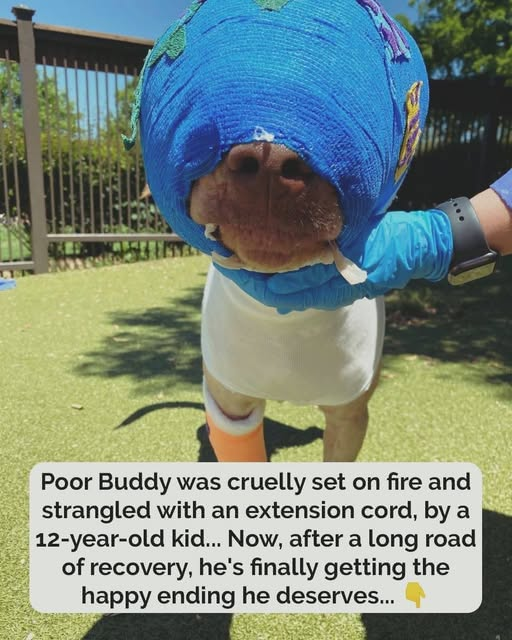
Animal cruelty stories have a way of breaking your heart and testing your faith in humanity. When news broke about a gentle dog in Mississippi suffering horrific burn injuries from a senseless attack, many assumed the worst. The friendly pup, later named Buddy, had endured unimaginable pain after someone deliberately set him on fire. His face, upper body, and parts of his fur were severely damaged, leaving him in critical condition with little hope of survival. Yet what followed became one of the most inspiring comeback tales in animal rescue history—a journey of dedicated veterinary care, community support, and the unbreakable spirit of a dog who refused to give up. Today, Buddy’s life stands as proof that even the darkest moments can lead to remarkable second chances filled with joy and healing.
Buddy’s ordeal began when he was discovered suffering from extensive burns that covered significant portions of his body. Reports from animal welfare organizations described a once-playful and affectionate dog who posed no threat to anyone, making the cruelty even more shocking. The injuries were consistent with intentional harm, sparking outrage and an outpouring of support from across the country. The Tunica Humane Society stepped in immediately, taking responsibility for his emergency care and launching a mission to save him when many others might have considered euthanasia the kinder option given the severity.
The road to recovery was anything but easy. Buddy required intensive medical treatment, including wound debridement, infection control, pain management, and specialized burn care protocols adapted from human medicine. Skin grafts, daily bandage changes, and nutritional support became part of his new reality. The physical pain must have been excruciating, yet Buddy’s gentle temperament shone through even in his weakest moments. Veterinary staff noted his willingness to accept care and his trusting eyes that seemed to understand help was on the way. This resilience in the face of trauma became the foundation for everything that followed.
Rehabilitation extended far beyond the initial hospital stay. Physical therapy helped restore mobility affected by scar tissue, while behavioral support addressed any fear or anxiety stemming from the attack. Volunteers and foster families played crucial roles, providing the consistent love and patience needed for emotional healing. Many burn survivors, whether human or animal, face long-term challenges like sensitivity to temperature, limited range of motion, and psychological trauma. Buddy’s team tackled each obstacle methodically, celebrating small victories like his first unassisted steps or the regrowth of healthy fur in previously damaged areas.
The financial and emotional burden on the rescue organization was immense. Crowdfunding campaigns and donations from compassionate strangers helped cover the thousands of dollars in veterinary bills. Social media updates about Buddy’s progress captured hearts worldwide, turning him into a symbol of hope for abused animals everywhere. People shared his story not just for the heartbreak but for the inspiration it provided—proof that dedicated care can overcome what seems impossible. His case also sparked broader conversations about animal protection laws, harsher penalties for cruelty, and the importance of reporting suspicious behavior.
As months turned into a year and beyond, Buddy’s transformation became nothing short of remarkable. Scars remained as visible reminders of his past, but they no longer defined him. He regained his playful energy, learned to trust again, and formed strong bonds with his caregivers and eventual adoptive family. The once-broken dog now enjoys daily walks, belly rubs, and the simple pleasures of a safe, loving home. His story resonates because it mirrors the human capacity for recovery while highlighting the unique healing power of animals who forgive and thrive despite betrayal by our species.
Buddy’s journey offers powerful lessons about resilience that extend beyond animal welfare. Trauma, whether physical or emotional, changes us, but it doesn’t have to destroy us. With the right support system, time, and determination, healing unfolds in unexpected ways. For pet owners, his experience underscores the importance of vigilance, spaying/neutering, and microchipping to prevent animals from ending up in dangerous situations. It also reminds us that adopting rescue animals with special needs can be incredibly rewarding, as their capacity for love often exceeds what we give them.
Communities play a vital role in cases like Buddy’s. The widespread attention and donations not only funded his care but raised awareness about animal cruelty prevention. Schools, local organizations, and online platforms used his story to educate people about recognizing signs of abuse and the resources available for reporting. Stronger laws and better enforcement are essential, but cultural shifts toward greater compassion create the most lasting change. Buddy became more than just one dog—he symbolized the fight against indifference and the triumph of kindness.
For anyone who has faced their own version of a “brutal attack”—whether illness, accident, loss, or violence—Buddy’s recovery serves as encouragement. Progress often feels slow and nonlinear, with setbacks that test resolve. Yet consistent care, support from others, and small daily wins accumulate into profound transformation. Mental health support, physical rehabilitation, and a nurturing environment make all the difference. Buddy couldn’t advocate for himself, but humans stepped up in ways that restored his faith in the world.
Adoption stories like his also challenge the misconception that animals with visible scars or special needs are less desirable. In reality, many become the most loyal and appreciative companions precisely because they know what it means to be given another chance. Potential adopters considering a dog with a difficult past should focus on the individual personality rather than the history. With patience and understanding, these animals often blossom into incredible family members.
The long-term outlook for Buddy remains bright. He continues to receive regular veterinary check-ups to monitor any lingering effects of the burns, but his quality of life is excellent. His adoptive family shares regular updates showing a happy, energetic dog who loves playing, cuddling, and simply being part of a pack. The contrast between his early suffering and current joy couldn’t be starker, offering hope to everyone involved in rescue work that their efforts truly matter.
This case also highlights the critical work of organizations like the Tunica Humane Society and similar groups nationwide. They operate on tight budgets with enormous hearts, often stretching resources to save animals others might overlook. Supporting these groups through donations, volunteering, or fostering directly impacts lives like Buddy’s. Public pressure for accountability in cruelty cases also drives systemic improvements, ensuring fewer animals endure what Buddy did.
Ultimately, Buddy’s remarkable life today stands as a beacon of what’s possible when compassion meets action. From the depths of pain and near-death, he emerged stronger, surrounded by people who refused to let cruelty win. His story encourages us all to be more vigilant, more kind, and more hopeful in the face of darkness. Whether you’re an animal lover, a survivor of personal trauma, or simply someone moved by tales of resilience, Buddy proves that healing is real and second chances can be extraordinary.
The gentle dog who once fought for his life now enjoys peaceful days filled with love, play, and security. His journey from victim to inspiration reminds us never to underestimate the power of care and community. In a world that can sometimes feel harsh, stories like his restore faith that goodness prevails and that every life, no matter how broken it seems, holds potential for beauty and joy. If Buddy can overcome what he did, perhaps we all can find the strength to keep moving forward toward our own remarkable recoveries.
Most Popular!
-
 The Haunting Last Words That Echoed After a Young Woman Plunged to Her Death in a Horrific Bungee Jump Tragedy
-
The Haunting Last Words That Echoed After a Young Woman Plunged to Her Death in a Horrific Bungee Jump Tragedy
-
From Broken Family Chaos to Hollywood Stardom: How One Woman Turned Early Heartbreak Into Unstoppable Success
-
Why Your Body Odor Changes as You Age — And What You Can Actually Do About It
-
The Janitor’s Quiet Dignity: How His Granddaughter’s Graduation Speech Exposed Years of Cruelty and Changed Everything
-
The Neighbor Who Destroyed My Late Husband’s Final Gift to Our Daughter Learned the Hard Way That Some Things Can’t Be Painted Over
-
The Silent Invader Lurking in Millions of Bodies: Why HPV Could Be Hiding in You Right Now
-
That “Minor” Dizzy Spell Could Be Your Brain’s Desperate Warning of a Mini-Stroke—Here’s Why You Must Never Ignore It