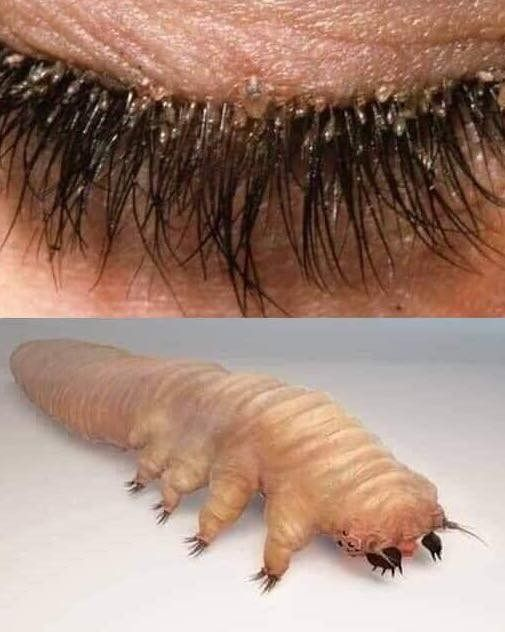
I’ll never forget the moment my eye doctor casually mentioned it during a routine check-up. I had been complaining about persistent dryness and itchiness around my eyes for months. After a quick examination under a special microscope, he looked at me and said, “You have Demodex mites. Most people do.” I laughed nervously, thinking it was a joke. Then he showed me the magnified image on his screen — tiny worm-like creatures crawling across my eyelashes like they owned the place. I felt my stomach turn. These microscopic parasites had been living on my face the entire time, and I had no idea.
Demodex mites are eight-legged arachnids so small that thousands can live on a single eyelash without you ever noticing. There are two main species that call humans home: Demodex folliculorum, which lives in hair follicles, and Demodex brevis, which prefers oil glands. They spend most of their short lives (about two to three weeks) eating dead skin cells, oils, and bacteria. At night, they come out to mate and lay eggs, crawling across your face while you sleep. The thought alone is enough to make anyone’s skin crawl.
What makes these parasites particularly unsettling is how common they are. Studies suggest that nearly all adults over the age of 60 have them, and a large percentage of younger people do as well. They’re passed through close contact — sharing towels, pillows, or even just rubbing eyes after touching someone else’s face. Most of the time, they live in harmony with your body, causing no noticeable problems. But when their population explodes, they can trigger inflammation, redness, and a condition called demodicosis that feels like a never-ending case of stubborn pink eye or rosacea.
The symptoms can be sneaky. Many people blame their dry, itchy, or crusty eyes on allergies, screen time, or aging. In reality, an overgrowth of mites might be the real culprit. You might notice increased lash loss, a gritty feeling like sand in your eyes, or small white bumps along the lash line. Some people develop chronic blepharitis (inflammation of the eyelids) that doesn’t respond to normal treatments. If you’ve been struggling with eye issues that won’t go away, those tiny residents could be the hidden cause.
The good news is that you’re not powerless against them. Simple daily habits can help keep their numbers in check. Using a gentle eyelid cleanser with tea tree oil has been shown to be particularly effective. Warm compresses followed by careful lid scrubbing can physically remove excess mites and their waste. Avoiding heavy eye makeup and regularly washing pillowcases in hot water also makes a big difference. For more severe cases, doctors can prescribe specific treatments that target the mites directly.
What continues to fascinate researchers is the complex relationship between these parasites and our immune systems. In healthy individuals, the body keeps their population under control. But when immunity dips — due to stress, illness, or age — the mites can multiply rapidly and cause problems. This delicate balance explains why some people live with them for decades without symptoms while others suddenly develop issues out of nowhere.
Beyond the physical discomfort, there’s a psychological layer to this discovery that many people struggle with. Learning that tiny creatures are living on your face can trigger feelings of disgust and anxiety. But the truth is, our bodies are ecosystems hosting trillions of microorganisms. Most of them are either harmless or actually beneficial. Demodex mites are part of that natural balance — until they’re not.
The key takeaway isn’t to panic, but to stay proactive about eye health. Regular eyelid hygiene, especially as we age, can prevent many common problems before they start. If you’re dealing with persistent eye irritation, don’t dismiss it as “normal aging.” A simple visit to an eye doctor could reveal whether these microscopic tenants have overstayed their welcome.
I’ve changed my daily routine since learning about my own uninvited guests. A gentle lid scrub every morning and night has made a noticeable difference in how my eyes feel. I’ve also become more mindful about not sharing towels or eye makeup with others. These small habits feel like a small price to pay for keeping those tiny parasites in check.
The human body is an incredible, complex world that we’re still learning to understand. The parasites living on your eyelashes right now are just one small reminder of how much is happening beneath the surface of our everyday lives. They don’t have to be terrifying — they can simply be another reason to take better care of ourselves.
If your eyes have been feeling off lately, consider this your gentle nudge to pay attention. Those tiny creatures might be trying to tell you something important. Listen to them before they multiply and cause bigger problems. Your future self — and your eyes — will thank you for it.
Most Popular!
-
 Eggs, Cholesterol, and Timing: What Actually Matters for Most People
-
When a Partner Leaves With More Than a Suitcase: Protecting Yourself From Financial Betrayal
-
When Financial Support Meets Contempt: Recognizing Exploitation Inside a Marriage
-
Why Some Sensory Toys and Household “Hacks” Do Not Belong in the Microwave
-
When Grief Clouds Judgment: Misreading Silence and the Quiet Ways People Show Care
-
When One Partner Does All the Hosting: Recognizing Imbalance Before Resentment Takes Over
-
How Many Holes Are in a T-Shirt? What a Simple Puzzle Reveals About How We See
-
The Quiet Stories Inside Secondhand Objects: When a Thrift-Store Find Carries Someone Else’s History