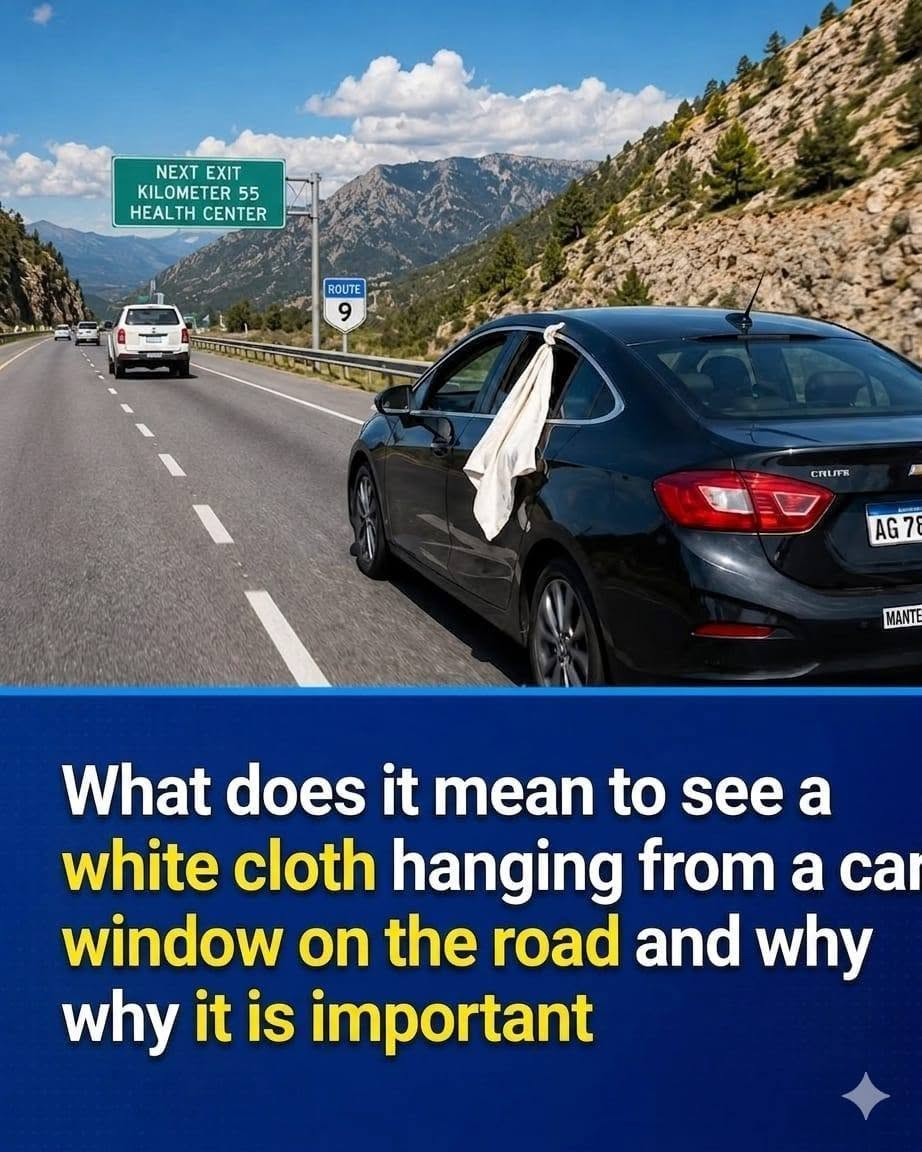
Driving along a busy highway or quiet back road, most of us focus on staying in our lane, watching traffic, and reaching our destination safely. But every so often, something unusual catches the eye—a vehicle pulled over with a simple piece of white fabric fluttering from the window or antenna. In that moment, many drivers feel a mix of curiosity, concern, and hesitation. Is it just litter caught by the wind? A forgotten rag? Or something more urgent? That unassuming white cloth carries a powerful, unspoken message that could mean the difference between life and death for someone stranded and vulnerable on the roadside.
This improvised signal has roots in practical necessity rather than any official handbook. When a car breaks down, a phone dies, or fuel runs out in an isolated spot, drivers often lack formal ways to communicate distress. A bright hazard light helps, but in daylight or heavy traffic it can blend in. Tying a white cloth—anything from a T-shirt to a handkerchief—creates high visibility that stands out against the vehicle and surroundings. It’s a universal, low-tech cry for attention that transcends language barriers and technology failures. For many, especially older drivers or those traveling alone, it represents a last resort when standard methods fall short.
The situations prompting this signal vary widely. A sudden flat tire on a remote stretch, a dead battery after forgetting to turn off headlights, or running out of gas far from the nearest station can leave anyone feeling exposed and helpless. More seriously, it might indicate a medical issue where the driver is experiencing chest pain, dizziness, or another emergency and can’t safely drive or call for help themselves. In group travel or convoy scenarios, it sometimes serves as a simple identifier to keep vehicles connected in heavy traffic. Regardless of the exact cause, the cloth signals vulnerability and a need for awareness from fellow road users.
One of the most important realities about this signal is what it does not mean. Contrary to some urban myths or wishful thinking, a white cloth does not grant special privileges. It doesn’t turn an ordinary car into an emergency vehicle with rights to ignore traffic laws, speed through congestion, or demand priority. Misunderstanding this can create dangerous situations where drivers assume others will yield or react differently. Legally and practically, the cloth is simply a marker of trouble, not a command for others to act in any specific way beyond basic caution.
When you spot a white cloth, your first and best response is heightened awareness rather than immediate action. Slow down as you approach, increase your following distance, and scan the scene carefully. Look for visible damage to the vehicle, people standing outside, or signs of immediate danger like smoke or poor positioning near traffic lanes. Rushing to help without assessing risks has tragically led to secondary accidents where good Samaritans become victims themselves on high-speed roads. Safety for everyone involved must come first.
Calling emergency services often proves the most effective way to provide real assistance. Modern phones make it simple to report the location, vehicle description, and observed details while continuing to drive safely. Dispatchers can send appropriate help—tow trucks, police, or medical responders—without putting additional civilians in harm’s way. This approach balances compassion with prudence, ensuring professionals trained for roadside emergencies handle the situation. In many areas, highway patrol or roadside assistance programs respond quickly once alerted.
If conditions appear safe and you feel equipped to stop, follow strict precautions. Choose a wide shoulder or protected area well away from moving traffic. Activate hazard lights, and if possible, keep your own vehicle between you and oncoming cars. Approach with care, remaining alert to the other driver’s condition and any potential threats. Offering water, a phone charger, or basic first aid can make a difference, but never attempt major repairs or tow someone yourself unless properly equipped. The goal is support, not becoming part of a bigger problem.
This simple signal highlights broader truths about road safety and human interdependence. Highways can feel isolating despite constant proximity to others, yet moments like these remind us how fragile mobility truly is. Mechanical failures, health episodes, or unexpected events can affect anyone regardless of vehicle reliability or preparation. Recognizing the white cloth encourages a culture of mutual vigilance where drivers look out for one another without reckless heroics. It bridges the gap between individual journeys and collective responsibility.
Preparation plays a key role in reducing the need for such signals while being ready if they appear. Keeping an emergency kit with water, snacks, a charged portable battery, reflective triangles, and a first aid kit provides peace of mind. Regularly maintaining your vehicle—checking tires, fluids, and battery—minimizes breakdowns. For long trips, sharing your route with someone and ensuring your phone is fully charged adds extra layers of security. Teaching younger drivers about these practices builds habits that can save lives down the road.
Technology has evolved roadside assistance options significantly. Many modern vehicles include built-in systems that automatically detect crashes and notify responders. Apps from auto clubs or insurance providers connect users to help with a tap. Yet in areas with poor signal or for older cars without these features, the white cloth remains a reliable backup. Combining traditional signals with digital tools creates the strongest safety net possible.
Communities and authorities continue working to improve responses to stranded motorists. Some regions have implemented dedicated “motorist assistance” patrols that cruise highways looking for exactly these situations. Public education campaigns raise awareness about safe ways to help or report issues. As drivers, staying informed about local laws regarding stopping on shoulders or obligations to assist can prevent legal complications while encouraging responsible actions.
The emotional side of encountering or using this signal deserves acknowledgment too. For the person displaying the cloth, hours of waiting in uncertainty can bring anxiety, frustration, or fear, especially at night or in bad weather. For passing drivers, the dilemma of whether and how to help weighs on the conscience. Finding the right balance—acting compassionately while prioritizing safety—strengthens our shared road culture. Small acts like a reliable report to authorities can provide immense relief to someone feeling invisible and alone.
Ultimately, that white cloth fluttering in the wind represents both vulnerability and hope. It’s a human acknowledgment that things go wrong and that we sometimes need others to bridge the gap. By understanding its true meaning—not as a demand for special treatment but as a quiet request for attention—we become better equipped to respond effectively. The next time you see one, let it serve as a prompt to slow down, assess, and choose the safest form of help available.
Road travel will always carry risks, but knowledge and thoughtful responses reduce them substantially. Recognizing this hidden code on windshields transforms potential confusion into opportunity for positive impact. It reinforces that behind every vehicle is a person with their own story, challenges, and need for connection in difficult moments. Staying alert, prepared, and responsibly compassionate turns ordinary drivers into quiet guardians of the road, ensuring that when trouble strikes, help arrives through careful, informed actions rather than chance. In a world of fast-moving steel and glass, this simple piece of fabric reminds us of the enduring power of human awareness and care.
Most Popular!
-
 The Janitor’s Quiet Dignity: How His Granddaughter’s Graduation Speech Exposed Years of Cruelty and Changed Everything
-
The Neighbor Who Destroyed My Late Husband’s Final Gift to Our Daughter Learned the Hard Way That Some Things Can’t Be Painted Over
-
The Silent Invader Lurking in Millions of Bodies: Why HPV Could Be Hiding in You Right Now
-
That “Minor” Dizzy Spell Could Be Your Brain’s Desperate Warning of a Mini-Stroke—Here’s Why You Must Never Ignore It
-
The Heartbreaking Truth Brad Pitt’s Daughter Finally Shared About Growing Up With a Hollywood Icon
-
The Chilling Final Words of Oliver Tree: A Millionaire Musician’s Eerie Premonition Before His Tragic Death
-
Jennifer Lopez’s Stunning Pregnancy Announcement at 56 Sparks Hope and Conversations About Motherhood Later in Life
-
The Bride’s Heartless Lie About Her Dying Mother Exploded During Her Wedding Vows in the Most Shocking Way