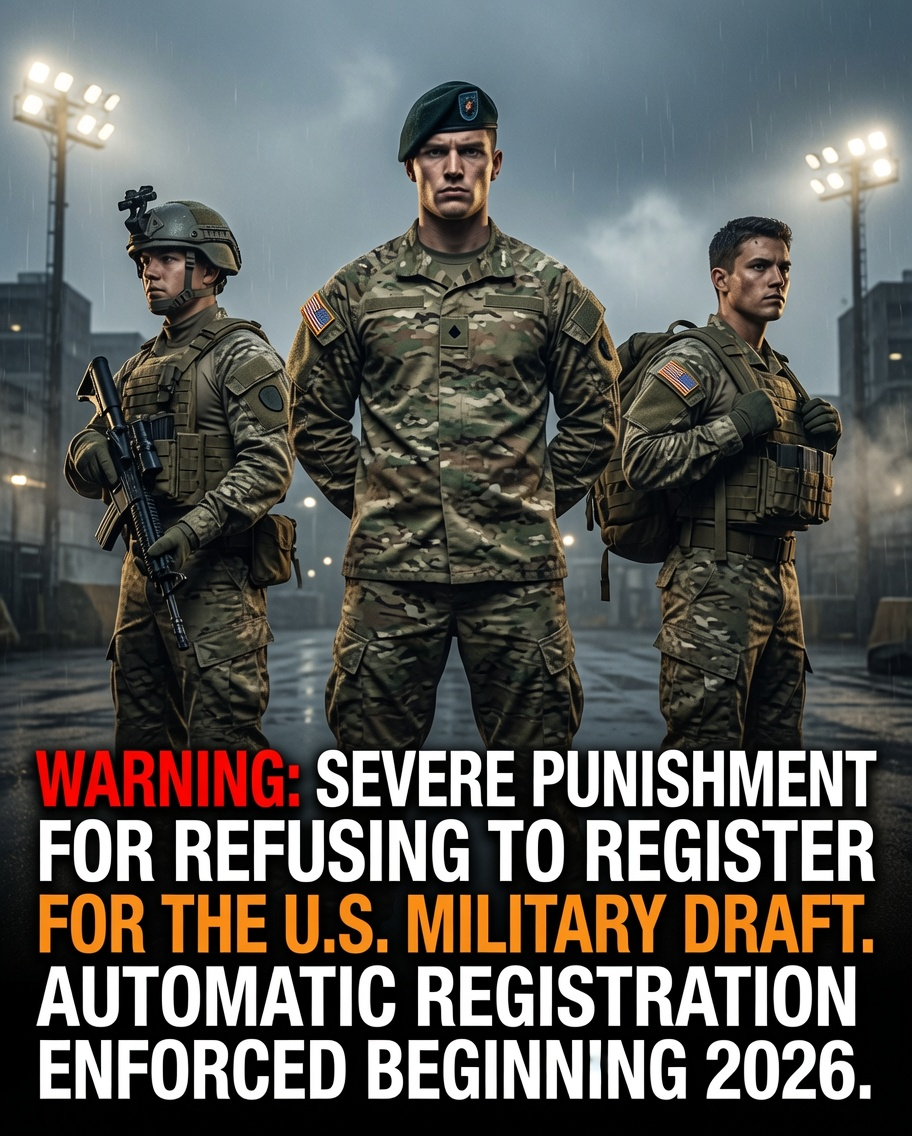
A significant policy change under consideration could fundamentally alter how the United States handles military draft registration. Reports indicate that beginning in 2026, all American men could face automatic enrollment in the Selective Service System, eliminating the current requirement for individuals to register manually. This shift represents a major update to a system that has remained largely unchanged for decades and has sparked intense debate about national security, individual rights, and preparedness in an increasingly uncertain global environment.
The Selective Service System currently requires men aged 18-25 to register, creating a database that could be used in the event of a national emergency requiring conscription. While the United States has maintained an all-volunteer force since 1973, the registration system remains in place as a contingency measure. Automatic registration would streamline this process by linking it directly to government databases, such as Social Security or driver’s license records.
Reasons behind the proposed change
Proponents argue that automatic registration improves national readiness and ensures fairness. In an era of rapid technological advancement and potential large-scale conflicts, maintaining an accurate, up-to-date pool of eligible individuals becomes increasingly important. Manual registration currently sees compliance rates that, while high, still leave gaps that automatic systems could close. Supporters also note that this change reduces administrative burden and potential penalties for those who forget or are unaware of registration requirements.
Critics express concerns about government overreach and the implications for personal liberty. Some worry that easier access to draft registration could make future conscription more likely, particularly amid ongoing international tensions. Others raise questions about privacy, data security, and whether such systems disproportionately affect certain demographic groups. Civil liberties organizations have called for careful examination of the proposal’s broader impacts.
What this would mean for young men and families
If implemented, automatic registration would mean that most young men would be enrolled without taking additional action around their 18th birthday. This could simplify life transitions but also remove an element of personal agency in the process. Families would likely receive notifications about the change, and educational institutions might play a role in informing students.
The policy would not affect women, who remain exempt from Selective Service registration under current law. This distinction continues to generate discussion about equality and modern military needs, as women serve in virtually all roles in the volunteer force.
Historical context and current relevance
The United States last used the draft during the Vietnam War era, an experience that left deep societal divisions. Since shifting to an all-volunteer military, the country has relied on recruitment and retention to maintain forces. However, recent recruiting challenges across branches and evolving global threats have prompted renewed conversations about preparedness and manpower strategies.
Automatic registration represents a technological update rather than a return to conscription itself. Officials emphasize that no draft is currently planned or imminent. The change focuses on modernizing the standby system to better reflect contemporary administrative capabilities.
Public reaction and next steps
News of the potential policy shift has generated mixed responses. Some view it as a commonsense update for national security, while others see it as another step toward expanded government control. Young men and their families are seeking clear information about how this would work in practice and what rights and options remain available.
Congressional committees are expected to examine the proposal thoroughly, with input from military leaders, civil liberties experts, and affected communities. Any final implementation would likely include public comment periods and opportunities for legislative refinement.
Staying informed on military service policies
For families with young men approaching registration age, staying informed through official Selective Service and government sources remains important. Understanding both rights and responsibilities helps navigate policy changes effectively. Broader conversations about military service, national defense strategy, and civic obligations will likely continue as this proposal moves forward.
The potential move to automatic draft registration reflects ongoing efforts to balance security needs with individual liberties in the 21st century. As discussions continue, the focus remains on creating systems that protect the nation while respecting the principles that define American society. Young Americans and their families deserve clear communication and thoughtful policy-making as these important decisions unfold.
Most Popular!
-
 Mystery Deepens After Elderly Woman’s Disappearance as Investigators Search for Answers
-
Marriage Burnout – Recognizing the Signs and Finding Your Way Back
-
Jennifer Garner’s Heartwarming Actions Towards Wheelchair-Bound Homeless Man
-
If There Is a Will, There Is a Way – The Incredible Transformation of This Miserable Kitchen
-
Shelley Fabares Offered a Tender and Nostalgic Rendition of “Johnny Angel”
-
If You Hit Your Head, Watch Out for These Symptoms That Can Show Up Even Days Later
-
Baggage Handler Reveals Shocking Reason You Should Never Tie a Ribbon on Your Luggage
-
Motorcycle Club Arrested After Protecting a Waitress When Police Refused Help