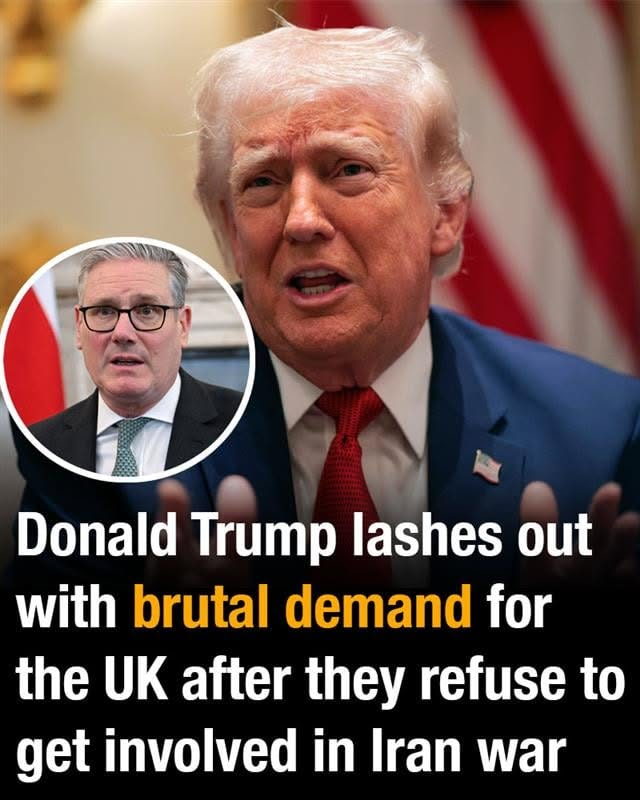
The phone call between two longtime allies was supposed to be routine. Instead, it ended in sharp words and a stark warning that has sent ripples through diplomatic circles on both sides of the Atlantic. Former President Donald Trump reportedly told British officials that if the UK refuses to support potential military action against Iran, the United States might reconsider its longstanding “special relationship” with Britain. The threat, whether strategic posturing or genuine frustration, has ignited intense debate about the future of one of the world’s most important alliances, the shifting dynamics of global power, and what happens when historic partners find themselves on opposite sides of a volatile issue.
The “special relationship” between the United States and the United Kingdom has endured for decades through world wars, Cold War tensions, and countless international crises. It is built on shared values, intelligence cooperation, military interoperability, and deep cultural ties. British and American forces have fought side by side in nearly every major conflict since World War II. Yet this latest friction over Iran policy reveals how even the strongest alliances can strain under pressure from diverging national interests, domestic politics, and differing threat assessments. Trump’s reported comments reflect a growing impatience with what he sees as European hesitation in confronting aggressive actors in the Middle East.
At the heart of the dispute lies Iran’s increasingly assertive behavior — its nuclear program, support for proxy militias, and repeated threats against Israel and Western interests. Trump has long taken a hard line on Tehran, viewing its regime as a destabilizing force that requires firm pressure rather than diplomatic accommodation. British leaders, while sharing concerns about Iran’s activities, have traditionally favored a more measured approach involving sanctions, negotiations, and multilateral institutions. This philosophical difference has existed for years, but recent escalations appear to have brought it to a breaking point in private conversations.
The threat to “abandon” the special relationship, even if rhetorical, carries significant symbolic weight. It suggests that Trump sees alliances not as permanent fixtures but as relationships that must deliver mutual benefit. Supporters argue this pragmatic stance forces allies to share the burden of global security rather than relying on American power while criticizing American decisions. Critics warn that such language risks damaging trust built over generations and weakening collective deterrence against common threats. Either way, the reported exchange highlights how personal diplomacy styles can dramatically influence international relations.
For the United Kingdom, the situation is particularly delicate. Britain has historically positioned itself as America’s closest partner, gaining influence and security benefits from that bond. A perceived cooling of relations could have economic, military, and diplomatic consequences. British officials are now navigating a difficult balancing act — maintaining their own strategic autonomy on Iran while preserving the vital partnership with Washington. The episode also comes at a time when the UK is recalibrating its global role post-Brexit, making the strength of transatlantic ties even more critical.
Trump’s approach reflects a broader philosophy he has championed for years: America First does not mean America alone, but it does mean expecting allies to contribute meaningfully to shared goals. During his presidency, he frequently pressed NATO members to increase defense spending and questioned trade deals that he believed disadvantaged the United States. His comments regarding Iran appear consistent with that worldview — alliances should be transactional to some degree, delivering clear benefits rather than serving as one-sided arrangements. Whether one agrees with this perspective or not, it has undeniably forced difficult conversations in capitals around the world.
The Iranian regime itself has watched these developments closely. Tehran has long sought to exploit divisions between Western allies, using diplomacy, economic incentives, and proxy conflicts to weaken unified opposition. A visible rift between Washington and London would represent a significant propaganda victory for Iran, potentially emboldening further destabilizing actions in the region. This reality adds urgency to efforts to resolve the current tensions and present a united front on issues like nuclear proliferation and regional security.
Beyond the immediate diplomatic friction, this episode raises important questions about the future of transatlantic relations in a changing world. As rising powers challenge Western dominance and new threats emerge, traditional alliances must evolve to remain relevant. The United States and United Kingdom share foundational values and strategic interests that have endured for generations. Finding ways to navigate disagreements without damaging the core partnership will be essential for addressing challenges from authoritarian regimes, economic competition, and global security threats.
For observers on both sides of the Atlantic, the reported exchange serves as a reminder that even the strongest friendships require honest communication and mutual respect. Alliances are not automatic — they are maintained through shared sacrifice, aligned interests, and the willingness to work through differences. Trump’s blunt style may unsettle traditional diplomats, but it also forces clarity on issues that have sometimes been papered over with vague commitments.
As this diplomatic drama continues to unfold, one thing remains clear: the relationship between the United States and the United Kingdom is too important to fail. Both nations benefit enormously from their partnership, and both face common challenges that are best addressed together. Whether through public statements, private negotiations, or quiet backchannel diplomacy, finding common ground on Iran and other pressing issues will test the resilience of a relationship that has shaped global affairs for nearly a century.
The reported threat from Trump to reconsider the special relationship may ultimately prove to be a negotiating tactic rather than a permanent shift. Yet it has already succeeded in drawing attention to legitimate questions about burden-sharing, strategic alignment, and the future of Western alliances. For the United Kingdom, the episode offers an opportunity to articulate its vision for the partnership and demonstrate its value as a reliable ally. For the United States, it reinforces the need for clear expectations and mutual commitment from its closest partners.
In the end, strong alliances are built on realism as much as idealism. They require honest assessments of capabilities, interests, and willingness to act when it matters most. The current tensions over Iran policy may strain the special relationship, but they also provide an opportunity to strengthen it through clearer communication and renewed purpose. As both nations navigate an increasingly complex world, their ability to work through disagreements while maintaining core cooperation will continue to shape not only their bilateral ties but the broader international order for years to come.
The world will be watching to see how Washington and London resolve this latest challenge to their historic partnership. The stakes are high, but so is the potential for renewed cooperation on the critical issues facing both nations and their allies. In diplomacy, as in any important relationship, honest friction can sometimes lead to stronger foundations if handled with wisdom and mutual respect.
Most Popular!
-
 Global Tensions Explode as Ceasefire Emerges and Greta Thunberg Fires Back at Trump in Brutal Clash
-
The Court of the 43rd President: Why George W. Bush’s Shocking New WNBA Role Is the Full-Court Press No One Expected
-
Deep Beneath the Earth, Iranian Missile Cities Reveal Shocking New Threat to Global Security
-
Jimmy Kimmel Blows the Whistle on Melania Trump as Late-Night Host Exposes Secret Photo Following Her Shocking White House Denial
-
Tehran Claims Direct Strike on USS Abraham Lincoln as Regional Conflict Reaches Breaking Point
-
Melania Trump Breaks Silence on Epstein Scandal Only to Face Blistering Backlash from Survivors
-
Melania Trump Breaks After Years of Silence to Denounce Epstein Links as Icy New Evidence Surfaces
-
Five Years After Our Divorce, I Took My Triplets to My Ex-Husband’s Wedding — And His Family’s Reaction Was Chilling