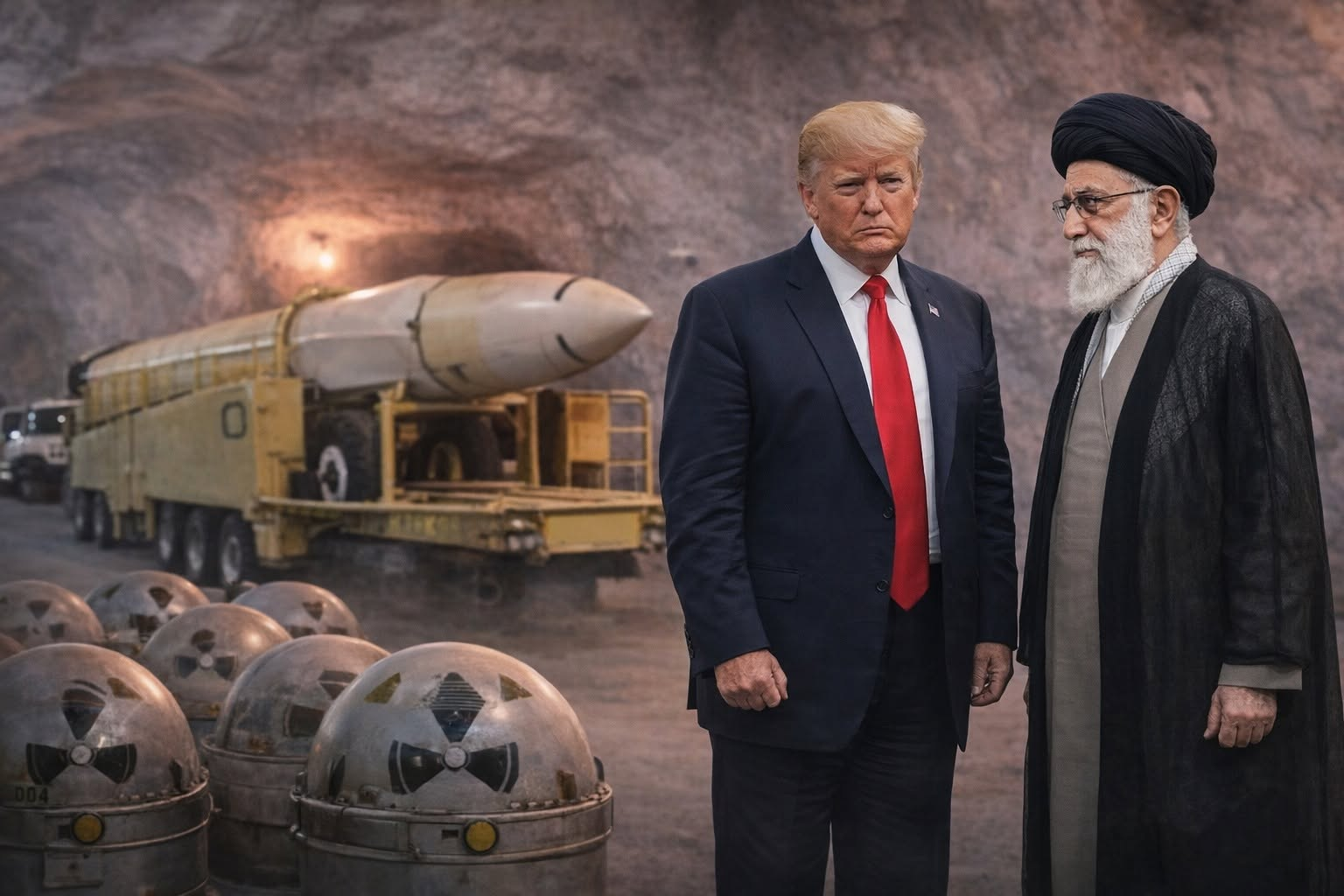
Far below the surface of Iran’s rugged terrain lies a network that has defense analysts and world leaders deeply concerned. Recent intelligence reports and satellite imagery have revealed extensive underground facilities — massive “missile cities” designed to store, protect, and potentially launch a vast arsenal with minimal warning. What was once suspected is now increasingly confirmed: Iran has invested heavily in creating hardened, deeply buried infrastructure that could dramatically alter the strategic balance in the Middle East and beyond. This development raises urgent questions about deterrence, proliferation risks, and the challenges of monitoring threats in an era of advanced tunneling and concealment technology.
Iran’s underground military expansion didn’t happen overnight. For years, the country has openly boasted about its missile program while quietly building redundant, survivable facilities. These subterranean cities are reportedly carved deep into mountains and reinforced with concrete and advanced engineering to withstand airstrikes, including those using bunker-busting munitions. Some facilities are said to stretch for miles, complete with living quarters, maintenance areas, and rapid-launch capabilities. The goal appears straightforward: ensure that even in the event of conflict, Iran retains a potent second-strike capability that would be extremely difficult for adversaries to neutralize completely.
The scale and sophistication of these sites represent a significant evolution in asymmetric warfare. Traditional military thinking often focuses on surface assets that can be targeted from the air. By moving critical capabilities underground, Iran aims to flip that calculation, forcing potential opponents to contemplate far more difficult and costly operations. Experts note that this strategy draws inspiration from historical examples like North Korea’s tunnel networks and China’s own underground facilities. What makes Iran’s version particularly concerning is its combination with an advancing ballistic missile program capable of reaching targets across the region and potentially beyond.
Global security implications are profound. Israel, Saudi Arabia, and other regional powers view these developments as an existential threat, especially given Iran’s support for proxy groups and its nuclear ambitions. The United States and its allies worry about the proliferation risks and the potential for miscalculation during crises. A single spark — whether a strike on Iranian territory or an attack attributed to Tehran — could rapidly escalate if underground missile forces are mobilized. The difficulty of accurately assessing damage to these buried sites adds another dangerous layer of uncertainty to any military contingency planning.
Intelligence agencies have been tracking this buildup for some time, but recent revelations have accelerated diplomatic efforts and defense posture adjustments. Satellite imagery, seismic monitoring, and human intelligence all point to a network far more extensive than previously understood. Some facilities are believed to house hundreds of missiles, including longer-range systems that could threaten Europe or U.S. bases. This reality has prompted calls for stronger sanctions, enhanced missile defense cooperation, and renewed focus on diplomatic solutions that address root causes of regional instability.
For ordinary citizens in the region and beyond, these underground cities represent more than abstract strategy — they symbolize a world where conflict can erupt with devastating speed and limited warning. Families in Israel, the Gulf states, and elsewhere live with the constant awareness that advanced weaponry is hidden just beneath the surface, ready to be unleashed. This psychological burden compounds the very real physical risks and fuels ongoing debates about security, deterrence, and the need for de-escalation.
The engineering behind these facilities is impressive, even as their purpose alarms many. Engineers have reportedly used techniques borrowed from mining and civil infrastructure projects to create vast halls deep underground. Ventilation systems, power generation, and communication networks allow sustained operations even if surface connections are severed. This level of self-sufficiency makes the sites formidable challenges for any potential military response. It also demonstrates Iran’s determination to maintain strategic autonomy despite international pressure.
International responses have varied. Some nations call for urgent negotiations and renewed attempts at a comprehensive agreement. Others advocate for stronger defensive measures, including expanded missile shields and joint military exercises. The United Nations and other bodies have expressed concern, though enforcement mechanisms remain limited. The situation underscores the limitations of global institutions when confronting determined state actors operating in their own territory.
As tensions simmer, the world watches closely for any signs of further escalation or diplomatic breakthroughs. The existence of these missile cities adds complexity to an already volatile region, where miscalculation could have consequences far beyond the Middle East. For policymakers, the challenge lies in deterring aggression without provoking the very conflict they seek to avoid. For citizens, it serves as a reminder that beneath the surface of international relations often lie preparations for scenarios few want to contemplate.
The story of Iran’s underground missile cities is still unfolding. What is clear is that they represent a significant shift in regional power dynamics and a new chapter in the long struggle to maintain stability in one of the world’s most critical areas. Understanding these developments is essential not just for strategists and diplomats, but for anyone who cares about global security and the hope for a more peaceful future. As technology and determination combine to create ever more sophisticated means of warfare, the need for wise diplomacy and strong deterrence becomes more important than ever. The earth beneath Iran may hide formidable capabilities, but the real test will be whether humanity can find ways to prevent them from ever being used.
Most Popular!
-
 Global Tensions Explode as Ceasefire Emerges and Greta Thunberg Fires Back at Trump in Brutal Clash
-
The Court of the 43rd President: Why George W. Bush’s Shocking New WNBA Role Is the Full-Court Press No One Expected
-
Jimmy Kimmel Blows the Whistle on Melania Trump as Late-Night Host Exposes Secret Photo Following Her Shocking White House Denial
-
Tehran Claims Direct Strike on USS Abraham Lincoln as Regional Conflict Reaches Breaking Point
-
Donald Trump Threatens to Abandon UK Over Iran War Refusal as Diplomatic Crisis Rocks the Special Relationship
-
Melania Trump Breaks Silence on Epstein Scandal Only to Face Blistering Backlash from Survivors
-
Melania Trump Breaks After Years of Silence to Denounce Epstein Links as Icy New Evidence Surfaces
-
Five Years After Our Divorce, I Took My Triplets to My Ex-Husband’s Wedding — And His Family’s Reaction Was Chilling