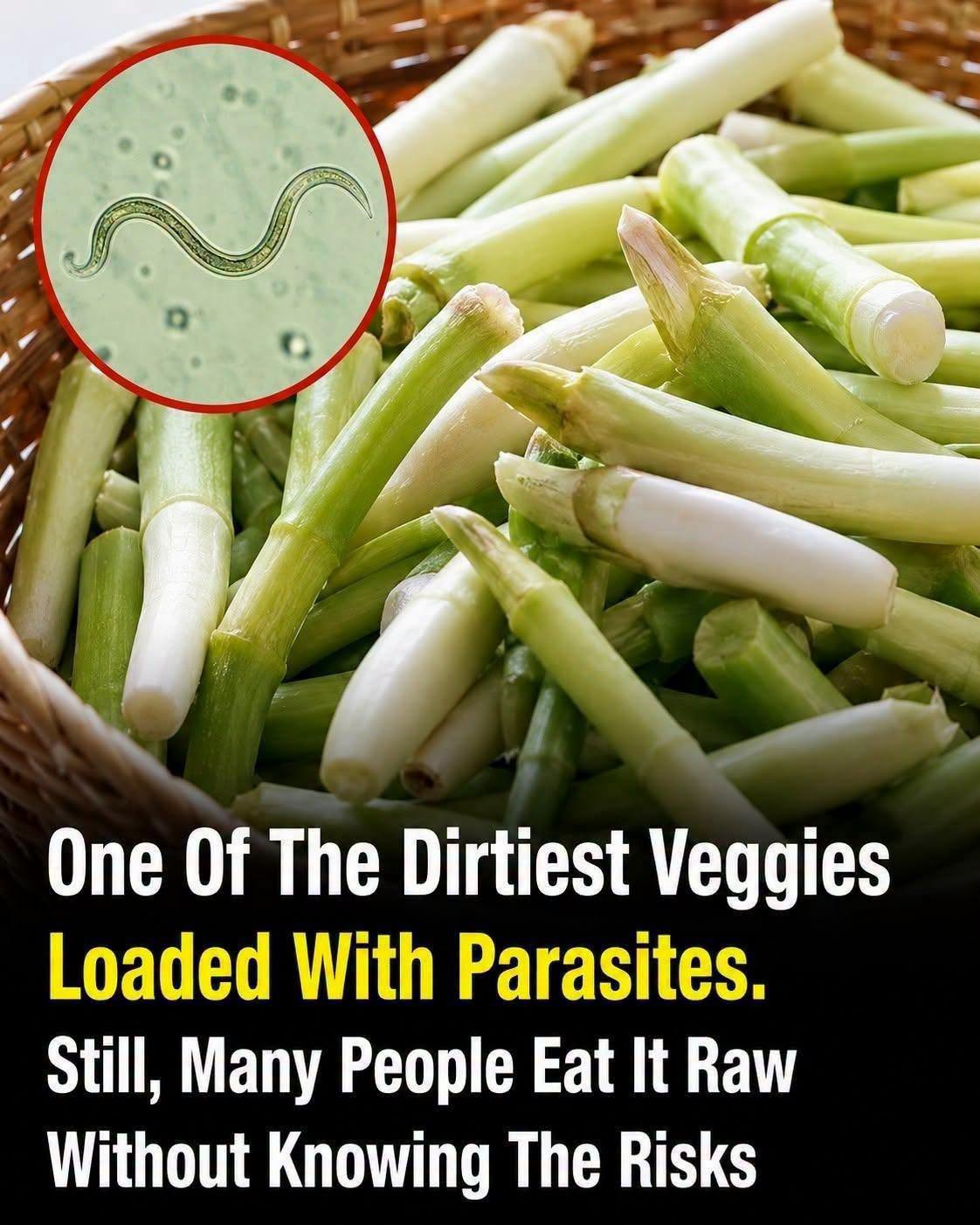
Green onions sit in nearly every refrigerator, ready to be sliced and scattered over soups, salads, tacos, and eggs. Their mild flavor and bright color make them one of the most convenient finishing touches in home cooking. Yet this everyday staple carries a quiet risk that many people overlook. Because green onions are almost always eaten raw and possess a layered structure that traps soil and moisture, they can harbor bacteria that simple rinsing does not remove.
Unlike many other vegetables that are cooked before eating, green onions rarely receive a high-heat “kill step.” The pathogens that may be present on their surfaces or trapped between the tightly wrapped layers can travel directly into the digestive system. Salmonella and E. coli are among the organisms most commonly associated with contaminated green onions. For healthy adults the resulting illness may be limited to temporary nausea and cramping. For young children, older adults, pregnant women, and anyone with a weakened immune system, the consequences can be more serious and may require medical attention.
The way green onions grow contributes to the problem. They develop in soil that can contain a wide range of microorganisms. Irrigation water, harvesting equipment, and packing facilities all offer additional opportunities for contamination. Once the onions reach the grocery store, the cool, moist conditions inside plastic bags or bunches can allow bacteria to survive and sometimes multiply. By the time the bunch arrives in a home refrigerator, the outer layers may look clean while the inner folds still hold microscopic hitchhikers.
Proper cleaning reduces but does not completely eliminate the risk. The most effective home method begins with removing the root ends and any damaged outer layers. The remaining stalks should be submerged in a bowl of cold water and gently rubbed, paying special attention to the white and light-green sections near the base where dirt and bacteria tend to collect. A second rinse under running water helps flush away loosened particles. Even after careful washing, some experts recommend using green onions promptly rather than storing them for long periods.
Storage practices also matter. Keeping green onions loosely wrapped in a paper towel inside a container or produce bag helps absorb excess moisture that bacteria prefer. Sealed plastic bags that trap humidity can accelerate spoilage and create more favorable conditions for microbial growth. Any bunch that develops a slimy texture, strong odor, or significant discoloration should be discarded without hesitation.
Cross-contamination is another pathway that is easy to miss. Cutting green onions on the same board used for raw meat, or handling them with unwashed hands after touching other foods, can transfer bacteria onto an otherwise carefully cleaned vegetable. Dedicating a separate cutting board to produce and washing hands thoroughly before and after preparation are simple habits that lower the overall risk in the kitchen.
Despite these concerns, green onions remain a nutritious addition to many meals. They provide vitamin K, vitamin C, folate, and dietary fiber, and their flavor enhances dishes without adding significant calories. The goal is not to eliminate them from the kitchen but to handle them with the same respect given to other raw foods that can carry pathogens. Awareness and consistent cleaning habits allow most people to continue enjoying them safely.
Restaurants and commercial kitchens follow stricter protocols precisely because of the known risks associated with raw green onions. Outbreaks linked to the vegetable have occurred in the past, prompting temporary recalls and increased scrutiny of growing and packing practices. Home cooks can apply scaled-down versions of the same caution by treating every bunch as potentially contaminated until it has been properly washed.
The phrase “silent killer” exaggerates the everyday danger for most healthy adults, yet it correctly highlights that the risk is invisible and easy to ignore. Unlike a piece of meat that looks or smells spoiled, contaminated green onions often appear perfectly fresh. That invisibility is what makes careful handling essential. A few extra minutes of cleaning and thoughtful storage convert a potential hazard into a safe and flavorful ingredient.
Ultimately the decision rests with each household. Some people choose to cook green onions briefly whenever possible, while others continue to use them raw after thorough washing. Both approaches can be reasonable when informed by an understanding of the underlying risks. The innocent-looking bunch in the refrigerator does not need to inspire fear, but it does deserve more attention than it usually receives. A small change in kitchen habits is enough to keep this common garnish on the safe side of the plate.
Most Popular!
-
 My Husband Abandoned Me 300 Miles From Home as a Joke — Then He Showed Up Five Years Later to Destroy Everything I Built
-
The Mystery Gear: Why Your Old Car Had a Secret “E” Button That Could Save Your Life and Your Wallet
-
The Brutal Truth: My Husband Tried to Control Me on Our Third Day of Marriage — He Didn’t Know Who He Was Dealing With
-
The Midnight Trap: Why One Single Ring Could Cost You Your Entire Life Savings
-
The Illegal Tag Myth: Why You’ve Been Living in Fear of Your Own Mattress
-
The BBQ Bomb: My Father-in-Law Treated My Home Like His Personal Five-Star Restaurant — Until I Served Him an $1,800 Reality Check
-
I Discovered My Mother-in-Law Selling My Priceless Wedding Dress at a Garage Sale — Then I Realized Why She Was Really Doing It
-
I Spent Years Hating My Ex-Husband for His Infidelity, But at His Funeral His Father Handed Me a Letter That Revealed the Sickening Truth