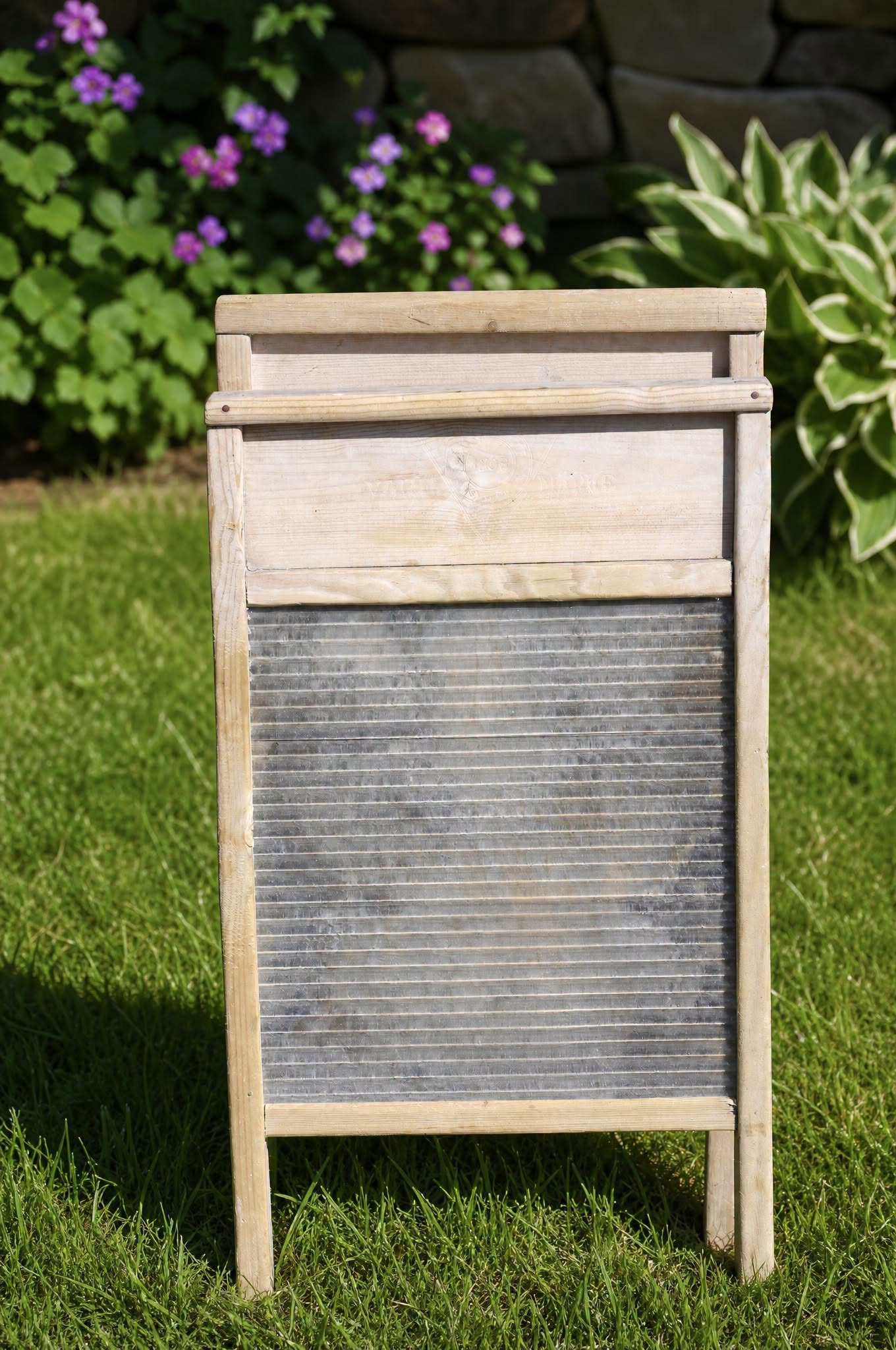
Yard sales are full of objects that once mattered and now sit unwanted on folding tables. Among the mismatched dishes and faded paperbacks, a heavy wooden frame fitted with two cast-iron rollers sometimes appears. Most people walk past it without a second glance. The device looks cumbersome, slightly rusted, and thoroughly outdated. Yet that simple machine once stood at the center of weekly household labor and represents a chapter of domestic history that modern convenience has almost erased.
The object is a laundry wringer. Before electric washing machines became common, wet clothes had to be twisted by hand to remove as much water as possible. The process was exhausting, especially with heavy fabrics such as work trousers, bed sheets, and winter garments. The wringer offered a mechanical advantage: two rollers pressed tightly together squeezed water from the fabric as it was cranked through, reducing both time and physical strain.
Using the device required care and strength. Clothes were fed carefully between the rollers while one person turned the handle. Fingers had to stay clear, and the pressure had to be adjusted for different thicknesses of cloth. A well-made wringer could extract far more water than hands alone, which meant clothes dried faster on the line and were lighter to carry. In an era when laundry was an all-day task, that difference was significant.
The arrival of electric washing machines with spin cycles made the wringer obsolete for most households. What had been a valuable labor-saving tool became an awkward piece of metal and wood that took up space in basements and laundry rooms. Many were discarded, sold cheaply, or left to rust. By the late twentieth century the device had shifted from everyday necessity to curious relic.
Finding one at a yard sale today often prompts a moment of recognition mixed with mild confusion. Younger buyers may not immediately understand its purpose. Older visitors sometimes pause, remembering the sound of the crank or the careful way their parents fed sheets through the rollers. The object carries memory even when its practical function has disappeared.
Historically the wringer belongs to a longer story of domestic technology. Laundry was once among the most physically demanding household chores. Water had to be heated, clothes scrubbed by hand or on a washboard, rinsed repeatedly, and then wrung before hanging. The work was repetitive, time-consuming, and often shared among women in a household or neighborhood. Mechanical improvements such as the wringer represented incremental relief rather than complete liberation.
That context gives the discarded machine a quiet dignity. It was not a luxury item. It was a practical response to the limits of human strength and the reality of heavy, wet fabric. Every turn of the handle was an effort to make an unavoidable task slightly more bearable. In that sense the wringer is a small monument to persistence and ingenuity under ordinary constraints.
Collectors and people interested in domestic history sometimes rescue these machines. Restored examples appear in museums of everyday life or as rustic decoration in homes that value visible reminders of earlier methods. Even unrestored ones retain a certain presence. The weight of the cast iron and the solid wooden frame communicate durability and seriousness of purpose that many modern plastic appliances lack.
There is also a broader reflection embedded in the object. Rapid technological change often renders previous solutions invisible. The wringer’s disappearance was progress, yet progress can make the labor it replaced harder to imagine. Looking at the machine forces a moment of recognition: someone once depended on this device, turned its handle week after week, and considered it an improvement worth owning.
In an age of fully automatic washers and dryers, the yard-sale wringer serves as a tangible link to a time when every stage of cleaning clothes required direct physical involvement. It does not need to be returned to active use to hold meaning. Its value now lies in the story it carries and the questions it raises about how much effort once stood behind the clean clothes we take for granted.
Next time a heavy, slightly mysterious metal-and-wood contraption appears among the items at a yard sale, it may be worth a closer look. What seems useless at first glance is often a surviving fragment of ordinary human history. The laundry wringer no longer earns its keep in the utility room, but it still earns a measure of respect for the work it once performed and the lives it quietly supported.
Most Popular!
-
 The Three-Dollar Miracle: How a Dust-Covered Vase Revealed a Heartbreaking Decades-Old Secret
-
The $80,000 Battle to Erase a Birthmark: Why One Mother Risked Everything for Her Daughter’s Future
-
The Silent Thief: Why Millions of Men Are Living with a Time Bomb They Can’t See
-
The Final Curtain Falls: Beloved Sanford and Son Legend Hal Williams Gone at 91
-
The Hidden Danger at the Funeral: Why a Viral Doctor Is Asking People to Rethink Kissing the Deceased
-
Behind the Spotlight: The Hidden Illness That Challenged Justin Bieber’s Life and Career
-
The Final Heartbeat: A Mother’s Devastating Goodbye That Will Leave You Shattered
-
The Grocery Store Killer: Is That Bloated Package Hiding a Deadly Secret?