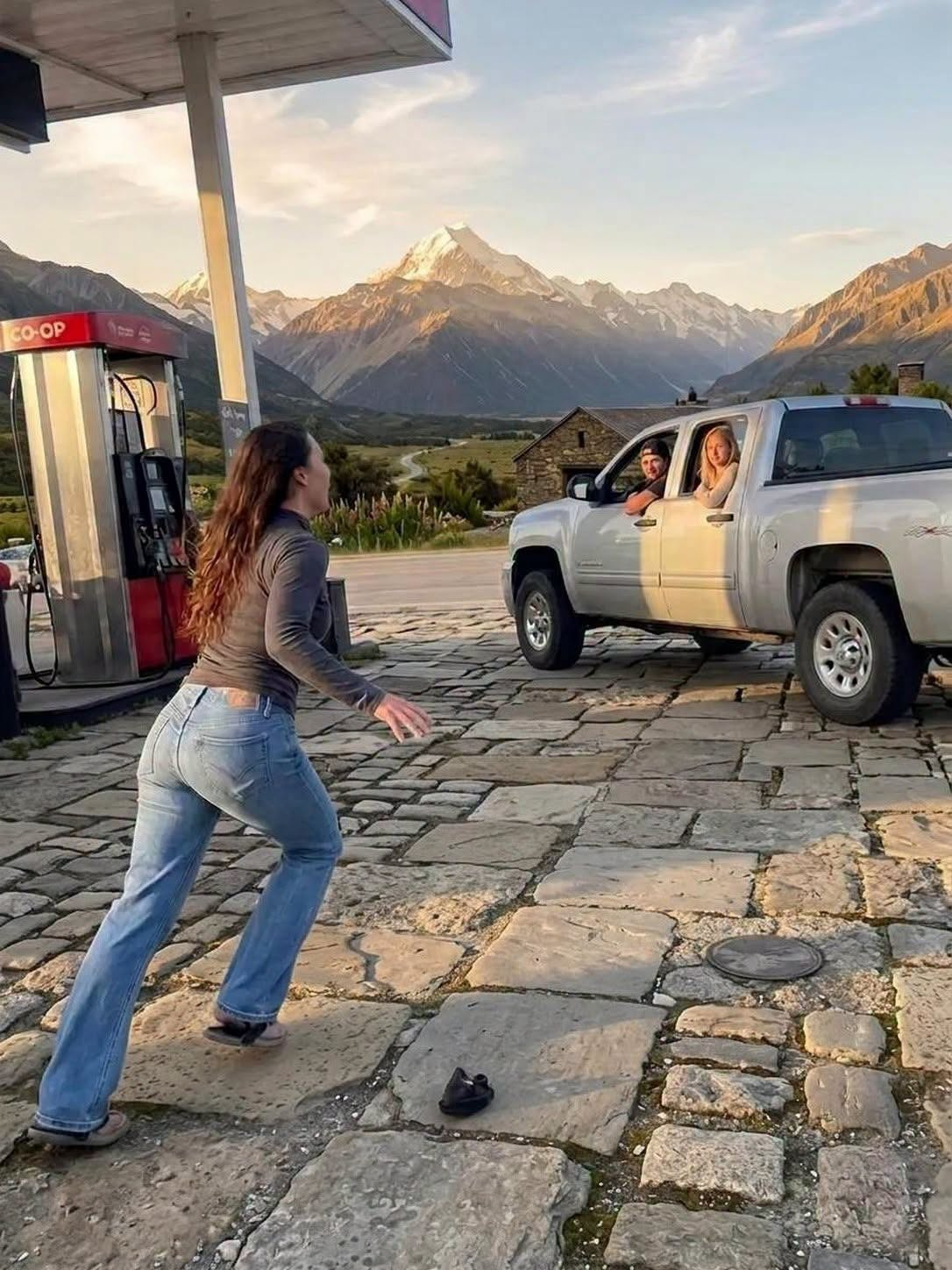
The sound of my husband’s laughter carried across the empty desert highway as his truck disappeared around the bend. I stood alone at a broken-down gas station with nothing but the clothes I was wearing. My wallet, phone, identification, and every practical means of getting home were locked inside the vehicle that had just driven away. A short text on a borrowed phone later claimed it was only a prank. In the blistering heat, with no water and no clear way forward, the distinction between a joke and abandonment felt meaningless.
His brothers had filmed the moment, treating my panic as content for an online audience. They expected me to wait until they decided the entertainment value had worn off. I chose not to wait. I accepted a ride from a stranger, scraped together enough money for a bus ticket, and began the long process of removing myself from a marriage that had turned my dignity into a recurring punchline. The decision was not dramatic. It was simply the first clear act of self-preservation I had taken in years.
I eventually reached the coastal home of my Aunt May. She asked few questions. She placed a modest sum of money on the table, pointed me toward a job at a local diner, and gave me the space to breathe. The quiet of that house felt unfamiliar after years of constant mockery and performance. For the first time in a long while I was allowed to exist without being the source of someone else’s amusement.
It was at the diner that I met Grant. He arrived one evening carrying an injury that needed immediate attention. I helped him until professional help arrived. In the days that followed he returned, and a cautious friendship began. He was a former detective who had left a career marked by institutional failure. I was a woman rebuilding after a marriage defined by humiliation. We recognized in each other the slow, unglamorous work of starting over.
Grant never pressed for explanations about the way I startled at sudden noises or checked locks more than once. He simply made the house more secure and treated safety as a normal expectation rather than a special favor. Over five years our connection deepened into a steady partnership. We built a home, a small security-consulting business, and a daily life grounded in consistency rather than performance. I stopped waiting for the next cruel joke. I stopped looking over my shoulder.
The past reasserted itself one afternoon when I returned to find Aunt May’s house had been entered. Nothing of obvious value was missing, but every drawer and folder had been carefully searched. Grant examined the scene with the habits of his former profession and concluded that the intruders had been looking for information rather than cash. Three days later the man who had left me in the desert stood on my front porch.
Kyle looked diminished. The confident figure who had once treated my distress as entertainment now appeared thinner, tired, and uncertain. He began a practiced apology, hands raised as if expecting the same accommodating response he had received in the past. Then he saw Grant standing in the hallway behind me. The hopeful expression drained from his face.
I did not invite him inside. I did not engage in conversation or demand explanations. I simply looked at the life he had played no part in building and closed the door. The man who had once controlled the narrative of my humiliation was left standing on the porch with nothing left to leverage. The moment required no raised voices or dramatic confrontation. The boundary itself was sufficient.
In the years since that afternoon the house has remained quiet in the ways that matter. The business continues. The partnership with Grant has grown deeper through ordinary shared days rather than crisis. I no longer measure my worth by someone else’s need for an audience. The desert highway and the abandoned gas station belong to a previous version of my life that no longer has access to the present one.
Leaving was not an act of sudden courage. It was the accumulation of too many moments in which my safety and dignity had been treated as optional. Rebuilding required time, practical support, and the decision to stop participating in a dynamic that only functioned when I accepted the role of punchline. The five years between the desert and the closed door were spent constructing a life that could not be easily dismantled by the return of the past.
Some people who once found humor in another person’s distress eventually discover that the target of their jokes has moved beyond their reach. When that realization arrives, it often comes too late to repair what was broken. I did not need Kyle to understand the full impact of what he had done. I needed only to protect the life I had built in his absence. Closing the door was the final and simplest expression of that protection.
Most Popular!
-
 The Mystery Gear: Why Your Old Car Had a Secret “E” Button That Could Save Your Life and Your Wallet
-
The Brutal Truth: My Husband Tried to Control Me on Our Third Day of Marriage — He Didn’t Know Who He Was Dealing With
-
The Midnight Trap: Why One Single Ring Could Cost You Your Entire Life Savings
-
Deadly Garnish: Why Your Innocent Kitchen Staple Is Actually a Silent Risk Lurking in Your Fridge
-
The Illegal Tag Myth: Why You’ve Been Living in Fear of Your Own Mattress
-
The BBQ Bomb: My Father-in-Law Treated My Home Like His Personal Five-Star Restaurant — Until I Served Him an $1,800 Reality Check
-
I Discovered My Mother-in-Law Selling My Priceless Wedding Dress at a Garage Sale — Then I Realized Why She Was Really Doing It
-
I Spent Years Hating My Ex-Husband for His Infidelity, But at His Funeral His Father Handed Me a Letter That Revealed the Sickening Truth