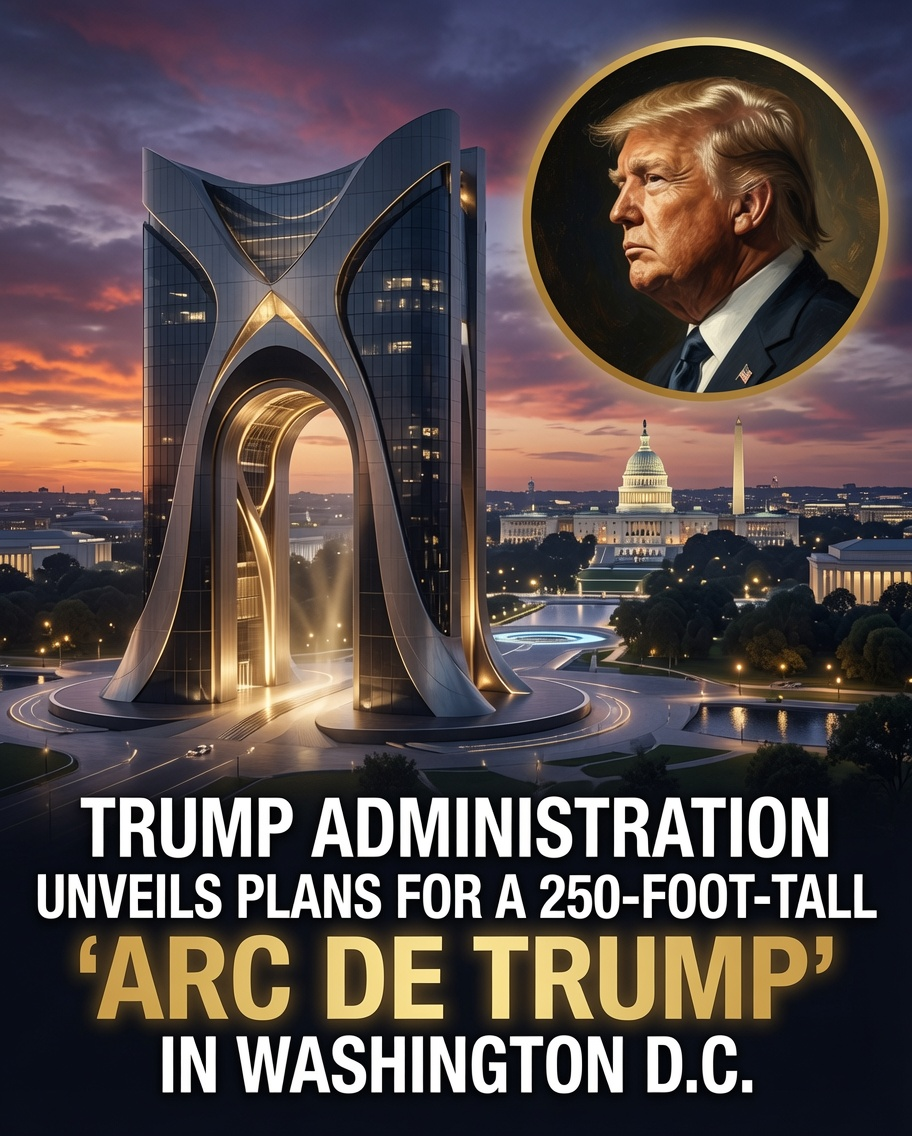
Plans reportedly released by the Trump administration for a massive 250-foot-tall monument dubbed the “Arc de Trump” in Washington, D.C., have ignited passionate discussions about legacy, public space, and political symbolism. The proposed structure, described as taller than the U.S. Capitol, would feature dramatic elements including a golden Statue of Liberty figure and ornate lion sculptures, aiming to make a bold statement in the nation’s capital.
The concept has been framed by supporters as a celebration of presidential achievements and a lasting tribute to a transformative era in American politics. Proponents argue it would serve as a powerful landmark honoring strength, vision, and America First policies that reshaped domestic and international priorities. They see it as a necessary counterbalance to what they perceive as underrepresentation of certain political perspectives in the capital’s monumental landscape.
Critics raise concerns about scale and symbolism
Opponents view the proposal as excessive and inappropriate for the symbolic heart of American democracy. Traditional Washington monuments typically honor collective national achievements, founding principles, or broadly respected historical figures rather than individual political leaders in such a grandiose manner. Critics worry that a structure of this scale could dominate the skyline and shift focus from unity to division.
The debate touches on deeper questions about how public memory is shaped through architecture and monuments. Washington, D.C.’s monumental core has historically emphasized shared democratic values and national heritage. Introducing a massive monument tied so explicitly to one administration raises concerns about precedent and the politicization of public space.
Practical and cultural considerations
Beyond symbolism, questions remain about location, funding, and feasibility. Washington’s existing architectural guidelines and historic preservation standards would likely face significant challenges accommodating a monument of this proposed size and style. Cost estimates for such a project would likely run into hundreds of millions, prompting discussions about priorities in federal spending.
Public reaction has been sharply divided along partisan lines, with social media filled with both enthusiastic support and strong opposition. The proposal has also drawn international attention, with some viewing it as emblematic of American political culture and others expressing surprise at its scale and ambition.
What this reveals about national identity
The intense response to the “Arc de Trump” concept reflects broader tensions in American society about how history should be remembered and represented. Monuments serve as physical embodiments of values and stories societies choose to elevate. Debates over their placement and design often reveal underlying disagreements about whose narratives deserve prominence in public spaces.
As discussions continue, the proposal highlights important questions about balancing commemoration with democratic principles, individual legacy with collective identity, and bold vision with traditional norms. Whether the plan moves forward in any form remains uncertain, but it has already succeeded in prompting Americans to consider what kind of symbols best represent the nation’s complex story.
The coming months will likely see continued debate as stakeholders, historians, architects, and citizens weigh in on what belongs in the capital’s monumental landscape. For now, the proposed “Arc de Trump” stands as a provocative idea that forces reflection on memory, power, and the stories we choose to tell through stone and steel in the heart of American democracy.
Most Popular!
-
 Mystery Deepens After Elderly Woman’s Disappearance as Investigators Search for Answers
-
Marriage Burnout – Recognizing the Signs and Finding Your Way Back
-
Jennifer Garner’s Heartwarming Actions Towards Wheelchair-Bound Homeless Man
-
If There Is a Will, There Is a Way – The Incredible Transformation of This Miserable Kitchen
-
Shelley Fabares Offered a Tender and Nostalgic Rendition of “Johnny Angel”
-
If You Hit Your Head, Watch Out for These Symptoms That Can Show Up Even Days Later
-
Baggage Handler Reveals Shocking Reason You Should Never Tie a Ribbon on Your Luggage
-
Motorcycle Club Arrested After Protecting a Waitress When Police Refused Help