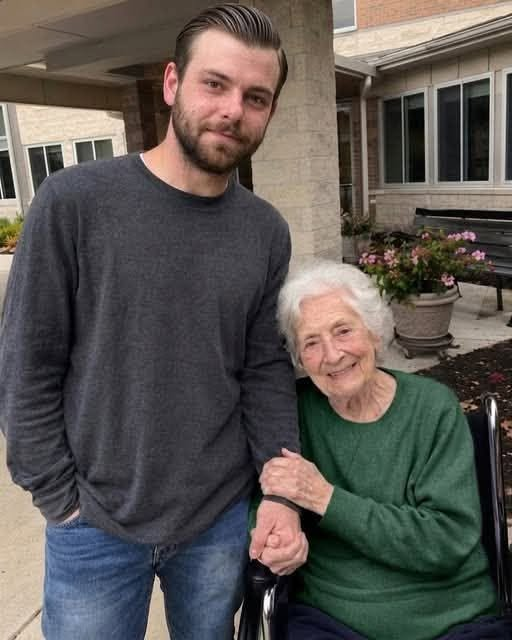
Life sometimes hands you opportunities that feel more like scenes from a movie than real experiences. For me, it started with a simple online ad looking for someone to play a very specific role. The pay was surprisingly good, and the commitment seemed short-term. A nursing home needed a stand-in son for an elderly resident named Margaret who had no living family. Her mind was sharp, but her loneliness was deep, and the staff thought having a “son” visit regularly would brighten her final months. I was between jobs, skeptical but curious, and I told myself it was harmless — just acting. I had no idea that this temporary gig would lead me into one of the most meaningful relationships of my life, and that after Margaret passed, the nursing home would hand me an envelope that changed how I see family, kindness, and the quiet legacies people leave behind.
Margaret was in her late eighties when I first met her. She had soft white hair, sharp blue eyes, and a gentle dignity that immediately made me feel like I was in the presence of someone special. The staff had briefed me on her favorite stories, her love for classical music, and how she often spoke about a son who had “moved far away.” I arrived with flowers and a nervous smile, introducing myself as David. She lit up in a way that made my prepared script feel unnecessary. From that first visit, something real sparked between us. We talked about books, old movies, and the way the world had changed. She shared memories of her late husband and the garden she once tended. I found myself looking forward to our twice-weekly visits more than I expected.
Over the months, our fake relationship grew into something authentic. I brought her favorite lemon cookies, fixed the volume on her radio when it acted up, and listened as she recounted stories from her youth. She called me “my boy” with such warmth that it stopped feeling like a performance. The staff noticed the positive change in her — more smiles, better appetite, even a renewed interest in activities. I told myself I was just doing a job, but deep down I knew Margaret was filling a space in my own life that I hadn’t realized was empty. My real family was scattered, and my days had felt aimless before her. She gave me purpose without even trying.
Then came the difficult news. Margaret’s health declined rapidly one winter. I sat with her during her final days, holding her hand and telling her stories to keep her comfortable. She passed peacefully with me by her side, believing her son had finally come home. The funeral was small but heartfelt. I played my role one last time, standing as her grieving son while staff and a few longtime friends offered condolences. I expected that to be the end of it — a bittersweet chapter closed with a paycheck and some cherished memories. But a week later, the nursing home director called me in for a meeting.
What she said next left me speechless. Margaret had left specific instructions and an envelope for “her son David.” Inside was a handwritten letter and a small package. In elegant, slightly shaky script, Margaret wrote that she had known almost from the beginning that I wasn’t her real son. She had no biological children — a quiet sorrow she had carried for decades after losing her husband young. But she chose to believe in the kindness she saw in my eyes. She thanked me for giving her the gift of family in her final months, for the laughter, the stories, and the feeling of being loved. Then came the part that brought tears to my eyes. She had left me a modest inheritance — savings she had carefully set aside over years — along with a beautiful antique pocket watch that had belonged to her husband. The letter ended with a simple request: “Use this to build something meaningful, and remember that family is whoever shows up with love.”
I sat in the director’s office, stunned. The money wasn’t life-changing in a dramatic sense, but combined with the watch and the letter, it felt like a treasure. Margaret had seen through the arrangement yet chose connection over suspicion. She turned a paid performance into a genuine bond that outlasted her life. That realization humbled me deeply. I had entered her world thinking I was the one giving comfort, but she ended up giving me far more.
In the months that followed, I used part of the inheritance to start a small scholarship fund at the local community center for young people who feel lost or disconnected — kids who might need someone to show up for them the way I showed up for Margaret. I visit the nursing home regularly now, not as a paid actor but as a volunteer, spending time with residents who don’t get many visitors. The pocket watch stays in my pocket as a daily reminder that kindness ripples outward in ways we can’t always predict.
This experience taught me several profound lessons about human connection and the stories we carry. First, loneliness doesn’t always look obvious. Margaret lived surrounded by care yet still yearned for family. Second, authenticity can bloom even from an arranged situation when hearts are open. Third, the greatest gifts often come wrapped in humility rather than grand announcements. And most importantly, showing up consistently for someone matters more than blood relation or perfect circumstances.
For anyone considering caregiving roles, whether paid or voluntary, this story encourages approaching each person with genuine warmth. You never know whose life you might touch — or how deeply they might touch yours in return. For families with aging loved ones, it’s a gentle reminder to prioritize presence and emotional connection alongside physical care. And for all of us, it highlights the power of small, consistent acts of kindness. A listening ear, a shared meal, or simply remembering someone’s favorite story can become a lifeline.
Margaret’s story continues through the lives she inspired. The residents I visit now light up when I share bits of her wisdom. My own life feels richer and more purposeful. The man who once took a temporary job for extra cash walked away with a new understanding of family, legacy, and the beautiful surprise of being truly seen.
We all have the capacity to become someone’s “person” — even if only for a season. Margaret chose to make me hers, and in doing so, she gave me one of the greatest gifts imaginable: the knowledge that love and family can be chosen, cherished, and passed forward. The envelope she left behind didn’t just contain money or a watch. It held permission to believe in connection, to show up for others, and to trust that kindness given freely always finds its way back multiplied.
If you ever find yourself in a position to brighten someone’s day — whether through a paid role, a volunteer shift, or a simple conversation — do it wholeheartedly. You might just become the answer to a quiet prayer someone has been holding for years. Margaret did that for me, and I carry her spirit with me every single day. The woman who had no biological son gained one in the end, and I gained a mother figure whose love continues to guide me. Some legacies are written in blood. Others are written in the quiet choice to care. Hers was the most beautiful kind of all.
Most Popular!
-
 The Heartbreaking Truth Behind the Sudden Death of a Reality TV Icon
-
High School Bullies Called Me “Dumpster Princess” for Wearing My Late Grandmother’s Gown — But the Prom King Silenced Them With One Brutal Speech
-
Doctor Reveals Health Issues Hidden in Your Nails — What Your Fingernails Are Trying to Tell You
-
Hidden PFAS in Toilet Paper Linked to Cancer Risk — 6 Types You Need to Be Aware Of Right Now
-
7 Subtle Signs You’re Going Through a Deep Inner Shift (And Why It’s a Beautiful Thing)
-
My Husband Had a Vasectomy But When I Got Pregnant Two Months Later He Accused Me of Cheating — I Thought That Was the Worst Part Until the Ultrasound
-
Doctors’ Chilling Warning About Kissing a Dead Person — The Hidden Risks You Need to Know Before It’s Too Late
-
A Legacy of Health: Soong Mei-ling’s Remarkable Longevity and Inspiring Fight Against Cancer