In the quiet suburban neighborhood of Oakwood Heights, everyone knew the routine. Every night around 11 p.m., Sarah Mitchell’s old blue minivan would pull into her driveway. Out would spill three, sometimes four or five children, all under the age of twelve, rubbing sleepy eyes and clutching backpacks. Sarah, a 38-year-old single mother of two, would gently guide them inside her modest three-bedroom home. At first, neighbors waved politely. Then the whispers started. By the third month, someone had called child protective services. “Something isn’t right,” they said. “No mother brings random kids home that late every night.” What happened next didn’t just clear Sarah’s name — it united the entire community in the most unexpected way.
Sarah had moved to Oakwood Heights two years earlier after losing her husband in a car accident. She worked as a daytime receptionist at a medical clinic, but money was tight. Her own children, 9-year-old Lily and 7-year-old Noah, missed their father terribly. Instead of withdrawing, Sarah decided to channel her pain into something bigger. She started volunteering at the city’s underfunded after-school program for low-income families. Many kids in the program had working parents who couldn’t pick them up until late, or no one to help with homework and dinner.
One evening, the program director asked for emergency help. A storm had canceled buses, and several children had nowhere to go. Sarah offered to bring them home for the night. She fed them, helped with homework, read them stories, and made sure they felt safe. The next day, more parents asked if she could do the same. Before long, Sarah’s home had become an unofficial safe haven for children who needed a warm meal and a caring adult between school and bedtime.
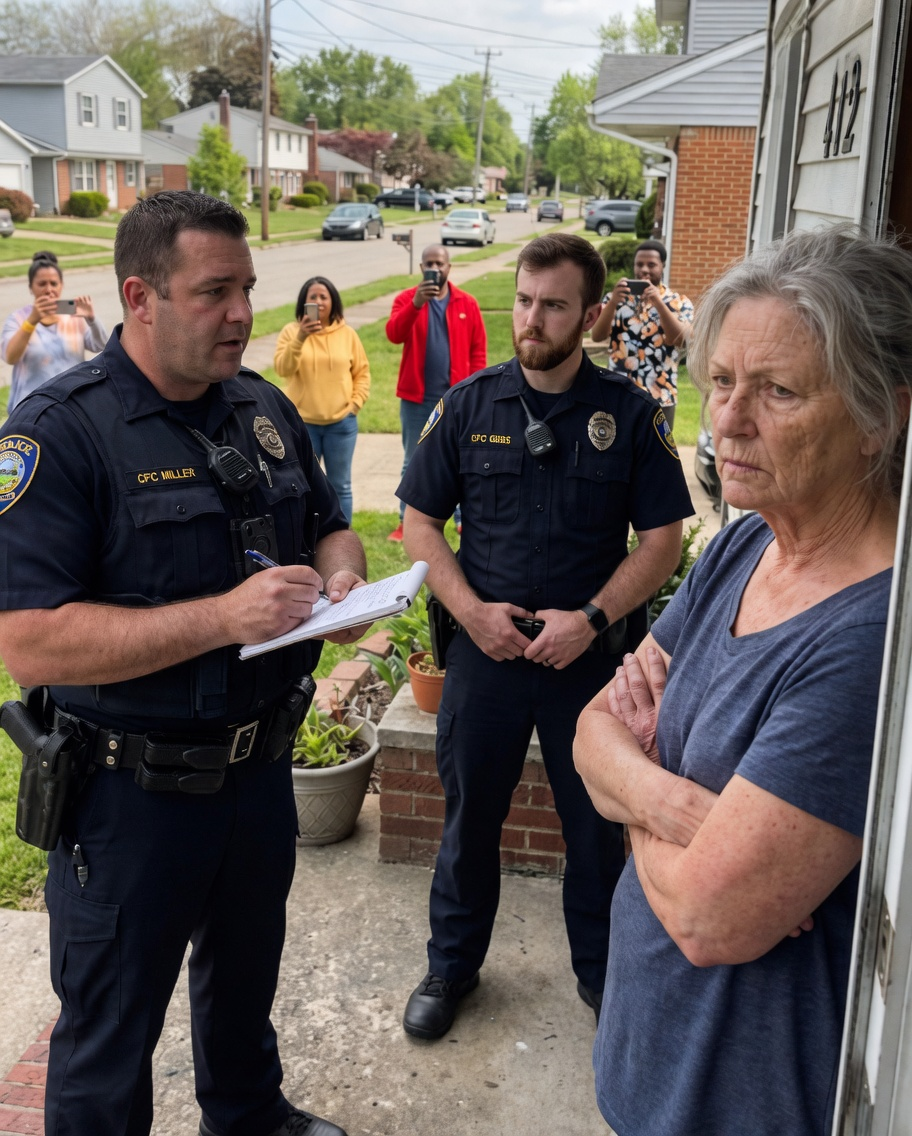
The neighbors didn’t know any of this. All they saw was a tired-looking woman bringing different children home after dark. Rumors spread quickly. “She must be running some kind of side hustle.” “Those aren’t even her kids — is she involved in something illegal?” One particularly concerned neighbor, Mrs. Hargrove, started keeping notes on license plates and called authorities anonymously.
When a social worker showed up at Sarah’s door one evening, she was stunned by what she found. The house was clean and warm. Children were doing homework at the kitchen table while Sarah stirred a big pot of spaghetti. Lily and Noah were reading bedtime stories to the younger ones. Every child had clean clothes and a full belly. The social worker left with a smile and a glowing report.
But the real turning point came at the next neighborhood association meeting.
Sarah, who had heard the rumors, stood up in front of more than sixty residents. With quiet dignity, she explained everything. She wasn’t neglecting anyone. She was filling a gap that no one else wanted to see. Many of the children she helped came from single-parent homes where the other parent worked night shifts at warehouses, hospitals, or fast-food restaurants. Without her, those kids would sit alone in empty apartments or be left with unreliable relatives.
“I lost my husband,” Sarah said, her voice steady but emotional. “I know what it feels like when the world keeps spinning and you’re just trying to keep your kids safe. These children aren’t ‘random.’ They’re someone’s babies who need a safe place until their parents can get home.”
The room was silent. Then Mrs. Hargrove, the same woman who had made the complaint, stood up with tears in her eyes. “I had no idea,” she whispered. “I thought I was protecting children. Instead, I was attacking the only person actually helping them.”
That meeting changed everything.
Within weeks, the neighborhood came together in remarkable ways. Mrs. Hargrove organized a meal train so Sarah didn’t have to cook every night. Several families volunteered to help supervise or drive kids home. A retired teacher started offering free tutoring sessions in Sarah’s living room. One neighbor donated a larger dining table. Another helped set up a proper play area in the backyard. Even the local church began donating groceries and school supplies.
What started as suspicion turned into a full community support network. Other parents who worked late shifts now had a trusted place for their children. Older residents who felt lonely found purpose in reading to the kids or sharing life stories. The children themselves began to thrive — grades improved, behavior issues decreased, and they formed friendships across different backgrounds.
Sarah never asked for any of this attention. She simply did what she felt was right. But the community’s response showed her she wasn’t alone. Her own children gained “bonus grandparents” and a whole village of support. The late-night minivan runs continued, but now they were celebrated instead of suspected.
This story spread beyond Oakwood Heights when a local reporter featured it. Soon, similar programs started popping up in neighboring towns. People realized that instead of assuming the worst about a parent, they could ask questions and offer help. What looked like neglect from the outside was actually profound compassion and sacrifice.
Sarah’s quiet mission taught the entire community several powerful lessons:
- Never judge a situation until you know the full story.
- One person’s kindness can spark an entire neighborhood’s transformation.
- Children belong to all of us — not just their biological parents.
- The people working hardest often make the least noise about it.
- Real community happens when we choose understanding over suspicion.
Today, Sarah’s home is still the heart of the program, but it’s no longer just her burden to carry. The neighborhood has officially partnered with the city to create a licensed after-school safe haven with proper funding and volunteers. Sarah now works part-time coordinating it while still being present for her own children.
The mother who was once whispered about is now the woman everyone turns to when they need help. The children who once slipped quietly into her house now run through the neighborhood with confidence, knowing they are loved and protected by many.
If you see a parent doing something that looks unusual, pause before you judge. Ask questions. Offer support. You might just discover that the person you thought was the problem is actually the solution your community has been missing.
Sarah Mitchell never set out to change her neighborhood. She simply refused to look away from children who needed help. In doing so, she reminded everyone that real love often shows up late at night in a tired minivan, carrying sleepy kids who just need someone to care.
Some heroes wear capes. Others drive old blue vans and open their doors after dark. And sometimes, the greatest transformations begin with the simplest act of saying, “Come inside. You’re safe here.”
Most Popular!
-
 Before You Throw Away That Tea Bag: Practical and Creative Ways to Reuse It at Home
-
The Surprising Truth Behind Why Dogs Sniff People – And What They’re Really Trying to Tell You
-
Strange Objects in Bedding Turn Out to Have a Surprisingly Simple Explanation
-
She Lost Her Father in a Tragic Family Betrayal and Was Left With Just $300 – Then She Rose to Fame and Changed Everything
-
What Really Happens When You Eat Boiled Eggs Every Morning – A Complete Guide Backed by Nutrition Science
-
Why You Might See Metal Bands Around Tree Trunks – And What They Really Do
-
My 15-Year-Old Daughter Came Home from Her Grandmother’s House and Locked Herself in Her Room – What I Discovered Changed Everything
-
The Strange Object Under the Car – When a Small Discovery Raises Unexpected Questions That Changed Everything