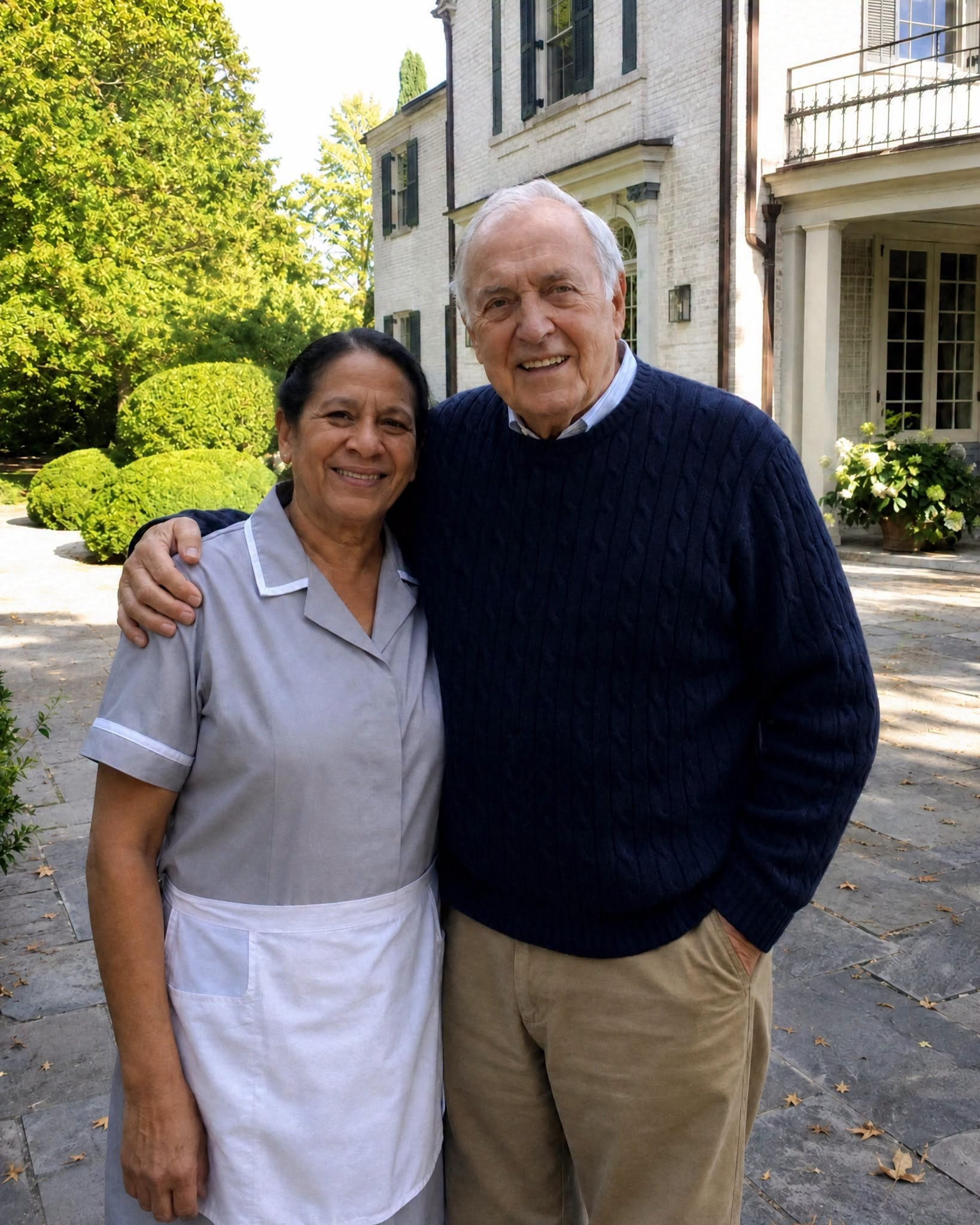
Long-term household staff often occupy a unique and emotionally charged position. A housekeeper, caregiver, or companion who spends years inside a private home can become deeply woven into the daily fabric of an elderly person’s life. Meals are shared, quiet conversations accumulate, and practical care turns into something that feels closer to family than employment. When the employer dies, that relationship is suddenly tested by legal documents, blood relatives, and questions of what loyalty is owed and to whom.
In many real households the pattern is familiar. An aging parent relies increasingly on a trusted aide while adult children live elsewhere, busy with their own careers and families. The caregiver becomes the constant presence—managing medications, preparing preferred meals, noticing small changes in health, and offering the ordinary companionship that distances make difficult for relatives to provide. Over time the boundary between professional duty and personal attachment blurs. The elderly person may speak of the caregiver with genuine affection. The caregiver may come to feel a sense of responsibility that exceeds the job description. Yet legally and financially the relationship usually remains that of employer and employee.
When death arrives, the contrast between emotional reality and legal reality can be stark. Adult children who were rarely present may return to claim the estate, sometimes treating the long-time caregiver as a temporary fixture to be dismissed with minimal notice and severance. The caregiver, who may have postponed other opportunities or structured their life around the household, is left without the security they believed their years of service had earned. In some cases the deceased had made private promises of future support. Unless those promises were written into a valid will or trust, they carry little legal weight.
Estate law is deliberate about this distinction. Most jurisdictions require clear written documentation for significant bequests. Oral assurances, no matter how heartfelt, are difficult to enforce. This protects against fraud and undue influence, but it can also leave devoted caregivers unprotected when families choose not to honor informal understandings. Some elderly employers do formalize their intentions, leaving property, funds, or ongoing support to a trusted aide. These decisions sometimes surprise or anger biological heirs, especially if the relationship with the caregiver was closer than the one the children maintained.
The emotional complexity runs in both directions. Caregivers who receive unexpected inheritance may feel both gratitude and discomfort. They may face accusations of manipulation even when the deceased acted freely and with full capacity. Families may struggle with guilt over their own limited involvement and project that discomfort onto the person who was present. The caregiver, meanwhile, must navigate sudden financial change while grieving the loss of a person who had become central to their daily life.
These situations highlight broader questions about how societies value care work. Domestic and personal care labor is often poorly paid, inconsistently regulated, and socially undervalued precisely because it happens in private homes and is performed disproportionately by women and immigrants. When that labor spans decades and includes emotional support, the disparity between contribution and compensation becomes especially visible. A week’s severance after eighteen years of service feels not only inadequate but insulting, regardless of legal minimums.
Practical safeguards exist for both sides. Employers who want to provide for a long-term caregiver can do so through clear estate planning—specific bequests, life estates, or trusts that avoid ambiguity. Regular conversations with adult children about these intentions can reduce later conflict. Caregivers, for their part, benefit from understanding that verbal promises are fragile. Keeping records of employment terms, seeking independent legal advice if substantial gifts are discussed, and maintaining some financial independence remain wise even in the most affectionate households.
The deeper human issue is recognition. Many caregivers describe the quiet satisfaction of being needed and trusted. They also describe the loneliness of that role—present for the most intimate parts of another person’s decline while remaining, in the eyes of the wider family, replaceable. When an estate plan acknowledges that contribution, it can feel like long-overdue validation. When it does not, the dismissal can reopen every moment of invisible labor.
Not every story ends with dramatic reversal. Most caregivers leave with ordinary severance, search for new work, and carry the memory of the person they served without further legal entanglement. Some maintain warm contact with the family. Others close the chapter and move on. The rare cases that capture public attention—those involving unexpected inheritance or courtroom battles—stand out precisely because they invert the usual power dynamic. They offer a fantasy of justice in a domain where emotional contribution is frequently overlooked.
What remains consistent is the need for clearer communication while the employer is still alive. Families who discuss care arrangements, financial plans, and the role of household staff early reduce the likelihood of bitter surprises. Caregivers who understand the limits of informal promises can protect themselves without diminishing the genuine care they provide. The relationship between an elderly person and the individual who helps them live with dignity is often one of the most significant in both their lives. Treating that relationship with the seriousness it deserves—legally, financially, and emotionally—honors the work that so often happens out of public view.
Most Popular!
-
 When an Absent Parent Returns: Boundaries, Time, and the Limits of Making Amends
-
When Secrets in the Home Become Dangerous: Recognizing Control, Betrayal, and the Path Back to Safety
-
The Quiet Crisis Next Door: Loneliness, Small Gestures, and What We Miss in Ordinary Neighborhoods
-
When a Community Refuses to Forget: Memorials, Missing Children, and the Complicated Search for Meaning
-
High School Cruelty, Body Shame, and the Quiet Work of Reclaiming Your Place
-
James Spader’s Quiet Rebellion: Why One of Hollywood’s Most Private Actors Still Fascinates Us
-
Shared Spaces, Small Cruelties, and the Quiet Power of Choosing Kindness on Vacation
-
When a False Accusation Echoes Across Decades: Trust, Silence, and the Long Path Back to Truth