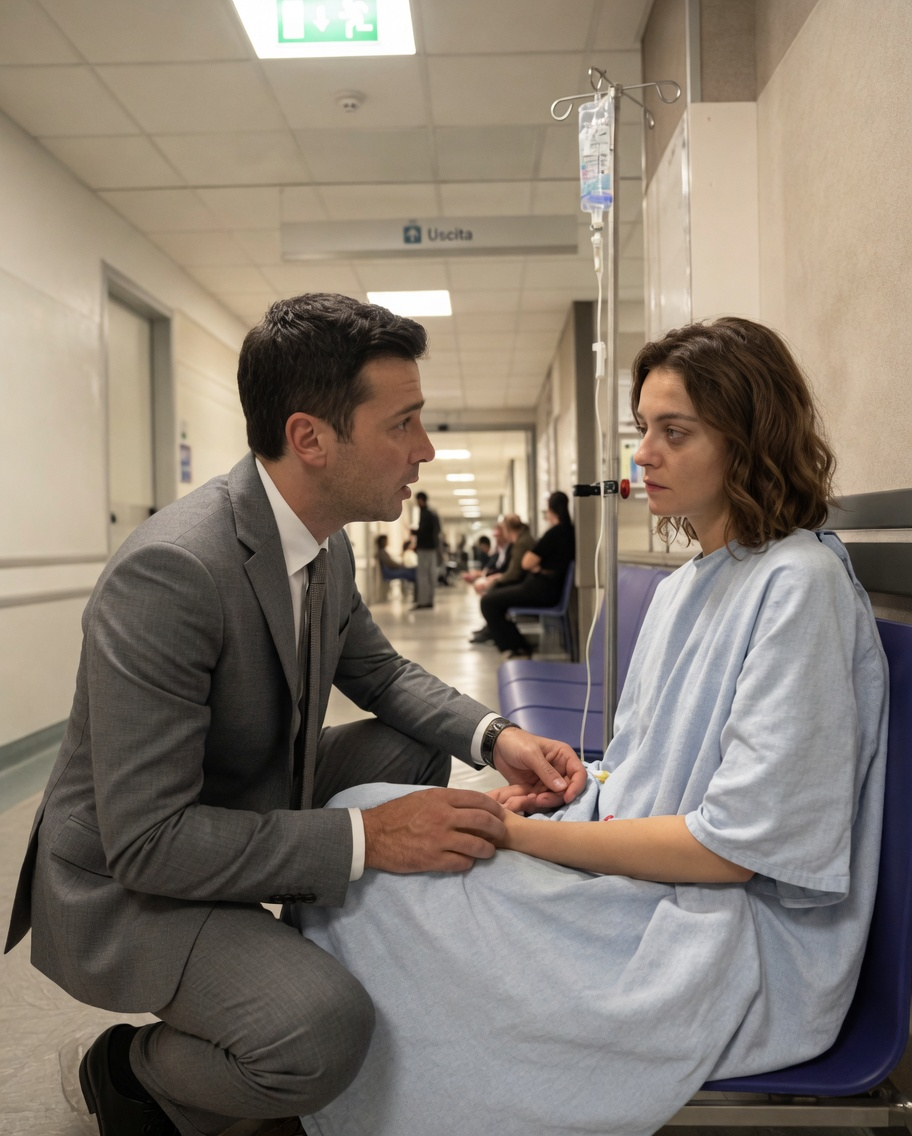
Two months after the ink dried on our divorce papers I thought I had finally moved on. The house was quiet, the arguments were over, and I told myself I was better off without the woman who had grown so cold and distant in our final year together. I filed the last box of her things in the garage and promised myself I wouldn’t look back. Then one ordinary Tuesday I ended up at Mercy General for a routine blood draw after a minor car accident. I never expected to see her there, barefoot in a pale blue hospital gown, drifting down the long sterile hallway like a ghost who had forgotten where she belonged. Her hair was tangled, her eyes unfocused, and when she passed the nurses’ station she paused as if the world itself had become unfamiliar. My heart slammed against my ribs before my brain could catch up. This was not the fierce, independent woman I had spent twelve years married to. This was someone lost.
I called her name softly at first, then louder. “Elena?” She turned slowly, squinting at me like I was a half-remembered dream. For a second her face lit up with the old smile I used to love, but it flickered out just as fast. “I… I can’t find the garden,” she whispered, her voice small and confused. “They said there was a garden where the flowers bloom year-round.” I took her arm gently, feeling how thin she had become, and led her to a bench while a nurse hurried over. Security and doctors appeared within minutes. They knew her by name. They knew her story. And in the quiet consultation room they sat me down and told me the truth that ripped the floor out from under the last two years of my life.
Elena had been diagnosed with early-onset Alzheimer’s nine months before she asked for the divorce. The doctors explained it started with small things—forgotten appointments, lost keys, moments of panic she hid behind sharp words and longer work hours. She had gone to specialists alone, terrified of what it meant for us. The night she told me she wanted out, she already knew her memory would eventually steal her ability to recognize her own husband. She chose to push me away while she still could, staging arguments and pulling back emotionally so I would remember her as strong instead of watching her slowly disappear. The papers were her final gift, she believed. Freedom for me before the disease took everything.
I sat there numb while the doctor described how she had checked herself into the hospital three days earlier after wandering away from a coffee shop and forgetting how to get home. She had no family left to call. Her friends had drifted during the divorce because she refused to explain why she was acting so strangely. All this time I had painted her as selfish, maybe even unfaithful, when the truth was she had been protecting me from the hardest goodbye of my life. The guilt crashed over me like a wave. Every harsh word I had thrown at her in those final months, every night I slept on the couch convinced she didn’t love me anymore—it had all been her desperate attempt to set me free before the disease chained us both.
When I walked back into her room she was sitting up in bed staring at an old photo on her phone—the one of us on our honeymoon in Santorini. Her hands trembled as she tried to zoom in. “You look happy here,” she said softly, not quite sure if the man in the picture was the same one standing in front of her. I sat beside her and took her hand the way I used to when we were young and the future felt endless. For the first time in years I didn’t try to fix anything or demand explanations. I just told her I was sorry. Sorry for not seeing the fear behind her anger. Sorry for believing the worst when she needed me to believe in her strength the most.
The days that followed were a strange, painful kind of second chance. I moved back into the guest room of the house we once shared. I learned how to leave sticky notes everywhere with her name, our address, and little reminders of who she was. The doctors warned me the disease would progress, but they also said moments of clarity could still come, and love seemed to bring them more often. We talked about the past without blame, about the future without promises we couldn’t keep. She told me she had sold her favorite necklace—the one her grandmother gave her—to pay for the first round of medication because she didn’t want me to worry about medical bills on top of everything else. That small detail broke me more than anything else.
Friends and family who had taken sides during the divorce reached out in shock when the truth spread. Some apologized for judging her. Others admitted they had sensed something was wrong but didn’t know how to ask. I realized how easy it is to write someone off when their behavior doesn’t fit the story we tell ourselves. Elena wasn’t cold. She was carrying a secret heavier than any of us could imagine, and she carried it alone so I wouldn’t have to.
I still don’t know how much time we have left together in the way we once were. Some mornings she wakes up knowing exactly who I am. Others she asks if I’m the nice man who brings her tea. But every single day I choose to show up. The divorce papers are still filed, yet the love that survived them feels deeper now than it ever did when everything was easy. This disease took her independence, but it gave me back the chance to be the husband she deserved all along.
If you’re reading this and carrying your own hidden pain, or if you’ve ever walked away from someone because you thought they stopped caring, please hear this: sometimes the people who push us away hardest are the ones protecting us the most. Don’t assume you know the full story until you’ve sat in the quiet room and listened without defending yourself. Love isn’t always loud or perfect. Sometimes it looks like a woman wandering hospital halls trying to spare the man she loves from watching her fade.
Elena taught me that real strength isn’t staying together forever. It’s choosing someone’s peace even when it shatters your own heart to do it. Two months after our divorce I found her lost in those white hallways, and the truth didn’t just shatter me. It rebuilt us into something gentler, truer, and far more beautiful than I ever thought possible after the papers were signed. Life doesn’t always give second chances, but when it does, you hold on with both hands—even if one of those hands is slowly forgetting how to hold on.
Most Popular!
-
 Eggs, Cholesterol, and Timing: What Actually Matters for Most People
-
When a Partner Leaves With More Than a Suitcase: Protecting Yourself From Financial Betrayal
-
When Financial Support Meets Contempt: Recognizing Exploitation Inside a Marriage
-
Why Some Sensory Toys and Household “Hacks” Do Not Belong in the Microwave
-
When Grief Clouds Judgment: Misreading Silence and the Quiet Ways People Show Care
-
When One Partner Does All the Hosting: Recognizing Imbalance Before Resentment Takes Over
-
How Many Holes Are in a T-Shirt? What a Simple Puzzle Reveals About How We See
-
The Quiet Stories Inside Secondhand Objects: When a Thrift-Store Find Carries Someone Else’s History