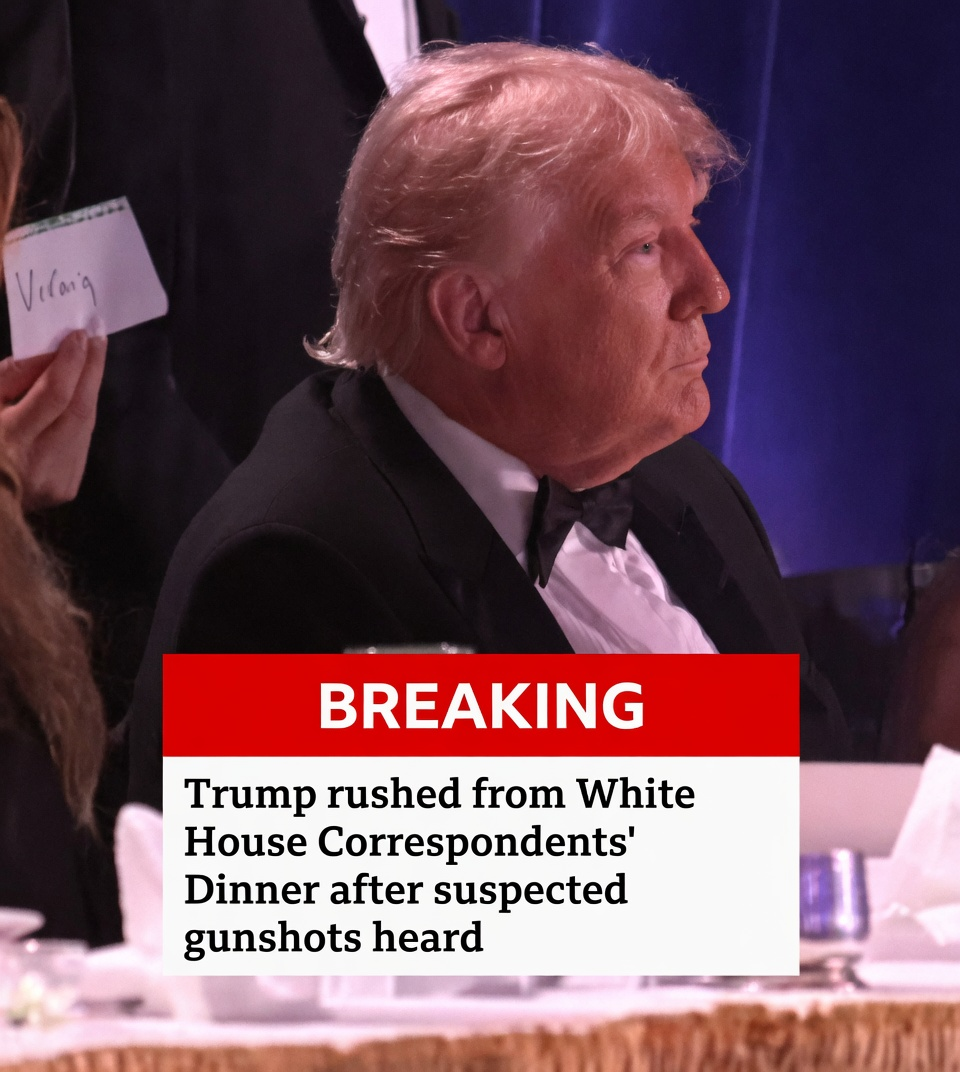
A shocking incident unfolded at the White House Correspondents’ Dinner when shots were fired, with President Trump and senior officials reported as the likely targets of a suspected gunman. The high-profile event, traditionally a night of speeches and celebration, quickly turned chaotic as Secret Service agents rushed Trump to safety and attendees sought cover. Early reports indicate the suspect acted with clear intent, prompting an immediate lockdown and large-scale investigation by federal authorities.
This latest act of political violence comes at a time of heightened tensions across the country. The White House Correspondents’ Dinner has long been a symbol of press freedom and political discourse, but this attack has raised serious questions about the safety of public officials and the growing risks faced by those in leadership positions. Security experts are already reviewing protocols after the breach, while investigators work to determine the gunman’s motive and possible connections.
The implications extend far beyond Washington. Markets reacted with volatility in the hours following the incident, with investors expressing concern over potential instability. For families across America, especially grandparents managing retirement savings and home equity, such events serve as stark reminders of how quickly national security issues can influence economic conditions and long-term financial planning. The possibility of increased uncertainty often leads to higher costs for protection and insurance, directly affecting nest eggs built over decades.
Law enforcement officials have confirmed they are treating the case as a targeted threat. Multiple agencies, including the FBI and Secret Service, are involved in the probe. Witnesses described the moment as terrifying, with some noting how quickly the situation escalated from a formal dinner to an active emergency. The incident has sparked renewed calls for stronger security measures at public events involving high-profile figures.
Political leaders from both parties have condemned the violence. Statements emphasized the need for unity and calm in the face of such threats. However, the event has also intensified debates about political rhetoric and its potential role in encouraging extremism. For many older Americans, this raises worries about the broader climate of division and how it might affect their grandchildren’s future stability.
The financial angle is particularly relevant for retirees. Events like this can trigger short-term market dips, increased insurance premiums, and higher costs for personal security measures. Grandparents who have carefully planned for retirement often find themselves reassessing their portfolios when national security concerns create economic ripples. Protecting home equity and savings becomes even more critical during periods of uncertainty.
Experts recommend reviewing emergency plans and financial buffers in light of rising threats. Simple steps such as diversifying investments, maintaining adequate insurance, and discussing family safety protocols can help mitigate risks. This kind of proactive approach is increasingly seen as essential for preserving independence in later years.
The incident also highlights the human cost. Families of those present at the dinner have expressed relief that no fatalities occurred, but the psychological impact remains significant. For grandparents, the story serves as a reminder of the importance of staying informed and prepared without living in constant fear.
As investigations continue, the nation watches closely for updates on the suspect and any broader security implications. The event has already prompted conversations in households about safety, legacy, and the steps needed to safeguard what matters most.
What this means for everyday Americans is clear: staying vigilant and making informed financial decisions can help protect retirement savings and family futures even when national events feel far removed from daily life. The courage to plan ahead remains one of the most effective ways to build lasting security for grandchildren in an increasingly unpredictable world.
Most Popular!
-
 Eggs, Cholesterol, and Timing: What Actually Matters for Most People
-
When a Partner Leaves With More Than a Suitcase: Protecting Yourself From Financial Betrayal
-
When Financial Support Meets Contempt: Recognizing Exploitation Inside a Marriage
-
Why Some Sensory Toys and Household “Hacks” Do Not Belong in the Microwave
-
When Grief Clouds Judgment: Misreading Silence and the Quiet Ways People Show Care
-
When One Partner Does All the Hosting: Recognizing Imbalance Before Resentment Takes Over
-
How Many Holes Are in a T-Shirt? What a Simple Puzzle Reveals About How We See
-
The Quiet Stories Inside Secondhand Objects: When a Thrift-Store Find Carries Someone Else’s History