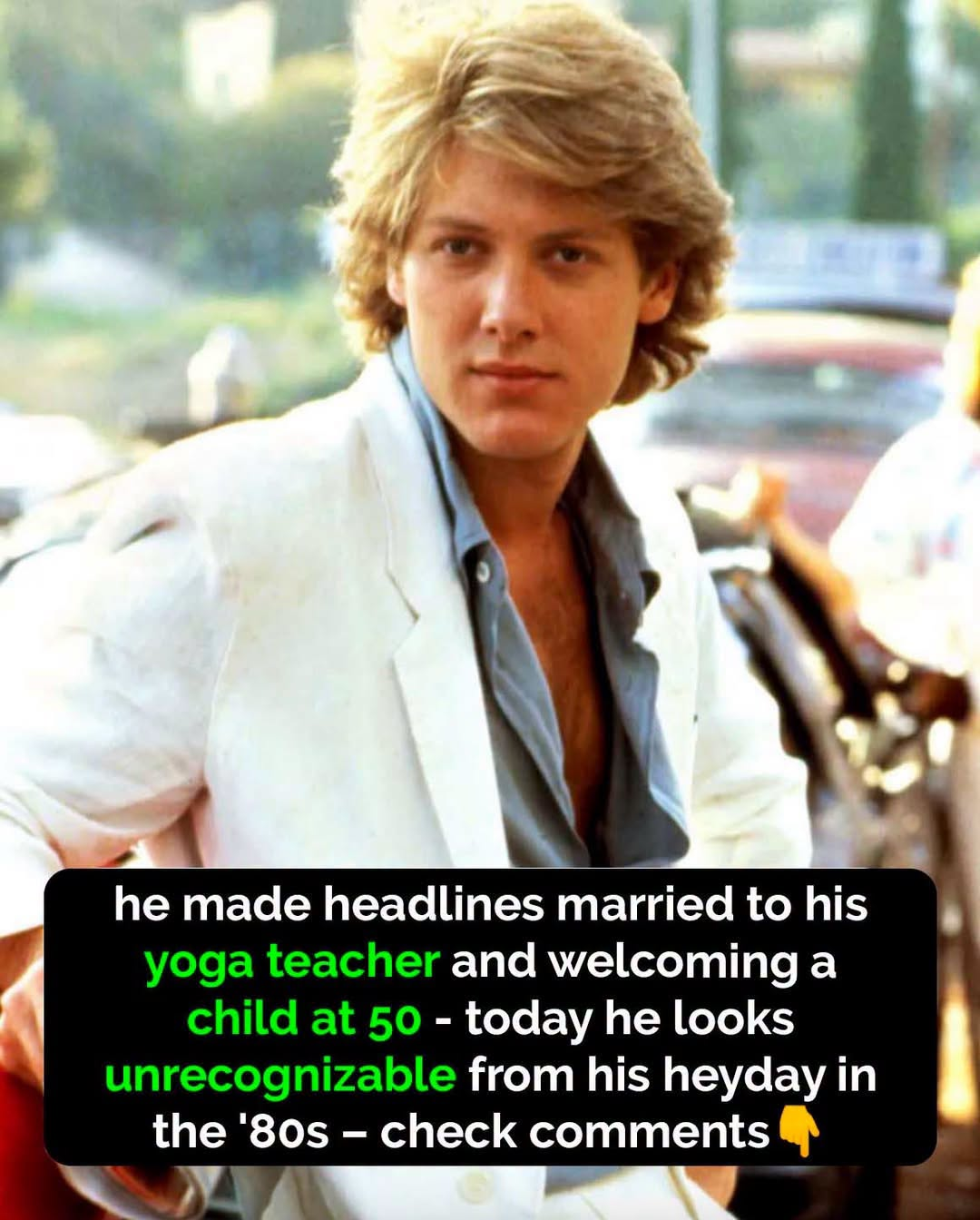
James Spader has spent more than four decades on screen without ever fully inviting the public into his off-screen world. In an industry that increasingly rewards constant visibility, his consistent refusal to perform the role of celebrity stands out. He works when the project interests him, disappears when it does not, and maintains boundaries that many of his peers abandoned long ago. The rare photographs that surface—most recently from a wedding in Morocco—tend to generate disproportionate attention precisely because they are rare. They do not reveal a secret life so much as they confirm a deliberate one.
Spader’s career began in the early 1980s with roles that capitalized on a particular kind of cool detachment. Films such as Pretty in Pink and Less Than Zero established him as a memorable presence, but it was sex, lies, and videotape that earned him serious critical recognition, including the Best Actor award at Cannes. He followed that success with a string of distinctive performances rather than a conventional movie-star trajectory. Later, his television work as Alan Shore on The Practice and Boston Legal brought multiple Emmy Awards and demonstrated a rare ability to make morally complex, highly verbal characters both magnetic and human. The Blacklist then introduced him to a new generation as Raymond Reddington, a role he inhabited for a decade with characteristic intensity.
What has remained constant is his approach to publicity. Spader has repeatedly stated that he has no interest in making his private life available for public consumption. He does not maintain a social media presence. He has spoken about avoiding computers and modern smartphones, once famously displaying a broken flip phone as evidence of his preference for disconnection. These choices are not presented as eccentricities for effect; they appear to be practical extensions of a temperament that values control over environment and information. He has also been open about living with obsessive-compulsive tendencies, describing a need for particular routines and order that would make the chaos of constant public exposure especially unappealing.
His personal life has followed a similarly low-profile path. After a long marriage that ended in the early 2000s, he began a relationship with actress and sculptor Leslie Stefanson that has now lasted more than two decades. They have a son together, and Spader has two older sons from his previous marriage. He has spoken occasionally about the pleasures of becoming a father later in life and about the slower, more ordinary rhythms that accompanied that role. These comments are typically brief and offered in the context of work interviews rather than as lifestyle content. The family appears to live primarily in New York, away from the denser celebrity ecosystems of Los Angeles.
The public’s ongoing interest in Spader says as much about contemporary culture as it does about the actor himself. In an era when many public figures document nearly every aspect of their lives, sustained privacy becomes its own form of intrigue. A single photograph from a private event can generate waves of commentary because it interrupts the usual silence. Viewers project narratives onto the image—about aging, about reinvention, about whether the man in the picture still resembles the characters they remember. Spader himself has never encouraged these projections. His career suggests a man more interested in the work than in the mythology that sometimes surrounds it.
There is a practical wisdom in his approach that extends beyond celebrity. Maintaining a clear separation between professional output and personal existence protects both. It allows the work to be evaluated on its own terms and preserves a private sphere in which ordinary relationships and routines can exist without performance. For an actor whose most memorable roles often involve characters who observe more than they reveal, the consistency between on-screen persona and off-screen boundaries feels intentional rather than accidental.
Spader’s continued selective appearances demonstrate that complete withdrawal is not required. He still takes roles that interest him and occasionally surfaces at industry events or in support of colleagues. The difference is that these appearances remain exceptions rather than obligations. He has never treated fame as a job that demands constant maintenance. In doing so, he has modeled an alternative to the prevailing expectation that visibility equals relevance.
The rare images that emerge do not show a man in hiding so much as a man who has simply declined to live his life for an audience. The “transformation” people sometimes remark upon is largely the ordinary passage of time, made noticeable by the long gaps between public sightings. What remains consistent is the impression of someone who has organized his existence around the things he values—craft, privacy, family, and a measure of control over his own attention—and who has been willing to forgo the louder rewards of celebrity in order to protect them. In a culture that often confuses exposure with authenticity, that choice continues to feel quietly radical.
Most Popular!
-
 When an Absent Parent Returns: Boundaries, Time, and the Limits of Making Amends
-
When Secrets in the Home Become Dangerous: Recognizing Control, Betrayal, and the Path Back to Safety
-
The Quiet Crisis Next Door: Loneliness, Small Gestures, and What We Miss in Ordinary Neighborhoods
-
When a Community Refuses to Forget: Memorials, Missing Children, and the Complicated Search for Meaning
-
High School Cruelty, Body Shame, and the Quiet Work of Reclaiming Your Place
-
Shared Spaces, Small Cruelties, and the Quiet Power of Choosing Kindness on Vacation
-
When a False Accusation Echoes Across Decades: Trust, Silence, and the Long Path Back to Truth
-
Love, Loyalty, and the Quiet Strength of Choosing Family When It Matters Most