Resort pools are designed to feel like temporary escapes. Loungers line the water, umbrellas create pockets of shade, and the sound of splashing is meant to replace ordinary stress. Most guests understand the unspoken rules: reserve a chair fairly, respect the space of others, and keep personal judgments to themselves. When those expectations break down, the conflict can feel sharper than it would in everyday life because people have invested time, money, and emotional energy in the idea of rest.
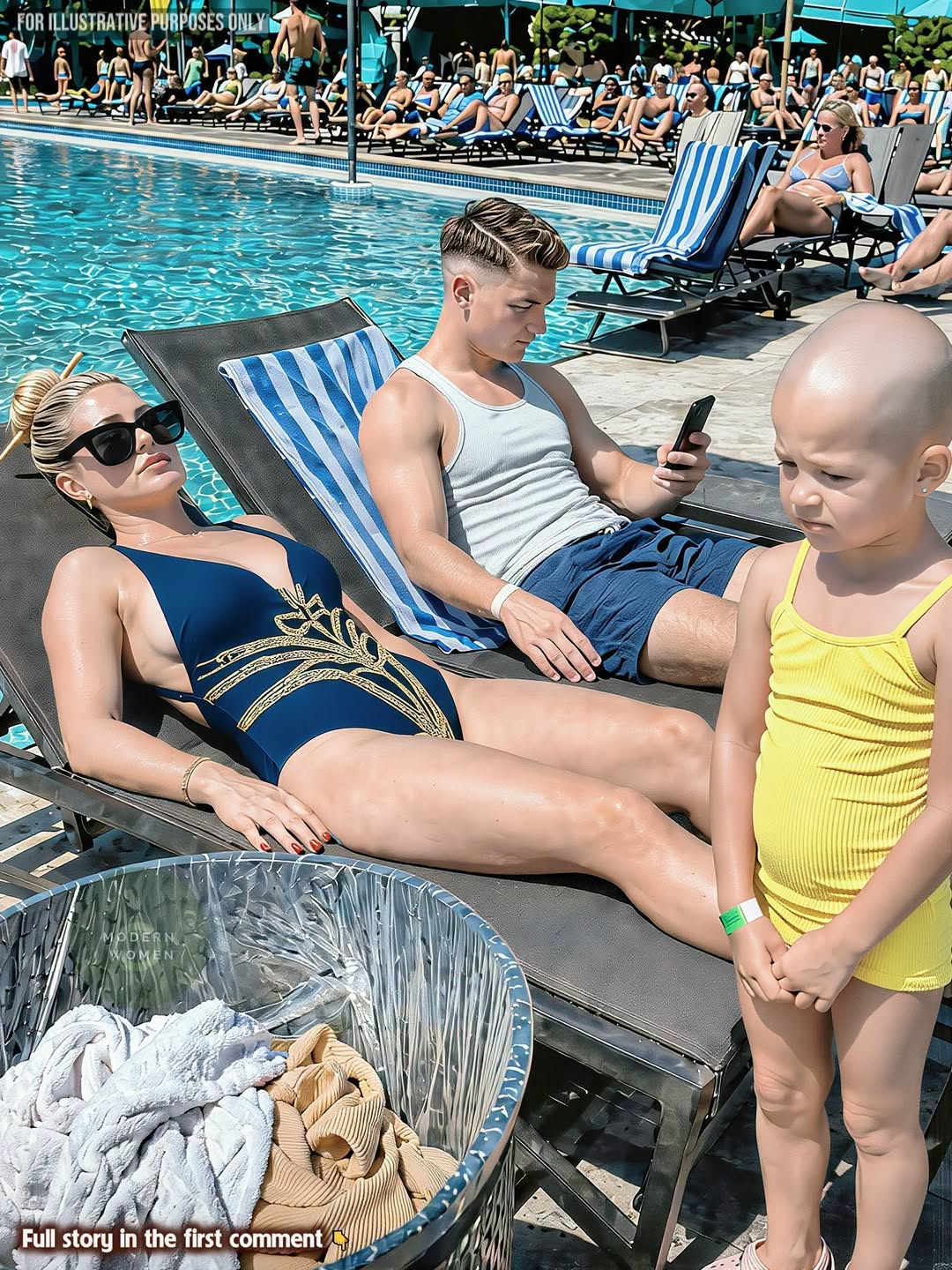
Families traveling with a child who has recently finished intensive medical treatment carry an extra layer of hope into these spaces. After months of hospital routines, restricted activity, and constant vigilance, a simple request to sit by a pool and watch a child play can represent a hard-won milestone. The parent is often hyper-aware of their child’s energy levels, sun exposure, and emotional readiness. The child may be eager to feel ordinary again, to laugh without the backdrop of medical equipment. Into that fragile recovery walks the ordinary friction of shared public space.
Chair disputes are among the most common complaints at resorts. Some properties use formal reservation systems with tags or digital bookings. Others rely on the honor system of towels and personal items. When someone removes those markers and claims the space, they force a confrontation that most people would rather avoid. Parents in particular may calculate the cost of escalating versus simply moving on, especially when their child is watching. The decision to stay calm is often less about weakness and more about protecting the emotional tone of the day.
What elevates ordinary rudeness into something more damaging is the addition of personal commentary. Remarks about a child’s appearance, medical equipment, or the suitability of their presence turn a logistical disagreement into an attack on dignity. A child recovering from chemotherapy may have hair loss, visible ports, or changes in weight and energy. These are not abstract details. They are the visible evidence of a battle most people never have to fight. When a stranger uses those details as justification for exclusion, the message received is that the child’s hard-won presence is an inconvenience to others’ comfort.
Resort staff occupy a difficult middle position. They are responsible for enforcing policies while maintaining a pleasant atmosphere for everyone. Effective properties train employees to intervene early, document problems, and protect vulnerable guests without turning every incident into a spectacle. Clear conduct policies that prohibit harassment and prioritize families with medical needs give staff the authority to act. When those policies are applied consistently, they send a broader signal that cruelty is not a neutral act.
Public accountability can take many forms. Sometimes it is as simple as a manager quietly relocating the offending guest. Sometimes witnesses step in with support for the targeted family. The most constructive responses focus on restoring safety and dignity rather than maximizing the offender’s embarrassment. While stories of dramatic public humiliation circulate widely because they satisfy a desire for justice, the lasting value lies in whether the vulnerable people involved feel protected and able to continue their day.
Children who have survived serious illness often develop a heightened awareness of how adults behave under stress. They notice who makes space for them and who treats their presence as a problem. A parent’s calm response in the face of unkindness becomes a model. So does the willingness of staff and other guests to reject the unkindness. These moments do not erase the original harm, but they can prevent it from defining the entire experience.
Traveling after a major medical ordeal requires deliberate planning. Choosing resorts with strong family policies, arriving early to secure appropriate seating, packing extra layers or sun protection, and preparing the child for the possibility of imperfect moments all help. Equally important is the internal decision to protect the emotional purpose of the trip. The goal is rarely a perfect vacation. It is the chance to collect ordinary memories—laughter in the water, the feeling of sun on skin, the absence of hospital schedules—that help rebuild a sense of normal life.
Kindness in these settings is not complicated. It looks like leaving reserved chairs alone, offering a smile instead of a stare, and remembering that every family carries private histories. Most people manage this without effort. The minority who do not create the stories that spread because their behavior violates a widely shared expectation of basic decency. When communities of staff and guests consistently refuse to normalize that behavior, the shared space becomes safer for everyone.
The deeper truth is that recovery is rarely linear or private. Children who have been seriously ill re-enter the world in stages, testing whether ordinary places will accept them. Parents watch those tests with a mixture of hope and vigilance. The rest of us, occupying the same loungers and walking the same pool decks, have a small but real influence on how those tests turn out. Choosing not to add unnecessary difficulty is one of the simplest forms of respect we can offer. In the end, the quality of a shared vacation space is measured less by its amenities and more by whether the people who need it most are allowed to use it in peace.
Most Popular!
-
 When an Absent Parent Returns: Boundaries, Time, and the Limits of Making Amends
-
When Secrets in the Home Become Dangerous: Recognizing Control, Betrayal, and the Path Back to Safety
-
The Quiet Crisis Next Door: Loneliness, Small Gestures, and What We Miss in Ordinary Neighborhoods
-
When a Community Refuses to Forget: Memorials, Missing Children, and the Complicated Search for Meaning
-
High School Cruelty, Body Shame, and the Quiet Work of Reclaiming Your Place
-
James Spader’s Quiet Rebellion: Why One of Hollywood’s Most Private Actors Still Fascinates Us
-
When a False Accusation Echoes Across Decades: Trust, Silence, and the Long Path Back to Truth
-
Love, Loyalty, and the Quiet Strength of Choosing Family When It Matters Most