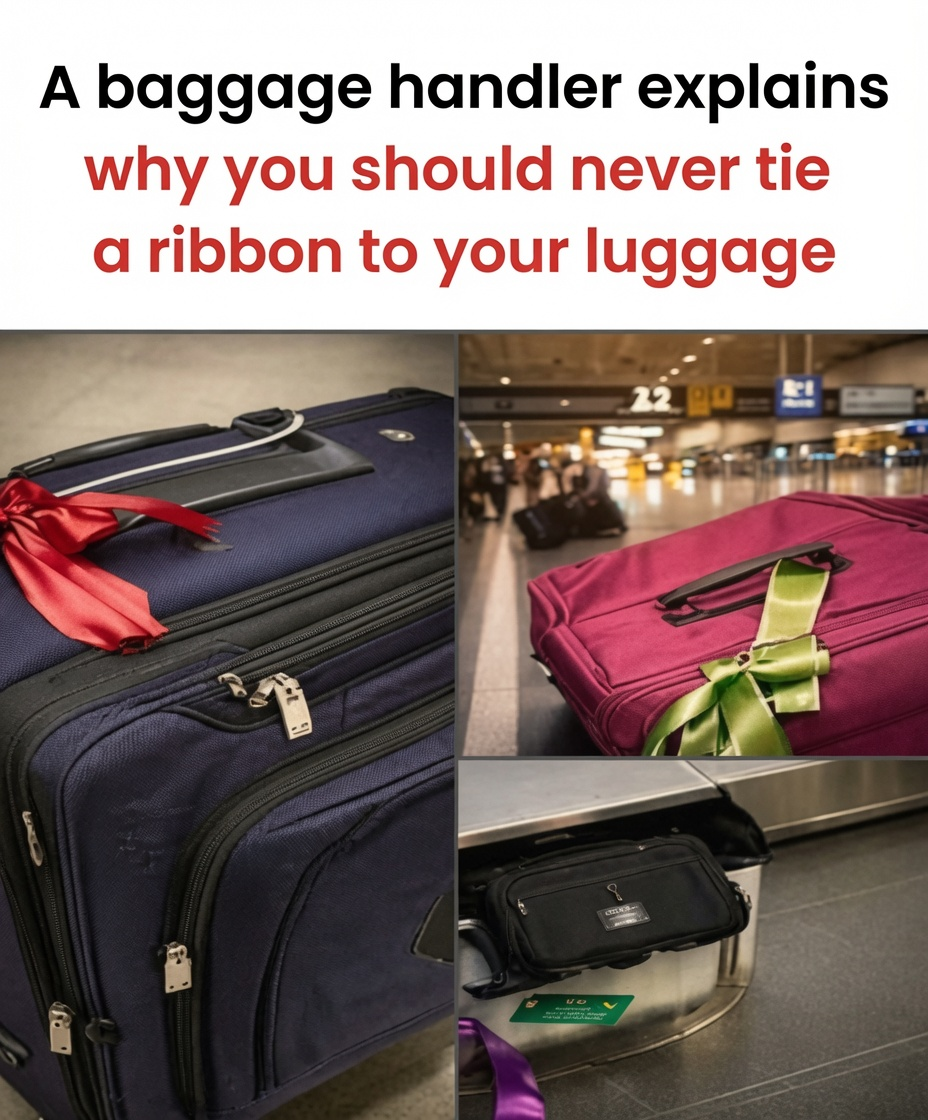
Many travelers add personal touches to their suitcases—ribbons, colorful tape, or distinctive tags—hoping to make their bags easier to spot on the carousel. However, airport baggage handlers warn that these seemingly innocent identifiers can actually create problems rather than solve them. What appears as a cute or practical solution might trigger security concerns, delay your trip, or even risk damage to your belongings.
Why ribbons and bows raise red flags
Security protocols at airports focus on identifying potential threats quickly and efficiently. Anything that draws unusual attention to specific bags can slow down screening processes. Ribbons, bows, or elaborate decorations may appear suspicious to security personnel trained to notice anomalies. What seems like a helpful identifier to you might look like an attempt to disguise or mark a bag for other reasons to trained eyes.
Baggage handlers also note practical problems with these decorations. Ribbons can get caught in conveyor belt systems, causing jams or damage to both your bag and airport equipment. The extra material increases the likelihood of your bag getting snagged, torn, or delayed during automated sorting processes that move thousands of pieces of luggage daily.
Better alternatives for identifying your luggage
Several more effective and security-friendly methods exist for making your bags stand out:
- Use brightly colored luggage or distinctive patterns
- Attach simple, durable name tags with clear contact information
- Choose unique but professional-looking luggage tags
- Take clear photos of your bags before checking them
- Use subtle colored tape on handles rather than dangling decorations
These approaches help you locate your bags quickly without raising unnecessary security concerns or creating practical problems during handling.
Additional luggage tips from baggage handlers
Experienced handlers offer several practical suggestions for smoother travel:
- Remove old airline tags completely before checking bags
- Use sturdy, high-quality luggage appropriate for air travel
- Distribute weight evenly and avoid overpacking
- Lock your bags with TSA-approved locks
- Include both inside and outside identification
- Consider luggage trackers for valuable items
Proper packing techniques also reduce damage risk. Rolling clothes rather than folding them often saves space and minimizes wrinkles while distributing weight more evenly.
Understanding airport security priorities
Security personnel must balance efficiency with thoroughness while processing enormous volumes of luggage daily. Anything that complicates their ability to screen bags quickly becomes problematic. Simple, standard luggage without excessive decorations allows smoother operations and reduces the likelihood of your bags being singled out for additional inspection.
The goal of airport security is protecting all passengers while maintaining reasonable flow through the system. Cooperation with these processes, including avoiding potentially problematic decorations, helps everyone reach their destinations more efficiently.
Making smarter travel choices
Traveling smoothly requires attention to details that many overlook. Understanding how baggage systems actually work helps you make choices that reduce complications and stress. The ribbon trend, while well-intentioned, creates more problems than solutions according to those who handle luggage daily.
Consider practical identification methods that serve your needs without interfering with security or handling processes. Clear, professional-looking tags with accurate contact information provide the best combination of visibility and practicality. Your bags will still be identifiable while avoiding unnecessary complications.
Safe travels ahead
The next time you prepare for a trip, remember the baggage handler’s warning about decorative ribbons. Simple, functional identification serves you better than cute but problematic additions. Focus on sturdy luggage, proper packing, and clear labeling to ensure your belongings arrive safely and efficiently at your destination.
Smart travelers learn from those who see the system from the inside. Baggage handlers’ practical advice helps you avoid common pitfalls that create unnecessary delays and complications. Travel smoothly by making informed choices about how you prepare and identify your luggage. Safe journeys depend on attention to these small but important details.
Your next trip can be smoother and less stressful by following these practical guidelines from the people who handle thousands of bags every day. Sometimes the best travel hacks come from understanding how the system actually works rather than following popular trends that create more problems than they solve.
Most Popular!
-
 Mystery Deepens After Elderly Woman’s Disappearance as Investigators Search for Answers
-
Marriage Burnout – Recognizing the Signs and Finding Your Way Back
-
Jennifer Garner’s Heartwarming Actions Towards Wheelchair-Bound Homeless Man
-
If There Is a Will, There Is a Way – The Incredible Transformation of This Miserable Kitchen
-
Shelley Fabares Offered a Tender and Nostalgic Rendition of “Johnny Angel”
-
If You Hit Your Head, Watch Out for These Symptoms That Can Show Up Even Days Later
-
Motorcycle Club Arrested After Protecting a Waitress When Police Refused Help
-
After Losing Her Parents and Being Raised by a Devoted Grandfather, a Young Woman’s World Shatters When a Mysterious Phone Call Changes Everything