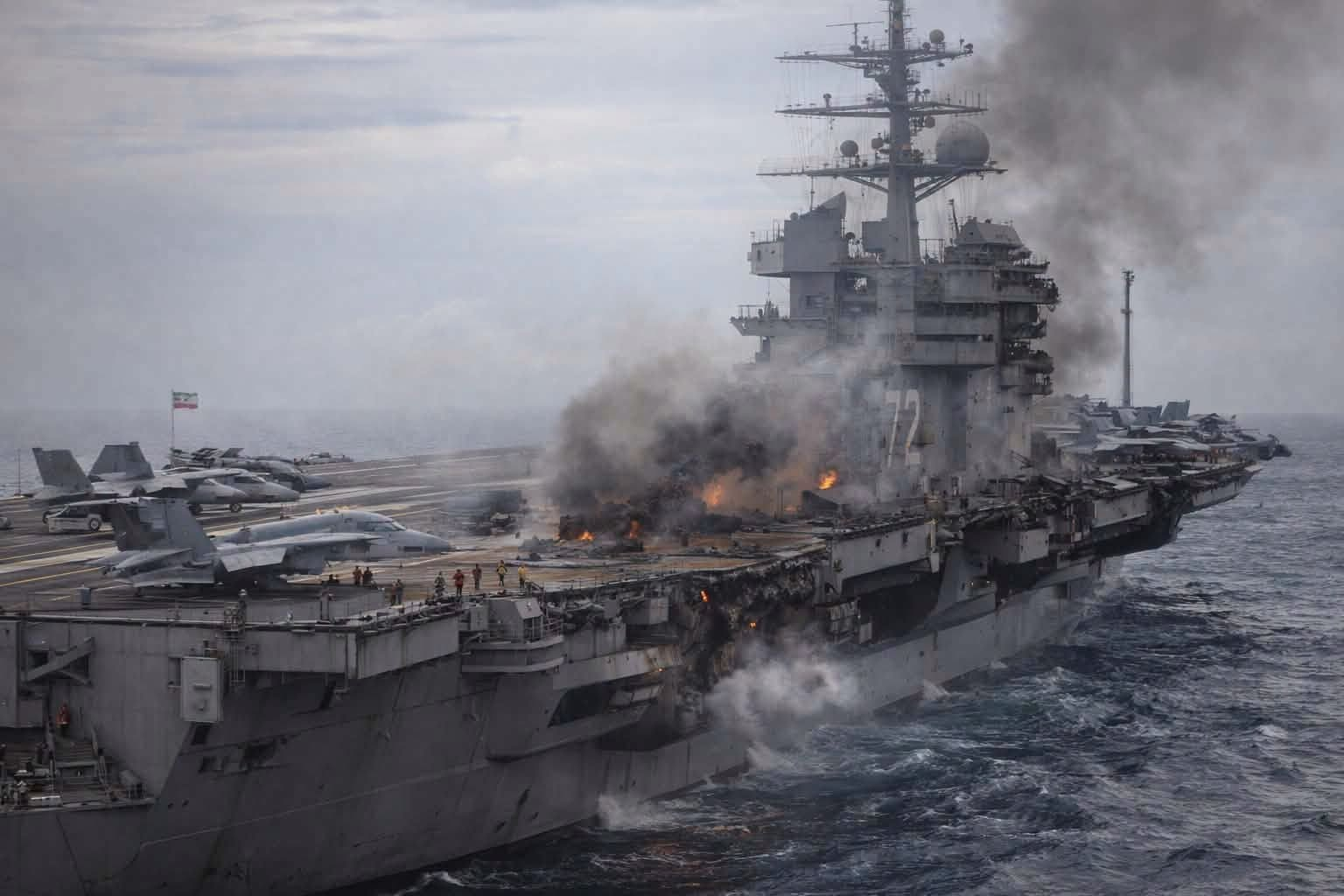
Tensions in Middle East have escalated dramatically following Tehran’s claim of direct strike on USS Abraham Lincoln aircraft carrier. Iranian officials announced successful missile attack while U.S. military sources strongly deny any damage to vessel. This exchange represents significant development in ongoing regional conflict involving multiple international actors. Situation has generated widespread concern about potential for broader military confrontation while affecting global markets and diplomatic relations.
Aircraft carriers like USS Abraham Lincoln serve as powerful symbols of naval strength while providing critical operational capabilities in strategic areas. Claims of successful strike against such vessel carry substantial symbolic and practical implications for international security dynamics. U.S. response emphasizing carrier’s continued operation aims to project strength while maintaining deterrence. These exchanges highlight complex nature of modern information warfare alongside traditional military considerations.
Regional conflicts often involve multiple layers of political, economic, and security interests creating volatile environment for diplomatic resolution. Recent events in Strait of Hormuz have significant implications for global energy supplies and international trade routes. Various stakeholders including regional powers and international organizations monitor situation closely while pursuing different objectives. Balancing immediate security concerns with long-term stability remains central challenge.
Media coverage of military claims requires careful verification while considering potential for propaganda and misinformation. Both sides in conflict use public statements to shape narratives and influence international opinion. Independent confirmation of events becomes particularly important during periods of heightened tension. Responsible reporting helps public understand complex situations while avoiding unnecessary escalation through sensationalism.
Economic markets respond quickly to geopolitical developments affecting energy supplies and international trade. Oil prices and shipping costs often fluctuate based on perceived risks to key maritime routes. These economic factors influence global supply chains while affecting consumers worldwide. Understanding interconnections between security events and economic stability helps contextualize broader impacts of regional conflicts.
Diplomatic efforts to de-escalate tensions involve complex negotiations between multiple parties with different interests and priorities. International organizations and neutral mediators sometimes facilitate dialogue while addressing specific security concerns. Success depends on finding common ground while managing domestic political pressures within various nations. Continued communication remains essential for preventing misunderstandings that could lead to unintended consequences.
Military readiness and strategic positioning play important roles in maintaining deterrence while avoiding unnecessary escalation. Naval forces in region serve multiple purposes including protection of shipping lanes and support for diplomatic initiatives. Balance between showing strength and maintaining open communication requires careful judgment from military and political leaders. These decisions affect not only immediate situation but also long-term regional stability.
Public interest in international conflicts reflects concern about potential impacts on global security and economic stability. Citizens seek information about developments while hoping for peaceful resolution of disputes. Media coverage helps inform public while sometimes amplifying tensions through dramatic presentation. Balanced reporting contributes to informed discourse while encouraging diplomatic solutions over military confrontation.
Historical patterns of regional conflicts demonstrate importance of early intervention and sustained diplomatic engagement. Past experiences provide valuable lessons about consequences of escalation while highlighting successful approaches to de-escalation. Learning from previous situations helps current leaders navigate complex challenges while avoiding repeated mistakes. International cooperation often proves most effective for addressing shared security concerns.
Current situation in Middle East requires careful management to prevent broader conflict while addressing legitimate security interests of various parties. Continued dialogue and verification of claims help reduce misunderstandings while building foundation for potential resolution. International community plays important role in encouraging restraint while supporting diplomatic initiatives. Peaceful solutions benefit all parties while creating more stable environment for regional development.
Most Popular!
-
 Eggs, Cholesterol, and Timing: What Actually Matters for Most People
-
When a Partner Leaves With More Than a Suitcase: Protecting Yourself From Financial Betrayal
-
When Financial Support Meets Contempt: Recognizing Exploitation Inside a Marriage
-
Why Some Sensory Toys and Household “Hacks” Do Not Belong in the Microwave
-
When Grief Clouds Judgment: Misreading Silence and the Quiet Ways People Show Care
-
When One Partner Does All the Hosting: Recognizing Imbalance Before Resentment Takes Over
-
How Many Holes Are in a T-Shirt? What a Simple Puzzle Reveals About How We See
-
The Quiet Stories Inside Secondhand Objects: When a Thrift-Store Find Carries Someone Else’s History