Most of us climb into bed each night without giving much thought to exactly how we position our bodies. We simply settle into whatever feels comfortable in the moment, drift off, and assume our sleep is restorative. But what if the way you’re lying could be silently fueling heartburn, poor digestion, back pain, or even long-term organ strain? The truth about sleeping positions goes far deeper than comfort. Certain postures can work against your body’s natural anatomy, turning what should be a healing process into a source of hidden damage that affects everything from your energy levels to your long-term health.
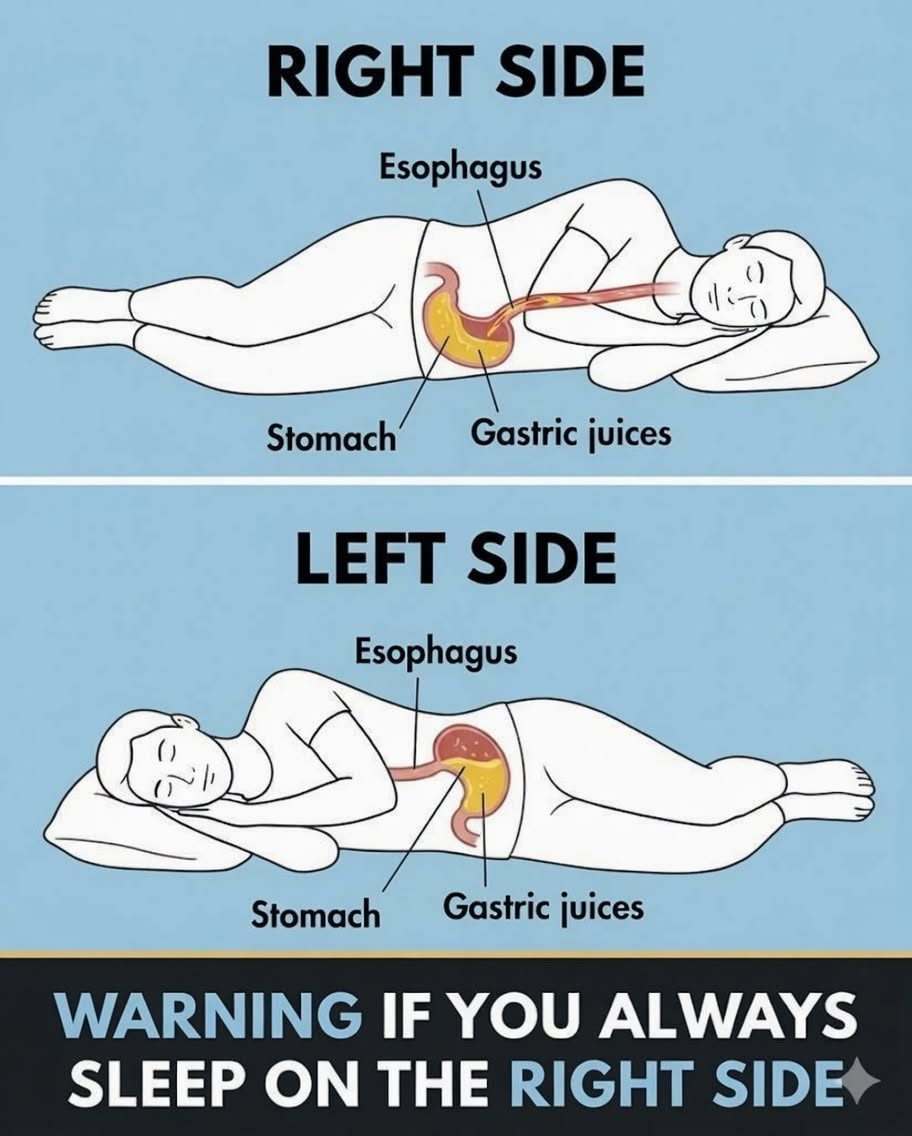
The human digestive system is particularly sensitive to gravity and positioning during sleep. When you lie flat on your right side, the shape and placement of your stomach allow acid to more easily flow upward into the esophagus. This happens because the junction between the stomach and esophagus sits in a way that gravity no longer acts as a natural barrier. For millions of people who already deal with occasional reflux or full-blown GERD, this seemingly innocent habit can turn nights into a cycle of burning discomfort, interrupted sleep, coughing, and morning fatigue. Many wake up with a sour taste in their mouth or chest irritation without realizing their sleeping direction is a major contributor.
On the other hand, sleeping on your left side takes advantage of anatomy in a beneficial way. Gravity helps keep stomach contents where they belong, reducing the likelihood of acid reflux episodes. This position can also support better circulation and lymphatic drainage, potentially easing pressure on internal organs. Clinical observations have shown that people with reflux symptoms often experience noticeable relief when they consciously switch to left-side sleeping. It’s a simple, zero-cost change that can dramatically improve sleep quality and daytime comfort for those struggling with digestive issues.
Back sleeping has its own set of pros and cons. It keeps the spine in a more neutral alignment, which can be excellent for people with back or neck pain. However, it may worsen snoring and sleep apnea because the tongue and soft tissues can collapse backward, obstructing airways. For those without breathing issues, back sleeping with a supportive pillow under the knees can promote spinal health and reduce acid reflux compared to the right side. The key is maintaining proper pillow height to keep the neck aligned with the spine.
Stomach sleeping is widely considered one of the most problematic positions for long-term health. It forces the head to turn sharply to one side for hours, straining the neck muscles and misaligning the spine. This can lead to chronic pain, numbness in the arms, and even contribute to wrinkles from constant pressure on one side of the face. Over time, stomach sleeping may also increase pressure on internal organs and restrict breathing. While it might feel comforting in the short term, especially for those with certain types of back pain, the drawbacks usually outweigh the benefits for most people.
Beyond digestion and spinal alignment, your sleep position influences circulation, joint health, and even brain function during rest. Poor positioning can compress nerves, restrict blood flow, or prevent the deep restorative stages of sleep that your body needs for repair. Pregnant women, for example, are often advised to sleep on their left side to improve blood flow to the placenta and reduce pressure on major vessels. Older adults may find that certain positions exacerbate arthritis or joint stiffness the next morning.
Making smarter choices about how you sleep doesn’t require expensive gadgets or major lifestyle overhauls. Start by becoming more aware of your natural tendencies. Many people favor one side consistently, which can create imbalances over years. Using a body pillow or placing a regular pillow between your knees when side sleeping helps maintain spinal alignment and reduces hip pressure. For back sleepers, a small pillow under the knees or lower back can preserve the natural curve and prevent strain.
Timing your evening habits plays a supporting role too. Avoiding heavy meals, caffeine, and alcohol close to bedtime reduces the digestive load that can worsen reflux regardless of position. Elevating the head of your bed slightly with a wedge pillow or bed risers provides additional protection against acid backup for those prone to heartburn. Consistent sleep schedules and a cool, dark bedroom environment further support quality rest no matter which position you prefer.
If you wake up regularly with neck pain, heartburn, numbness, or unexplained fatigue, your sleeping posture could be a key factor worth addressing. Simple experiments—tracking how you feel after a week of intentional left-side sleeping versus your usual habit—can reveal surprising improvements. Of course, persistent symptoms should always prompt a conversation with a doctor, as they could signal underlying conditions like sleep apnea, GERD, or spinal issues that need professional attention.
The beauty of optimizing your sleep position is that the benefits extend beyond one area of health. Better digestion leads to improved nutrient absorption and energy. Proper spinal alignment reduces chronic pain and tension headaches. Enhanced breathing supports better oxygenation throughout the night, which can improve cognitive function and mood the next day. These small nightly adjustments compound into meaningful long-term wellness gains.
Parents can also pass on healthy habits by teaching children about comfortable, supportive sleep positions early. Using age-appropriate pillows and encouraging movement throughout the night helps develop good patterns that last into adulthood. For couples, finding compatible positions that allow both partners to rest well can strengthen relationships and reduce nighttime disturbances.
In our fast-paced world, sleep is often the first thing sacrificed, yet it remains one of the most powerful levers for health. Paying attention to something as basic as which direction you face in bed might seem trivial, but it represents a practical way to work with your body’s design rather than against it. The difference between waking up refreshed and starting the day with discomfort often comes down to these subtle choices made in the dark.
Your bedroom should be a place of genuine restoration, not a source of silent strain. By experimenting with positions that honor your anatomy—favoring the left side for digestion, supporting the spine on your back, or using pillows for alignment—you give yourself a powerful daily advantage. Listen to the signals your body sends each morning. If something feels consistently off, a simple shift in how you lie down might be the missing piece that transforms your nights and brightens your days.
Small changes in sleep posture won’t solve every health challenge, but they can remove unnecessary burdens that quietly accumulate over time. Give your body the support it needs during those critical recovery hours, and you’ll likely notice improvements in energy, digestion, pain levels, and overall well-being. The right sleeping direction might just be one of the easiest and most effective upgrades you can make to your daily health routine. Tonight, before you drift off, take a moment to consider how you’re positioned. Your future self may thank you for the thoughtful choice.
Most Popular!
-
 The Silent Killer Hiding in Your Fridge: Why Your Refreshing Coconut Water Could Send You Straight to the ER
-
The Alarming Health Rumor That Nearly Paralyzed America: How a Single False Claim Exposed the Fragility of Our Information Age
-
Your Sitting Position Is Silently Revealing Your Deepest Secrets – What Your Body Language Is Telling Everyone Around You
-
The Sleeping Monster Inside You: Why a Childhood Virus Could Suddenly Erupt Into Years of Unbearable Pain
-
The Shocking Transformation of Barron Trump: Is This Really the Same Quiet Teen We Once Knew?
-
The Vicks VapoRub Hack That’s Making Spiders Flee Your Home in Terror
-
The Forgotten Queen of Hollywood: Angie Dickinson’s Quiet, Lonely Final Chapter
-
Trump’s Bold Tax Plan for Seniors Over 65: A Game-Changer That Could Put Real Money Back in Retirees’ Pockets