Weddings are supposed to be celebrations of love, new beginnings, and the joining of families in joy and support. Yet for one bride obsessed with presenting a flawless image, the day became a devastating reckoning that exposed the ugly truth behind her perfect facade. What started as a calculated deception about her mother’s absence due to illness unraveled in front of two hundred guests when the very person she tried to erase walked down the aisle clutching a decades-old promise. This story isn’t just about a ruined ceremony—it’s a powerful reminder of how lies rooted in shame and vanity can destroy the most important relationships and leave lasting scars on everyone involved.
Vanessa had always dreamed of a high-society wedding that would impress her wealthy future in-laws and social circle. When her mother began showing signs of early-onset dementia, she saw it not as a call for compassion but as a threat to that perfect picture. Instead of embracing her mother’s condition and finding ways to include her meaningfully, Vanessa chose exclusion. She banned her mom from the event and spun a convincing tale that the older woman had simply “refused to come” or was traveling abroad. To her sister, who served as maid of honor, and the rest of the family, the pressure was immense. Everyone was expected to uphold the lie, turning what should have been a day of unity into a web of uncomfortable secrecy.
The emotional weight of hiding a parent’s illness weighs heavily on many families dealing with dementia or other progressive conditions. Caregivers often face isolation, guilt, and the painful choice between authenticity and social acceptance. In Vanessa’s case, her decision reflected deeper issues of internalized shame and fear of judgment. She worried about unpredictable behaviors, wandering, or emotional outbursts that might disrupt the elegant atmosphere she had meticulously planned. Rather than educating guests or making accommodations, she opted for erasure, gaslighting family members into believing her mother was indifferent or unreliable. This approach, while temporarily preserving her image, planted seeds of resentment and moral conflict that would soon bloom.
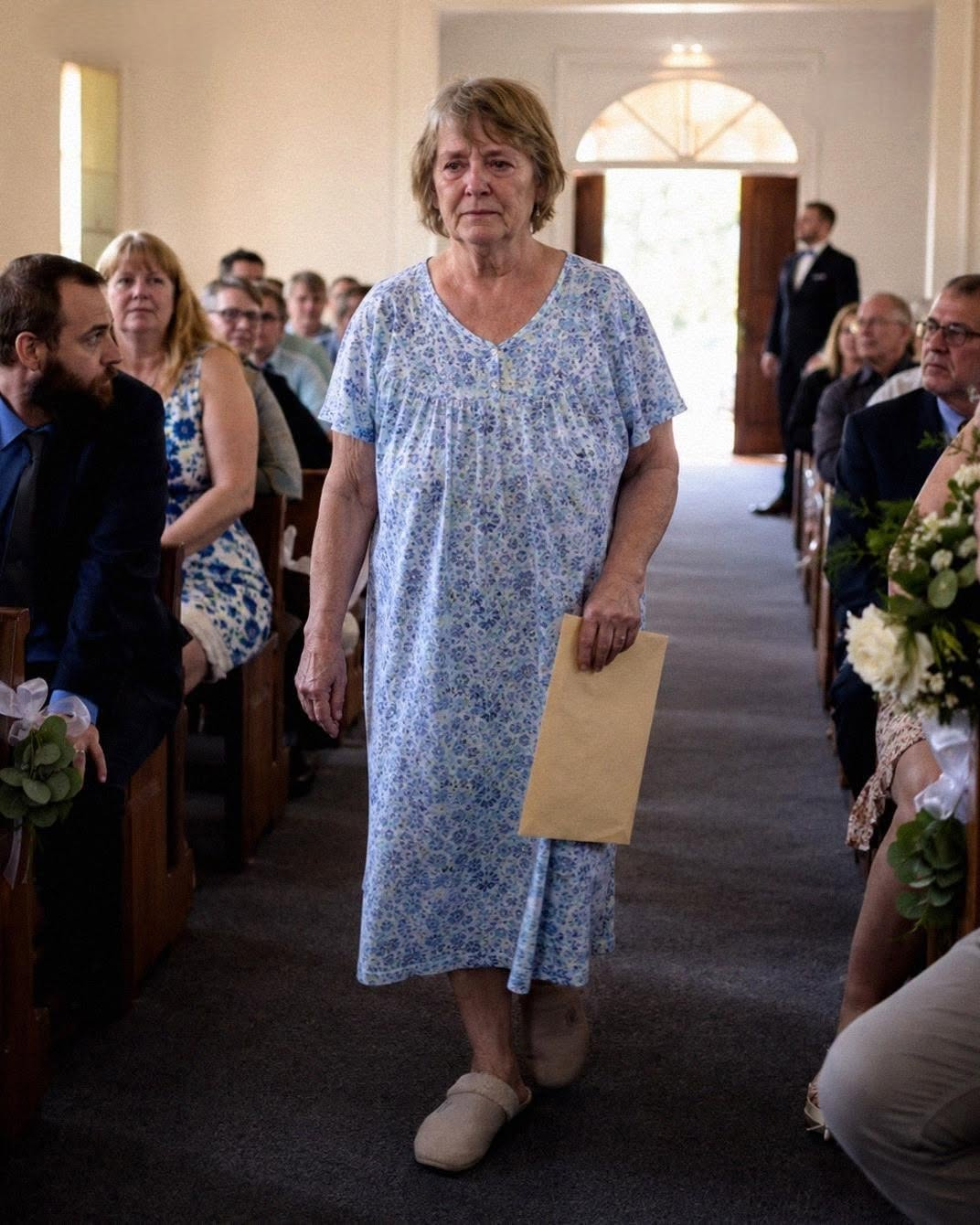
As the wedding day unfolded in a beautiful church adorned with white roses and soft candlelight, the tension was palpable for those in the know. Vanessa glided down the aisle looking radiant in her designer gown, her confidence masking the deception at the heart of the celebration. Guests whispered sympathetically about the “absent” mother, pitying the bride for supposedly being abandoned on her special day. The ceremony proceeded with vows exchanged under the weight of unspoken truths. But just as the moment felt complete, the side door opened, and an unexpected figure appeared—Vanessa’s mother, dressed simply in her house clothes and slippers, looking confused yet determined, clutching an old envelope.
The room fell into stunned silence as the mother slowly made her way down the aisle. She approached her daughter with pure, unconditional love in her eyes, oblivious to the social earthquake she was causing. Holding out the yellowed envelope, she spoke softly about a promise made long ago. Inside was a childhood note written in crayon by young Vanessa, promising to always love and care for her mother, paired with the mother’s heartfelt reply vowing to be present on her wedding day and pass down a cherished family heirloom ring. The revelation hit like a thunderbolt, exposing not just the lie about attendance but the profound betrayal of family bonds.
Vanessa’s face crumpled as the truth spilled out. Her sister, overwhelmed by months of suppressed pain, publicly confronted her about banning their mother out of shame. The groom stood frozen, realizing the woman he was about to marry had hidden her mother’s illness and manipulated everyone around her to maintain appearances. The heirloom ring Vanessa was already wearing added another layer of heartbreak—stolen sentiment without the accompanying respect for its giver. What should have been a moment of tender family connection became a public indictment of cruelty disguised as perfectionism.
This dramatic turn highlights a painful reality many families navigate: the stigma surrounding dementia and mental decline. Rather than fostering empathy, society often encourages hiding vulnerabilities to avoid discomfort. Vanessa’s actions, while extreme, reflect a broader cultural pressure to present only polished versions of ourselves, especially in milestone events like weddings. Yet as this story shows, such suppression rarely ends well. The exposure not only shattered the ceremony but eroded trust in her relationships, culminating in the groom walking away, unable to commit to someone capable of such calculated exclusion.
The aftermath left Vanessa standing alone at the altar, her fairy-tale vision reduced to rubble. Guests shifted from sympathy to judgment, family members grappled with divided loyalties, and the mother, in her gentle confusion, remained largely unaware of the destruction. For the sister who had cared for their mom, it was a bittersweet validation mixed with sorrow for the family fractured by pride. Stories like this ripple through communities, sparking conversations about elder respect, honesty in relationships, and the true meaning of commitment.
Beyond the individual pain, this incident offers broader lessons on family dynamics and integrity. Weddings bring together loved ones to witness and support a couple’s journey, yet they also reveal character under pressure. Choosing vanity over vulnerability often backfires spectacularly, as secrets have a way of surfacing at the worst possible moments. Dementia caregivers frequently report feeling invisible or burdensome; validating their experiences and including affected parents where possible strengthens rather than diminishes celebrations. Simple adaptations like quiet seating, familiar faces nearby, or flexible timing can honor both the day and the person.
For couples planning weddings, this cautionary tale urges prioritizing authenticity over optics. Discussing family challenges openly with partners builds stronger foundations than elaborate deceptions. The groom’s decision to call off the marriage, while painful, demonstrated self-respect and clarity about shared values. In healthy partnerships, love extends to embracing each other’s full realities—including aging parents and health struggles—rather than airbrushing them away.
On a societal level, narratives like Vanessa’s challenge us to reduce stigma around cognitive decline. Dementia affects millions worldwide, touching families across all social strata. Public awareness campaigns, support groups, and compassionate community responses can ease the isolation that drives desperate lies. Celebrating imperfect families with grace creates space for genuine connection rather than performative perfection that crumbles under scrutiny.
Ultimately, the mother’s uninvited appearance, driven by a pure promise from years past, symbolized enduring love that no amount of denial could erase. While Vanessa lost her dream wedding and relationship, the event became a catalyst for truth and potential healing in the family. The sister and mother left together, their bond intact despite the chaos. For readers reflecting on their own lives, the message is clear: family ties deserve honesty and compassion, especially when illness tests them most.
Lies told to protect image rarely shield us from consequences—they amplify them. True strength in relationships comes from facing realities together, supporting one another through decline as much as through joy. This heartbreaking wedding story serves as a mirror for anyone tempted to hide inconvenient truths. In the end, the most beautiful ceremonies are those grounded in love that includes everyone, flaws and all. Choosing kindness over cruelty preserves legacies far more valuable than any designer gown or society approval. Families built on such honesty weather storms far better than those constructed on fragile deceptions.
Most Popular!
-
 The Janitor’s Quiet Dignity: How His Granddaughter’s Graduation Speech Exposed Years of Cruelty and Changed Everything
-
The Neighbor Who Destroyed My Late Husband’s Final Gift to Our Daughter Learned the Hard Way That Some Things Can’t Be Painted Over
-
The Silent Invader Lurking in Millions of Bodies: Why HPV Could Be Hiding in You Right Now
-
That “Minor” Dizzy Spell Could Be Your Brain’s Desperate Warning of a Mini-Stroke—Here’s Why You Must Never Ignore It
-
The Heartbreaking Truth Brad Pitt’s Daughter Finally Shared About Growing Up With a Hollywood Icon
-
The Chilling Final Words of Oliver Tree: A Millionaire Musician’s Eerie Premonition Before His Tragic Death
-
Jennifer Lopez’s Stunning Pregnancy Announcement at 56 Sparks Hope and Conversations About Motherhood Later in Life
-
The Hidden White Cloth on a Car Windshield: The Life-Saving Roadside Signal Every Driver Needs to Recognize