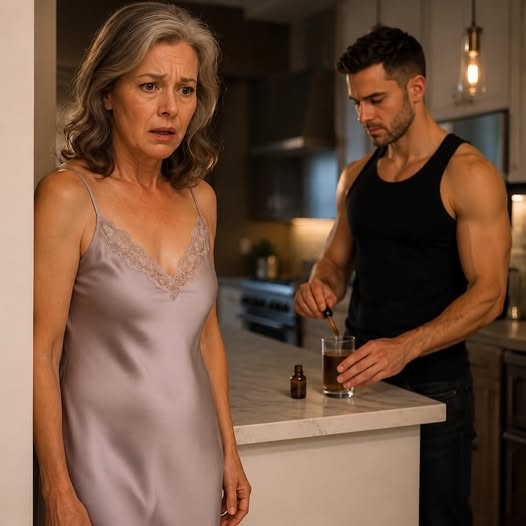
For most of my life, I believed I understood what love looked like. I had been married once before, happily, until my husband passed away after thirty-two years together. The years that followed his death were quiet in a way that sometimes felt peaceful and other times felt unbearably lonely. I filled my days with teaching, gardening, and long walks, but the evenings often stretched out empty. When Ethan Ross entered my life, I told myself that perhaps this was the universe offering me a second chance at companionship.
He was thirty-one years younger than me, something that raised eyebrows among my friends and family. I understood their concern. At fifty-nine, I was a retired teacher with a comfortable inheritance — a townhouse in the city, savings my husband had carefully built, and a small beach villa that had been in my family for generations. Ethan was charming, attentive, and seemed genuinely interested in the quieter life I had built. He cooked for me, gave thoughtful massages when my back ached, and prepared a nightly drink of warm water with honey and chamomile to help me sleep. I felt cared for in a way I hadn’t experienced in years.
Friends warned me. They said the age difference was too great, that a man his age might have other motives. I brushed their concerns aside. I had always prided myself on being independent and clear-headed. I told myself that real love didn’t calculate ages or bank accounts. For six years, I believed the version of our life that Ethan presented — a gentle, devoted partner who simply wanted to spend his days with me.
The truth revealed itself on an ordinary night when I couldn’t sleep. I had gone to the kitchen for a glass of water and found Ethan standing at the counter. He didn’t hear me approach. I watched as he took a small amber bottle from his pocket, unscrewed the cap, and let several drops fall into the drink he was preparing for me. He stirred it carefully before carrying it back to the bedroom.
I didn’t confront him that night. Instead, I took the glass he gave me, pretended to sip from it, and later poured the contents into a container I hid in my purse. The next morning, I had the liquid tested at a clinic. The results came back with a name I didn’t recognize at first — a strong sedative, one that could cause drowsiness, memory issues, and long-term dependence when used regularly without medical supervision.
I sat with those test results for two days before I acted. Part of me kept hoping there was some innocent explanation. Maybe he was trying to help me sleep and didn’t know how to tell me. But the more I thought about the past six years, the more patterns emerged. The way he discouraged me from seeing certain friends. The way he handled more and more of my finances “to help.” The way he always seemed to know exactly what I needed before I asked. What I had interpreted as care now looked like something far more calculated.
I met with a lawyer the following week. I transferred my accounts into my name only, changed the locks on both properties, and made copies of every document I could find. When I finally confronted Ethan, I did it with evidence in hand and a clear mind. He didn’t deny what he had done. He said he had been adding the sedative to help me relax, to keep me “calmer” and “happier.” He claimed he was protecting me from stress and worry. The words sounded hollow even as he spoke them.
I asked him to leave that same day. He packed a bag without argument and walked out of the townhouse without looking back. In the weeks that followed, I learned more about who he really was. The charming man who had appeared in my yoga class had a history of attaching himself to older women with assets. The nightly drink wasn’t an act of care — it was a tool to keep me docile and less likely to question the gradual control he was taking over my life.
The emotional fallout was heavier than I expected. Even though I had made the right decision, I still had to grieve the version of our relationship I had believed in. I had spent six years thinking someone finally saw me and chose to stay. Instead, I had been living with a man who saw my loneliness and my resources as opportunities. The betrayal cut deeper because it had been so quiet, so wrapped in the language of care.
Rebuilding took time. I sold the townhouse and moved permanently to the beach villa, a place that had always felt like mine rather than ours. I started walking on the sand every morning, something I had stopped doing when Ethan preferred we stay inside. I reconnected with old friends I had gradually drifted from during the marriage. Most importantly, I began seeing a therapist who helped me understand how easily manipulation can hide inside gestures that look like love.
At sixty-two, I started teaching yoga again, but this time I focused on classes for women over fifty. We talked about strength that has nothing to do with flexibility and everything to do with boundaries. I spoke openly about what had happened to me, not because I wanted sympathy, but because I had seen how many women my age carry silent stories of control dressed up as devotion. The room often grew quiet when I shared my story, and afterward women would approach me privately to say they recognized pieces of their own lives in what I described.
I still make myself a warm drink before bed some nights, but now I prepare it myself. I choose the herbs, measure the honey, and drink it while looking out at the ocean. The simple act of preparing something for myself has become a quiet ritual of reclaiming autonomy. I no longer wait for someone else to decide what I need.
The hardest part of this chapter wasn’t leaving Ethan. It was accepting how long I had ignored my own instincts. There had been moments over the years when something felt slightly off — conversations that didn’t quite add up, moments when his attentiveness felt more like management than care. I had dismissed those feelings because I wanted the relationship to work. I had been afraid of being alone again. In the end, the loneliness I feared turned out to be far kinder than the slow erosion of self that had been happening inside my own home.
Today I live with a kind of peace I didn’t know was possible at this stage of life. I have my mornings on the beach, my small circle of honest friends, and the freedom to make decisions without negotiating them with anyone else. I no longer measure my worth by whether someone chooses to stay. I measure it by whether I choose myself when it matters most.
Ethan’s deception taught me something I wish I had understood decades earlier: real love does not require you to become smaller or quieter to keep the peace. It does not need sedatives or secrets or carefully maintained narratives. It can stand in the light without fear of being examined. The man I married at fifty-nine had offered me a version of love that looked gentle on the surface but required me to stay asleep to the truth underneath.
Waking up at sixty was painful, but it was also the beginning of something better. I no longer need to be rescued or managed or gently managed into compliance. I am learning, slowly and with intention, how to stand in my own life without apology. The beach villa is quiet most evenings now, but it no longer feels empty. It feels like mine.
Some people might look at my story and see only the loss — the years spent in a relationship built on lies. I choose to see something else: the courage it took to open my eyes, the strength it required to walk away, and the unexpected freedom that arrived when I finally stopped waiting for someone else to tell me who I was allowed to be. At sixty-two, I am not starting over. I am simply continuing — awake, aware, and finally free to decide what comes next on my own terms.
Most Popular!
-
 Eggs, Cholesterol, and Timing: What Actually Matters for Most People
-
When a Partner Leaves With More Than a Suitcase: Protecting Yourself From Financial Betrayal
-
When Financial Support Meets Contempt: Recognizing Exploitation Inside a Marriage
-
Why Some Sensory Toys and Household “Hacks” Do Not Belong in the Microwave
-
When Grief Clouds Judgment: Misreading Silence and the Quiet Ways People Show Care
-
When One Partner Does All the Hosting: Recognizing Imbalance Before Resentment Takes Over
-
How Many Holes Are in a T-Shirt? What a Simple Puzzle Reveals About How We See
-
The Quiet Stories Inside Secondhand Objects: When a Thrift-Store Find Carries Someone Else’s History