Shakira has built a career on high-energy performances, powerful stage presence, and an ability to connect deeply with her audience. But during a September 2024 appearance at LIV nightclub in Miami, that connection was suddenly broken by one person’s unacceptable behavior. What should have been another memorable night on her tour turned into a moment that left the entire crowd stunned and sparked a wider conversation about respect and boundaries.
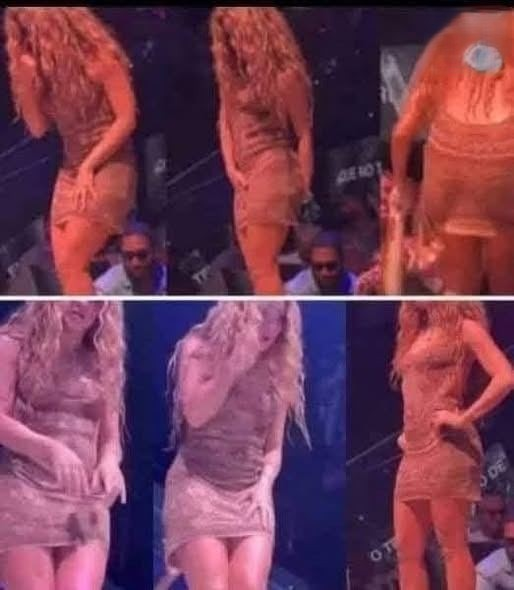
Mid-performance, while dancing and engaging with fans near the front of the stage, Shakira noticed someone attempting to film up her skirt. She immediately stopped moving. The music continued for a few seconds as she looked directly toward the person responsible and firmly told them to stop. When the behavior didn’t end, she made a clear decision: she walked off the stage entirely.
The abrupt halt sent a ripple through the venue. For a moment, the crowd didn’t seem to understand what had just happened. Then the reality set in. Many fans began cheering and clapping in support of her choice to protect herself. Others expressed shock that anyone would behave that way during a live performance. Within minutes, videos of the moment began circulating online, turning a local incident into a much larger discussion.
What made the situation particularly striking was how quickly Shakira drew a hard line. She didn’t try to continue the show or brush the moment aside. Instead, she chose to remove herself from an environment where her personal space was being violated. That decision sent a powerful message: no performance is worth tolerating harassment or invasive behavior.
Incidents like this highlight a difficult reality for performers, especially women in entertainment. Even in controlled environments with security present, artists remain vulnerable to inappropriate actions from audience members. The pressure to keep the show going can sometimes make it harder to address problems in the moment. Shakira’s choice to stop everything demonstrated that protecting her dignity mattered more than finishing the set.
The crowd’s reaction was telling. After the initial surprise, the majority of people in the venue appeared to side with Shakira. Many expressed disappointment in the person who had crossed the line and appreciation for her decision to stand up for herself. In an industry where fans often feel a sense of ownership over artists, moments like this serve as important reminders that performers are human beings with the right to basic respect.
Social media quickly amplified the story. Clips of the halted performance spread rapidly, with many users praising Shakira for refusing to tolerate the behavior. Others used the moment to discuss broader issues of consent, privacy, and how fans should conduct themselves at live events. The conversation extended beyond this single incident, touching on similar situations artists have faced across different genres and venues.
Security at live shows exists for a reason, but no system is perfect. When someone decides to violate another person’s boundaries in a crowded space, it can be difficult to catch immediately. Shakira’s direct response bypassed the need for security intervention and made her stance unmistakably clear. By leaving the stage, she shifted the power dynamic and refused to continue under those conditions.
The incident also sparked reflection on what audiences owe to the artists they admire. Buying a ticket does not grant permission to treat performers as objects or ignore their personal space. Respect should be the baseline expectation at any live event, whether it’s a stadium concert or a smaller club appearance. Shakira’s decision reinforced that standard in a very public way.
In the days that followed, Shakira continued with her scheduled performances, but the Miami moment remained a talking point. It served as a reminder that even successful, experienced artists can face situations that require them to assert their boundaries on the spot. Her willingness to stop the show rather than endure the misconduct sent a clear signal to both fans and the industry.
Ultimately, what happened in Miami wasn’t just about one inappropriate act. It became a larger conversation about how we treat public figures and the responsibility that comes with being part of an audience. Shakira’s choice to walk away rather than continue under those circumstances was a powerful example of self-respect. It also gave many people something important to think about the next time they attend a live performance: the artists on stage deserve the same basic dignity and safety that everyone else expects.
Most Popular!
-
 Eggs, Cholesterol, and Timing: What Actually Matters for Most People
-
When a Partner Leaves With More Than a Suitcase: Protecting Yourself From Financial Betrayal
-
When Financial Support Meets Contempt: Recognizing Exploitation Inside a Marriage
-
Why Some Sensory Toys and Household “Hacks” Do Not Belong in the Microwave
-
When Grief Clouds Judgment: Misreading Silence and the Quiet Ways People Show Care
-
When One Partner Does All the Hosting: Recognizing Imbalance Before Resentment Takes Over
-
How Many Holes Are in a T-Shirt? What a Simple Puzzle Reveals About How We See
-
The Quiet Stories Inside Secondhand Objects: When a Thrift-Store Find Carries Someone Else’s History