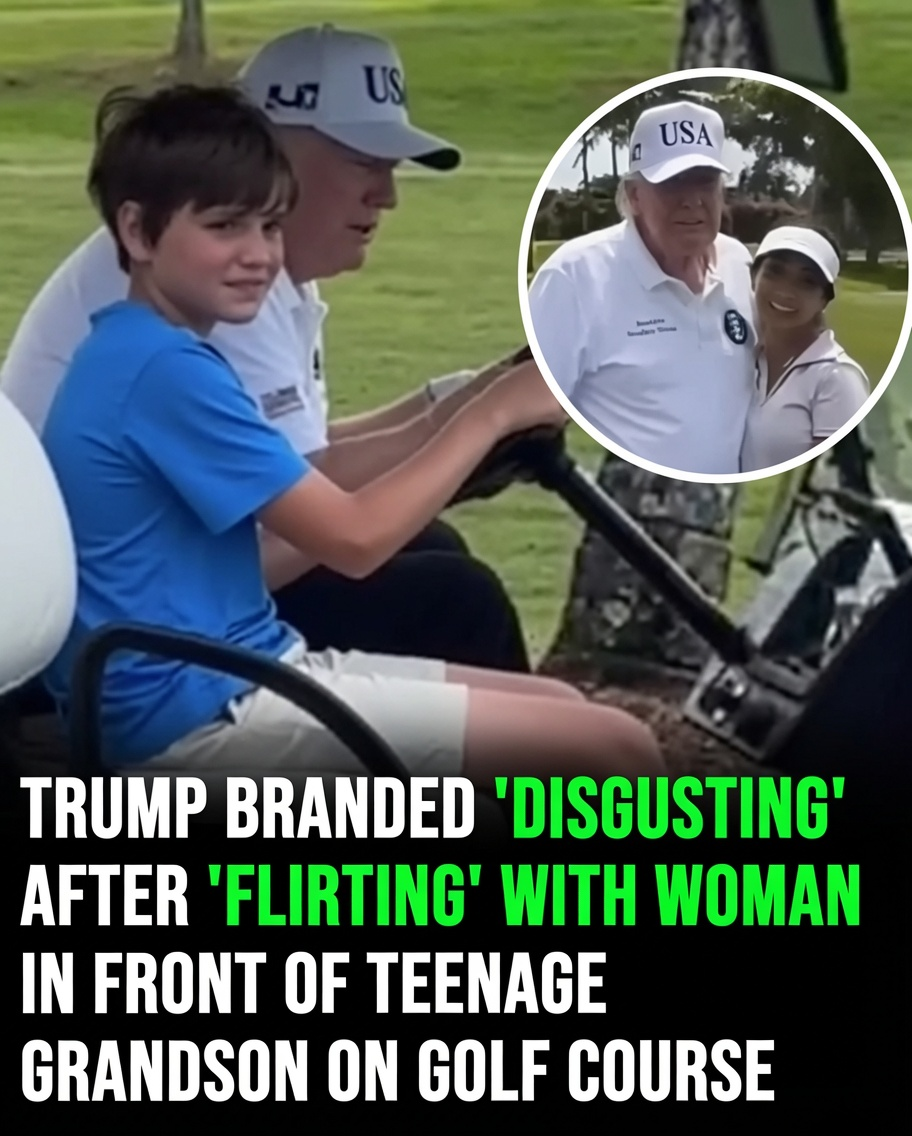
A short video clip from a luxury golf course began circulating widely online, showing former President Donald Trump riding in a golf cart with his young grandson. In the footage, Trump can be heard making a loud, appreciative comment about a woman on the course and then motioning for her to come over for a photograph. The moment, captured casually on what appears to be a regular day at the club, quickly drew intense criticism across social media and news outlets.
The reaction was swift and strong. Many viewers expressed disgust that the comment was made in front of a child, arguing that it set a poor example and reflected a lack of basic respect. Critics described the behavior as objectifying and inappropriate for anyone in a position of public influence, especially someone who had once held the highest office in the country. The video was widely shared with captions calling it embarrassing and unfit.
Supporters of Trump often pushed back against the outrage, describing the moment as harmless banter between adults that was being unfairly weaponized. Some argued that the criticism was overblown and part of a larger pattern of holding Trump to different standards than other public figures. They pointed out that golf courses are social environments where casual conversation is common, and suggested the reaction revealed more about political animosity than about the incident itself.
The presence of Trump’s grandson in the cart added another layer to the debate. For many critics, the fact that a young child was sitting beside him made the comment feel especially inappropriate. They argued that public figures, particularly former presidents, have a responsibility to model respectful behavior, even in private or semi-private settings. Others countered that family moments should not be scrutinized so harshly and that children are exposed to far more concerning content in everyday life.
This kind of viral moment highlights how social media has changed the way personal conduct is judged. A few seconds of casual conversation, captured without full context, can quickly become a national talking point. The speed at which the video spread shows both the power and the limitations of this new reality — moments can be amplified before nuance or additional information has a chance to emerge.
The incident also tapped into ongoing discussions about Trump’s public image and past behavior. For those already critical of him, the golf cart moment fit into a longer narrative about how he speaks about women and conducts himself in social settings. For supporters, it reinforced their view that his casual style is being constantly misrepresented by opponents looking for reasons to attack him.
Golf has long been part of Trump’s public persona. He has frequently used his courses for both business and leisure, and critics have sometimes pointed to his time on the links during periods of national tension. Supporters, however, see his love of golf as a normal personal interest that humanizes him rather than detracts from his leadership.
What makes moments like this particularly charged is the gap between private behavior and public expectations. When someone has held the presidency, many people believe their conduct — even off-camera — should reflect a higher standard. Others believe that expecting perfection in every casual interaction is unrealistic and that the intense focus on such moments distracts from more substantive issues.
Regardless of where people stand politically, the rapid spread of the video demonstrates how little it sometimes takes for a single clip to dominate public conversation. In an environment where attention is fragmented and emotions run high, short moments without full context can be interpreted in dramatically different ways depending on the viewer’s existing views.
As with many viral incidents involving polarizing figures, the long-term impact of this particular video may be limited. Public attention tends to move quickly from one moment to the next. Still, these episodes reveal something important about how we consume information and form judgments in the digital age. They show how easily a brief, unscripted interaction can be turned into a symbol of larger debates about character, leadership, and the standards we apply to those in the public eye.
Whether the outrage was justified or exaggerated ultimately depends on individual perspectives about privacy, public responsibility, and what constitutes appropriate behavior. What remains clear is that in today’s media landscape, even a seemingly ordinary moment on a golf course can quickly become the center of a much larger national conversation.
Most Popular!
-
 Eggs, Cholesterol, and Timing: What Actually Matters for Most People
-
When a Partner Leaves With More Than a Suitcase: Protecting Yourself From Financial Betrayal
-
When Financial Support Meets Contempt: Recognizing Exploitation Inside a Marriage
-
Why Some Sensory Toys and Household “Hacks” Do Not Belong in the Microwave
-
When Grief Clouds Judgment: Misreading Silence and the Quiet Ways People Show Care
-
When One Partner Does All the Hosting: Recognizing Imbalance Before Resentment Takes Over
-
How Many Holes Are in a T-Shirt? What a Simple Puzzle Reveals About How We See
-
The Quiet Stories Inside Secondhand Objects: When a Thrift-Store Find Carries Someone Else’s History