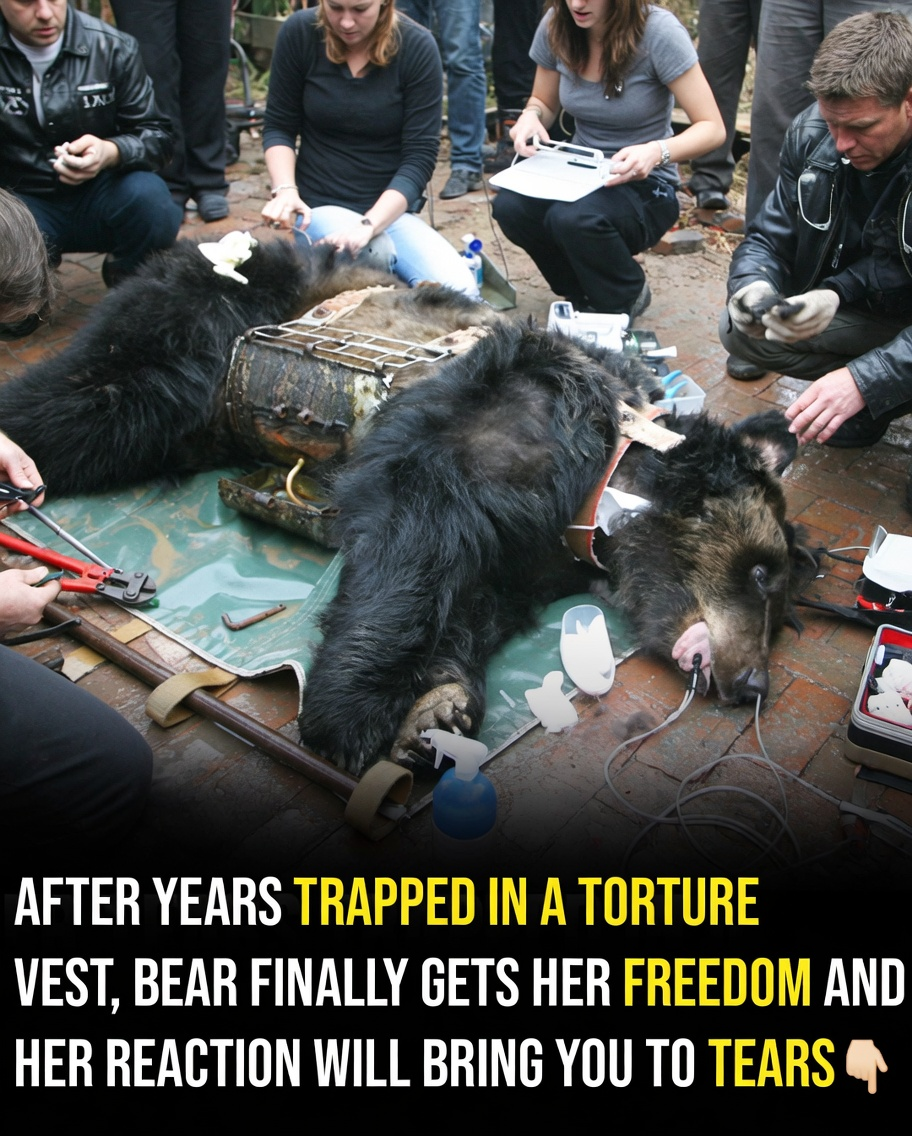
I still wake up some nights hearing the sound of that bear’s desperate roars echoing through the forest. When wildlife rescuers first found him, the massive animal was caught in a cruel metal trap designed for smaller game. The jagged jaws had clamped shut around his front paw weeks earlier, cutting deep into muscle and bone. He had dragged the heavy device for miles, leaving a trail of blood and broken hope behind him. What those rescuers witnessed wasn’t just an injured animal — it was a living soul being slowly destroyed by human cruelty.
The trap was one of the worst kinds: an illegal steel-jaw leghold device meant to hold animals in agonizing pain until the hunter returned. This bear had survived on sheer will, chewing at his own flesh in desperate attempts to escape. By the time he was discovered, infection had set in, and his once-powerful body was emaciated and weak. The rescuers said his eyes carried a look of complete defeat, as if he had finally accepted that this was how his life would end — alone, suffering, and forgotten.
The journey to save him was grueling. Vets worked around the clock to stabilize him. They had to amputate part of his damaged paw, treat severe infections, and slowly rebuild his strength with careful nutrition and physical therapy. For the first several weeks, he barely moved. He would lie in his enclosure with the same vacant stare, as though waiting for the pain to finally finish what the trap had started.
But something beautiful began to happen as the weeks turned into months.
With patient care and endless love from the rescue team, the bear slowly started to trust again. The first time he took food from a human hand without fear, the entire staff cried. The first time he stood up on his three remaining paws and took a few wobbly steps, they cheered like he had won an Olympic medal. Day by day, the broken animal who had been left to die in the woods began to remember what it felt like to be alive.
Today, that same bear — now named Atlas — lives in a spacious sanctuary where he can roam, swim, and feel the sun on his fur without pain. He plays with enrichment toys, naps under shady trees, and has even made friends with other rescued bears. The transformation is nothing short of miraculous. The creature who once roared in agony now makes soft, content grumbling sounds when his caretakers visit. His eyes are bright again. His spirit has returned.
Atlas’s story is more than just one animal’s rescue. It’s a powerful reminder of both the darkness and the light that exist in our world. The cruelty that left him trapped in that metal device represents the worst of humanity. But the compassion that saved him and gave him a second chance represents the best of us.
Every time I see the updated photos of Atlas playing in his sanctuary, I think about how many other animals are still suffering in silence right now — caught in traps, confined in horrible conditions, or abandoned when they’re no longer convenient. Their stories may never make headlines, but they deserve our attention and action just the same.
If Atlas could survive what he went through and still find joy in life again, then there is hope for all of us. Hope for the broken, the forgotten, and the ones who feel like they’ve been left behind to suffer. His transformation proves that even the deepest wounds can heal when love and care are given freely.
The bear who was once trapped in hell now lives in happiness. And every time he lifts his head to the sky or splashes in his pool, he reminds us that second chances aren’t just possible — they’re worth fighting for.
If this story touches you, please consider supporting wildlife rescue organizations. The Atlas’s of the world are waiting for someone to care enough to save them. Sometimes the greatest victories aren’t loud or celebrated. Sometimes they’re quiet — like a broken bear finally learning how to trust the world again.
Most Popular!
-
 Eggs, Cholesterol, and Timing: What Actually Matters for Most People
-
When a Partner Leaves With More Than a Suitcase: Protecting Yourself From Financial Betrayal
-
When Financial Support Meets Contempt: Recognizing Exploitation Inside a Marriage
-
Why Some Sensory Toys and Household “Hacks” Do Not Belong in the Microwave
-
When Grief Clouds Judgment: Misreading Silence and the Quiet Ways People Show Care
-
When One Partner Does All the Hosting: Recognizing Imbalance Before Resentment Takes Over
-
How Many Holes Are in a T-Shirt? What a Simple Puzzle Reveals About How We See
-
The Quiet Stories Inside Secondhand Objects: When a Thrift-Store Find Carries Someone Else’s History







