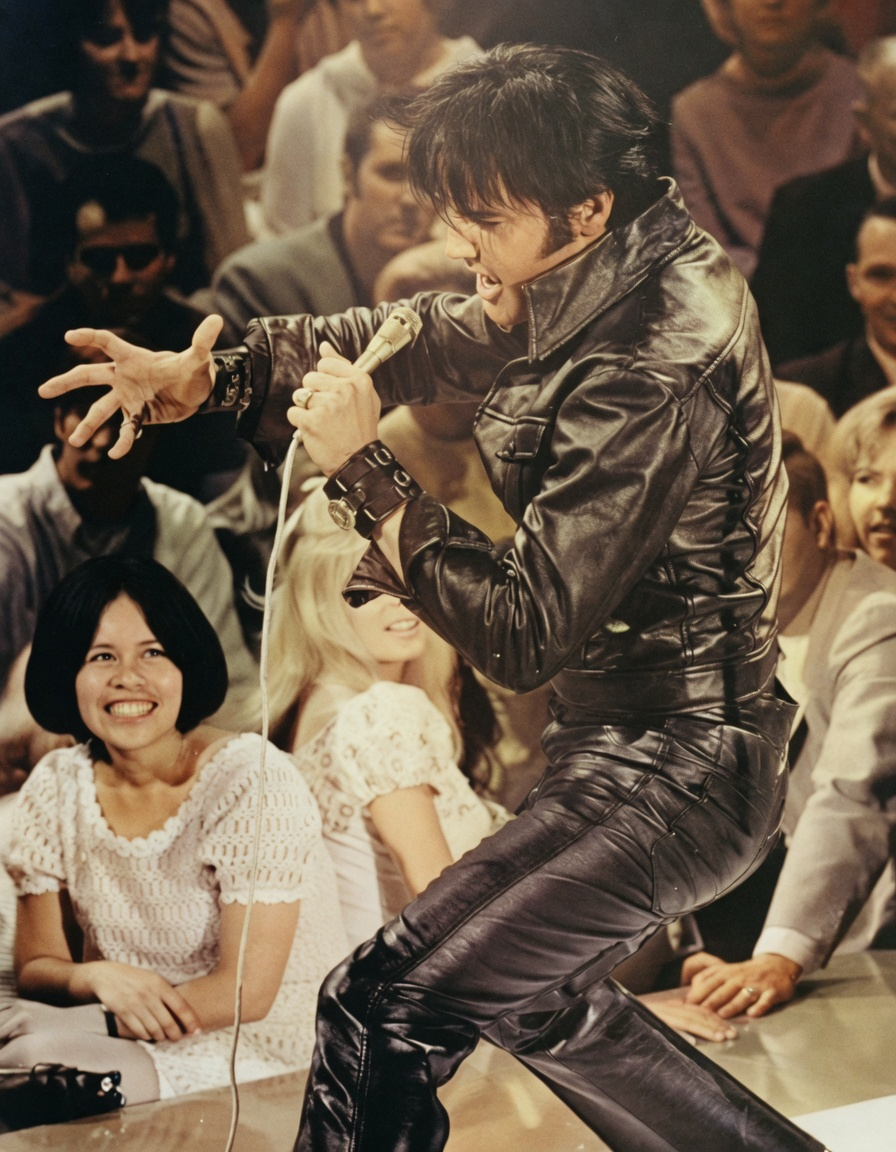
In 1968, Elvis Presley stepped onto a television stage wearing a sleek black leather suit that would change everything. Gone was the polished, movie-star image Hollywood had carefully crafted for him. In its place stood a raw, dangerous, and undeniably magnetic King of Rock ‘n’ Roll. That moment wasn’t just a comeback — it was a rebellion. And many don’t realize it was heavily inspired by Marlon Brando’s revolutionary style from over a decade earlier. Elvis didn’t just borrow the leather. He borrowed the attitude, the defiance, and the freedom that Brando had made famous.
By the mid-1960s, Elvis was trapped. After his military service, Hollywood had turned him into a leading man in a string of formulaic, forgettable musical films. The movies made money, but they drained his soul. The raw energy that once made teenage girls scream was being slowly replaced by a safe, clean-cut image. Elvis felt suffocated. He knew if he didn’t break free soon, his career — and his identity — would be lost forever.
Meanwhile, Marlon Brando had already shattered Hollywood’s expectations years earlier. In 1953’s The Wild One, Brando appeared as a motorcycle gang leader wearing a black leather jacket, exuding rebellion and cool detachment. That single piece of clothing became a symbol of youthful defiance against authority. Brando wasn’t just acting — he was redefining what a male star could look and behave like. His influence reached far beyond film. It seeped into music, fashion, and culture.
Elvis had always admired Brando. In private, he studied his films and respected the actor’s refusal to be boxed in. When Elvis decided it was time for his own transformation, he reached for that same black leather armor. The 1968 Comeback Special, often called the ’68 Special, became his declaration of independence. Dressed in that tight black leather outfit, sweating under the lights and performing with raw power, Elvis reminded the world — and himself — who he really was.
The transformation was electric. Millions watched as the once-polished movie star growled through hits like “Jailhouse Rock” and “Hound Dog” with the same fire he had in the 1950s. The black leather wasn’t just a costume. It was armor against the sterile image that had nearly destroyed him. By channeling Brando’s rebellious spirit, Elvis broke the Hollywood cage that had held him for years.
Critics and fans immediately felt the shift. The special was a massive success, reviving Elvis’s career and leading to some of his most legendary live performances in Las Vegas. The leather suit became iconic, symbolizing his refusal to fade quietly into middle age. It proved that authenticity and danger still sold — perhaps even better than safe, family-friendly entertainment.
This black leather rebellion also reflected deeper changes happening in America. The late 1960s were a time of social upheaval, civil rights struggles, and youth rebellion. Elvis, once the face of teenage rebellion himself, had been sidelined by his own success. By returning to that raw edge, he reconnected with a new generation while reminding older fans why they fell in love with him in the first place.
What makes this story so powerful is how intentionally Elvis borrowed from Brando. He didn’t copy him blindly — he adapted that rebellious energy to fit his own style and Southern roots. The leather suit became Elvis’s version of Brando’s motorcycle jacket: a visual statement that said “I’m still here, and I’m still dangerous.”
Even today, that moment continues to inspire. Fashion designers, musicians, and performers still reference Elvis’s 1968 leather look when they want to project cool confidence and defiance. It remains one of the most powerful comeback moments in entertainment history — proof that sometimes the best way forward is to reconnect with the fire that made you special in the beginning.
Elvis didn’t just wear black leather that night. He reclaimed his throne by remembering who he was before Hollywood tried to remake him. In doing so, he taught every artist a valuable lesson: never let anyone dim your true light. Sometimes you have to borrow a little rebellion from those who came before you to light your own path again.
The King never forgot that night. For the rest of his career, he would return to that raw, powerful version of himself on stage. The black leather rebellion wasn’t just a performance — it was Elvis Presley reminding the world, and himself, that he was still the one and only King. And thanks in part to a little inspiration from Marlon Brando, he made sure no one would ever forget it.
Most Popular!
-
 Eggs, Cholesterol, and Timing: What Actually Matters for Most People
-
When a Partner Leaves With More Than a Suitcase: Protecting Yourself From Financial Betrayal
-
When Financial Support Meets Contempt: Recognizing Exploitation Inside a Marriage
-
Why Some Sensory Toys and Household “Hacks” Do Not Belong in the Microwave
-
When Grief Clouds Judgment: Misreading Silence and the Quiet Ways People Show Care
-
When One Partner Does All the Hosting: Recognizing Imbalance Before Resentment Takes Over
-
How Many Holes Are in a T-Shirt? What a Simple Puzzle Reveals About How We See
-
The Quiet Stories Inside Secondhand Objects: When a Thrift-Store Find Carries Someone Else’s History