I was mortified the day my mother showed up at my high school graduation with those scars. I had begged her for weeks to stay home. “Please, Mom,” I whispered the night before, tears stinging my eyes. “Everyone will stare. They’ll ask questions. I just want one normal day.” She looked at me with that quiet, hurt expression I had come to hate, nodded slowly, and said she understood. I thought she would listen. I was wrong. And the moment a stranger stepped onto that stage and revealed the truth behind her scars, my entire world — and everything I thought I knew about my mother — came crashing down.
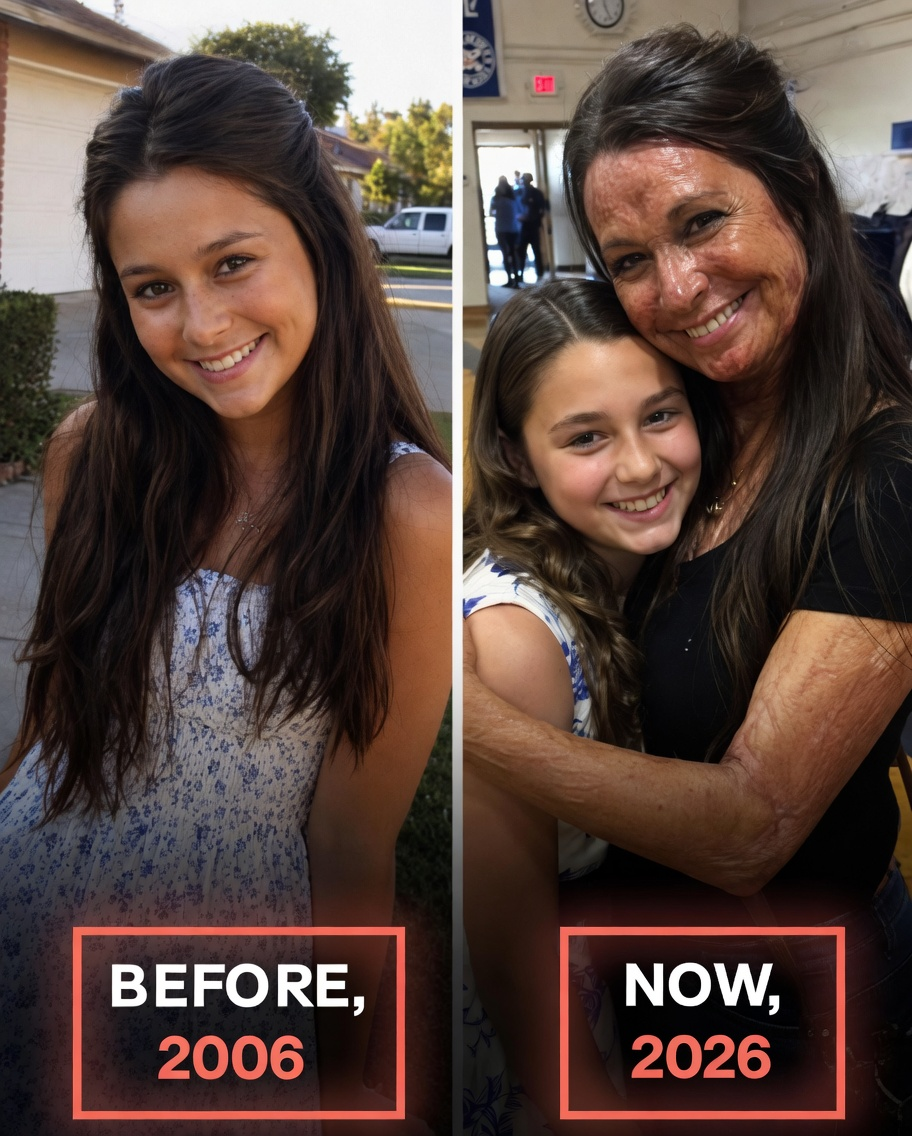
My name is Brooke. I was eighteen, captain of the debate team, and about to give a speech as valedictorian. All I wanted was to walk across that stage looking like the perfect success story. My mother, Elena, had severe burn scars covering the left side of her face, neck, and arm from an accident when I was a baby. I grew up watching kids whisper and adults avert their eyes. The pity, the questions, the way people treated her like she was fragile or contagious — it embarrassed me more than I ever admitted. By high school, I had perfected the art of keeping her at a distance during school events. I told myself I was protecting her. Really, I was protecting my image.
Graduation morning, I woke up determined. I had practiced my speech until I could deliver it flawlessly. I imagined the applause, the photos, the pride on my friends’ faces. Then my mother appeared in the kitchen wearing her best dress, the one that covered most of her scars. “I’m coming,” she said softly. “This is your day, but I carried you for nine months. I want to see you walk.” I exploded. I said cruel things I can never take back — that she would ruin everything, that people would remember her scars instead of my achievements, that I wished she would just stay invisible like she usually did. She cried. I stormed out. I assumed she would stay home.
The ceremony started beautifully. The principal praised our class. My friends cheered as I walked to the podium. I began my speech about resilience and chasing dreams. Then, halfway through, a man I didn’t recognize stepped onto the stage from the side. He was older, maybe in his sixties, wearing a simple suit. The principal looked confused. The audience murmured. The man gently took the microphone from me with a kind but firm hand.
“I’m sorry to interrupt,” he said, his voice steady. “But there’s something this young woman and this entire audience needs to hear before she finishes her speech.”
He turned to me with tears in his eyes. “Brooke, your mother saved my life twenty years ago. And she paid for it with those scars you’re so ashamed of.”
The room went completely silent. My heart stopped.
The stranger introduced himself as Dr. Michael Reynolds, a firefighter who had been trapped in a burning apartment building the year I was born. My mother, who worked as a paramedic at the time, had run into the flames against orders to pull him out. The ceiling collapsed on them. She shielded him with her body, suffering third-degree burns while dragging him to safety. He survived because of her. She spent months in the hospital and carried the scars for the rest of her life.
He had been searching for her ever since to thank her properly. When he saw her name in the program as the mother of the valedictorian, he knew this was his chance. He had no idea about the tension between us. He simply wanted the world to know who Elena really was.
I stood there shaking as he spoke. Photos from the old newspaper articles appeared on the screen behind him — my mother as a young paramedic, bandaged and heroic, receiving an award for bravery. The audience was in tears. My classmates looked at me with disbelief. And then I saw her — my mother, sitting in the back row, crying quietly, trying to hide her scarred face like she always did.
I couldn’t finish my speech. I walked off the stage, straight to her, and hugged her harder than I ever had in my life. “I’m so sorry, Mom,” I whispered. “I didn’t know. I was so selfish.” She held me and said the words that broke me even more: “I never wanted you to know. I didn’t want my pain to be your burden.”
That moment changed everything. The shame I had carried for years dissolved into deep regret and overwhelming love. I had spent my entire life embarrassed by the very thing that made my mother extraordinary. I had hidden her, distanced myself, and made her feel unworthy because of scars she earned saving a stranger’s life.
The years since that graduation have been about healing. I’ve apologized countless times. I’ve made sure my mother knows how proud I am of her. We’ve grown closer than ever. She still carries the scars, but now when people stare, I stand beside her with my head high. I tell anyone who will listen about the hero who raised me.
My mother taught me the most important lesson of my life that day: true strength isn’t about looking perfect. It’s about running toward danger when everyone else runs away. It’s about carrying pain quietly so your child doesn’t have to. And it’s about forgiving yourself and others when you finally see the full truth.
If you’re reading this and you’ve ever been ashamed of someone you love because of how they look, what they’ve been through, or the burdens they carry, please stop. You have no idea what battles they’ve fought or what courage lives behind those scars. Take the time to ask. Listen. Love them openly before it’s too late.
My mother’s scars aren’t ugly. They’re proof of her love. And I almost missed seeing that because I was too busy worrying about what other people thought. That mistake cost us years of closeness I can never get back. But I’m grateful for the stranger who interrupted my speech that day. He didn’t just reveal my mother’s secret — he gave me back the relationship I almost threw away out of ignorance and pride.
To every parent carrying invisible or visible scars for their children: thank you. We don’t always understand in the moment, but your sacrifices shape us more than we know. And to every child who has ever been embarrassed by their parent’s imperfections: look closer. There is usually a story of love and courage behind what you see as weakness.
My mother’s scars saved a life. And in the end, they saved our relationship too. Some interruptions are exactly what we need to finally see clearly.
Most Popular!
-
 Selfish Husband Leaves Pregnant Wife Stranded on Front Steps with a Broken Leg to Save His Back for Boys’ Trip – But His Grandfather Delivers the Ultimate Justice
-
Iconic Bond Girl Walked Away from Hollywood Fame and Fortune for the Love of This Legendary Beatles Icon
-
Millions of Drivers Shocked to Discover True Meaning of Mysterious Letter “E” Hidden on Vintage Car Gear Sticks
-
Storage Wars Legend Darrell “The Gambler” Sheets Found Dead in His Arizona Home After Tragically Long and Secret Battle
-
Generous Nine-Year-Old Sells Her Beloved Toy Collection to Help a Friend – But Next Day Furious Parents Confront Her Mother with a Life-Changing Truth
-
Terrifying Midnight Panic Ends in Hilarity After Family Investigates Mysterious Spiky Object in Bed Sheets
-
Bride Decides to Wear Her Late Grandmother’s Wedding Dress – But a Hidden Note Discovered in the Lining Exposes a Heartbreaking Thirty-Year Family Secret
-
Jennifer Aniston’s Secret Heartbreak: The Tragic Losses That Left the Friends Star Grieving Alone