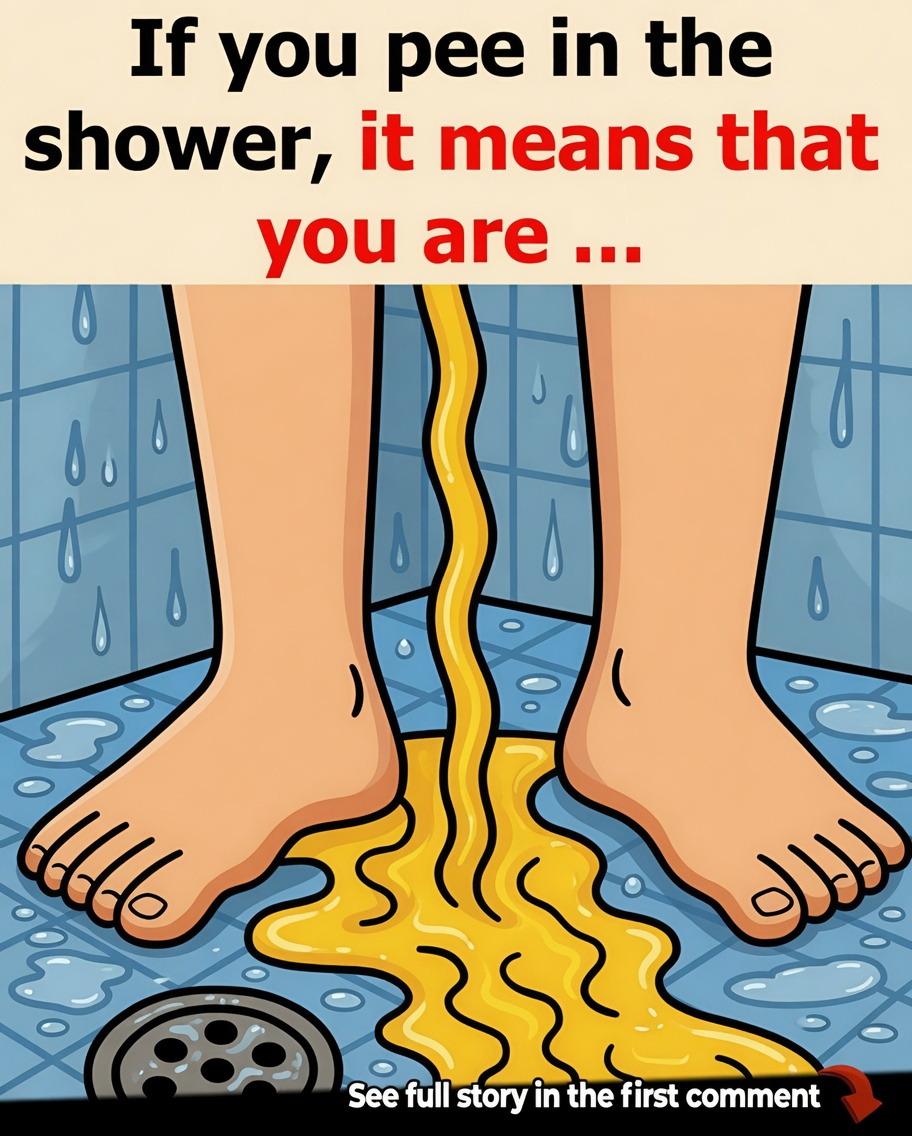
We all have daily habits we rarely question — brushing our teeth, washing our hands, taking a shower. But there’s one simple change that could save thousands of gallons of water per year, reduce your water bill, and even offer minor hygiene perks: peeing in the shower. While it might sound a bit taboo at first, this eco-friendly habit is gaining mainstream attention for very practical reasons. Far from being gross or unhygienic, it’s a small, effortless action with outsized benefits for your wallet, the environment, and even your bathroom routine.
The average person flushes the toilet about 5–7 times per day. Each flush uses roughly 1.6 gallons of water in a modern low-flow toilet. That adds up fast — over 2,500 gallons per year for one person just for urine-related flushes. Multiply that by a household of four, and you’re looking at tens of thousands of gallons wasted annually. By simply peeing while you’re already in the shower, you eliminate those extra flushes without adding any extra water usage. It’s one of the easiest zero-effort sustainability hacks available.
Environmental Impact That Actually Adds Up
Water conservation is more important than ever as droughts, aging infrastructure, and population growth strain resources in many regions. According to environmental data, the average American uses about 80–100 gallons of water per day. Cutting out unnecessary toilet flushes through shower peeing can reduce household water consumption by 5–10% or more. When millions of people adopt this habit, the collective savings become significant for municipal water systems and treatment plants.
Beyond water, there’s an energy angle too. Treating and pumping water requires electricity. Reducing demand means lower energy consumption and a smaller carbon footprint. In drought-prone areas like California, Arizona, and parts of the Southwest, every gallon saved helps ease pressure on reservoirs and groundwater supplies. It’s a small personal action that contributes to a much larger solution.
Health and Hygiene Benefits Most People Don’t Realize
Contrary to what some might assume, peeing in the shower is generally hygienic when done correctly. Urine is sterile when it leaves the body (barring infection), and the constant flow of shower water quickly washes it down the drain. Many dermatologists and urologists actually see minor benefits. The warm water can help relax pelvic floor muscles, potentially making the stream more complete and reducing the chance of minor urinary tract irritation.
For people with limited mobility or those who wake up multiple times at night, combining bathroom trips with shower time can reduce physical strain and improve sleep quality. Some even report that the warm water encourages fuller bladder emptying, which may help with minor prostate or bladder comfort issues in older adults. Of course, if you have an active urinary tract infection or other medical condition, consult your doctor first.
Addressing the “Gross” Factor
The biggest barrier for most people isn’t practicality — it’s the mental hurdle of thinking it’s unclean. In reality, your shower is already a place where soap, shampoo, body oils, and dead skin cells go down the drain. A little urine diluted in running water is negligible by comparison. Think about it: public swimming pools, lakes, and oceans all contain trace amounts of urine from swimmers, yet we still enjoy them. A private shower with constant water flow is far cleaner than those environments.
If the idea still feels off-putting, start small. Try it once or twice a week and see how natural it feels. Most people who adopt the habit report that within a couple of weeks it becomes automatic and they no longer think twice about it.
Money-Saving Angle You’ll Notice on Your Next Bill
Water bills are quietly rising in many cities. By cutting out several flushes per day, a family of four can save significantly over the course of a year. Depending on local rates, the savings can range from $50 to $150+ annually. That’s money that can go toward groceries, vacations, or other priorities. When combined with other water-saving habits like shorter showers and fixing leaks, the impact becomes even more noticeable.
How to Make It a Natural Habit
- Start simple — Try it first thing in the morning when you’re already stepping into the shower.
- Create a reminder — Put a small, tasteful sign inside the shower (or just set a mental cue) until it becomes automatic.
- Talk about it openly — Normalizing the habit with family members removes any awkwardness.
- Teach the next generation — Kids who grow up with this habit will see it as completely normal and carry the water-saving mindset into adulthood.
When You Shouldn’t Do It
There are a few situations where it’s better to stick with the toilet:
- If you have an active urinary tract infection or other medical issue that requires monitoring urine color or output.
- In homes with septic systems that may be sensitive to changes in flow (though this is rarely an issue).
- If anyone in the household feels strongly uncomfortable with the practice — respect and communication matter.
The Bigger Picture: Small Habits, Big Change
Peeing in the shower won’t single-handedly solve the world’s water problems, but it represents something important: the power of small, consistent actions. When millions of people make tiny changes like this, the cumulative effect is meaningful. It’s the same principle behind other simple eco-habits like turning off lights, using reusable bags, or taking shorter showers.
In a world full of overwhelming environmental news, this is one change that feels doable and immediately beneficial. You save money, conserve resources, and simplify your morning routine all at once. It’s practical sustainability at its best.
The next time you step into the shower, consider giving it a try. Your wallet, the planet, and your peace of mind might thank you. And who knows — once you start, you might wonder why you ever did it any other way.
Have you tried peeing in the shower? What was your experience? Share in the comments below — let’s normalize this simple, helpful habit together.
Most Popular!
-
 Why Eating a Handful of Nuts Every Day Could Be One of the Best Things You Do for Your Brain
-
Most Drivers Never Touch This Tiny Rearview Mirror Tab – But Using It at Night Could Save Your Life
-
6 Simple Daily Habits That Make Older Women Look Radiantly Beautiful (No Expensive Creams Required)
-
8 Sneaky Hives Triggers Hiding in Plain Sight – And How to Finally Stop the Itch for Good
-
What the Handshake Symbol on a Parking Space Really Means – And How Community Exchange Zones Are Making In-Person Transactions Safer
-
Spencer Pratt Destroys Karen Bass on Live TV: “You Burned My House Down” – The Explosive Moment That Left Everyone Speechless
-
Popular Boy Ruined My Prom Night Over My Weight — But My Gym Trainer Exposed His Dark Secret and Ended His Entire Future
-
My Dad Claimed Mom Crashed in the Rain — But a Nurse Showed Me Hospital Security Footage That Exposed His Darkest Secret