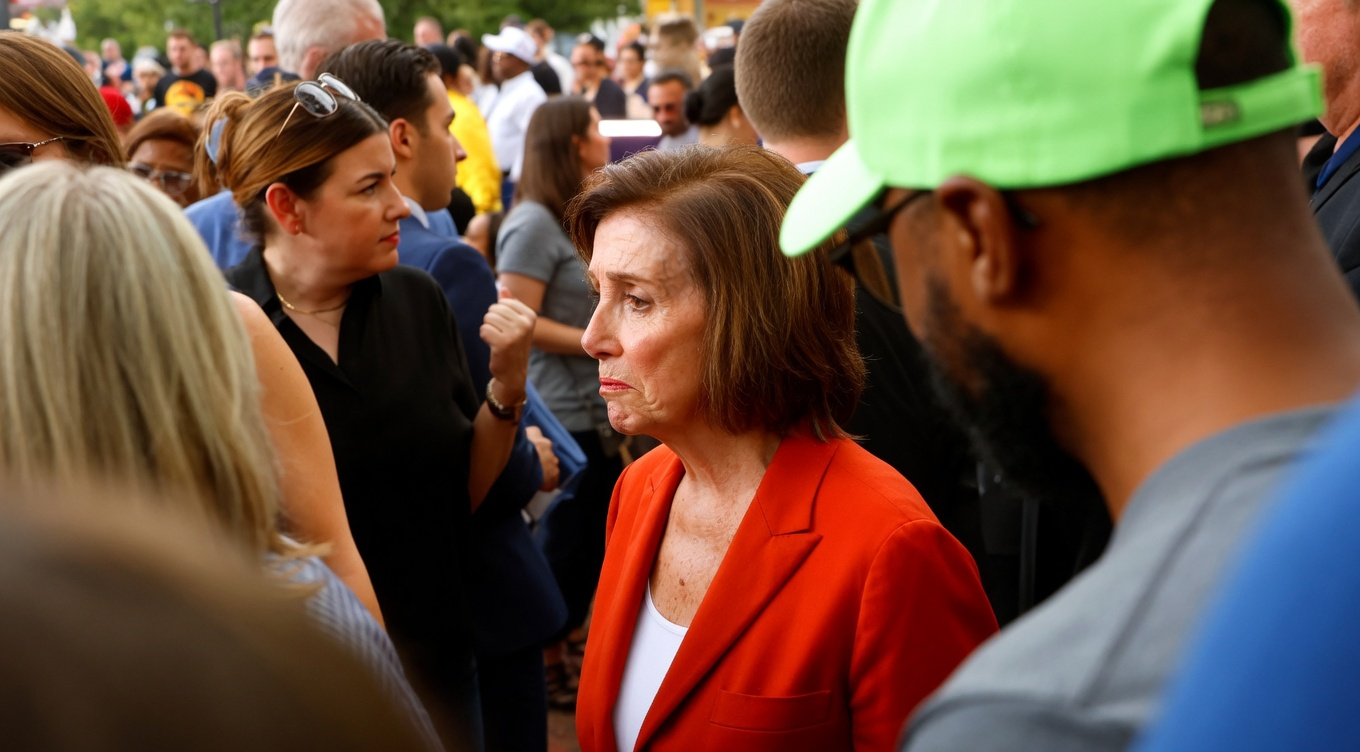
Public political events are supposed to be orderly forums for dialogue, but in today’s deeply polarized climate, they can quickly spiral into raw, unfiltered expressions of long-simmering frustration. That’s exactly what happened recently in California when former Speaker of the House Nancy Pelosi faced a series of intense disruptions from protesters who accused her of everything from orchestrating deceptive foreign policy decisions to personal corruption. The live outburst, which unfolded in front of a stunned audience, captured national attention and reignited debates about accountability, free speech, and the growing distrust many Americans feel toward longtime political figures.
The event started as a routine public appearance in the Golden State, but tensions boiled over almost immediately. Multiple hecklers interrupted Pelosi’s remarks, shouting accusations tied to decades-old foreign policy controversies, including the Iraq War and its intelligence failures around weapons of mass destruction. One protester’s voice cut through the room, declaring that “there is a special place in the depths of hell reserved for those who have played a role in the orchestration of the Iraq War.” The reference to Afghanistan’s post-occupation struggles and even the Nord Stream pipeline sabotage added layers to the heated claims, painting a picture of systemic betrayal that protesters said had caused unnecessary suffering both abroad and at home.
Security teams worked frantically to maintain order, escorting disruptive individuals out one by one, only for others to stand and continue the barrage. The repeated interruptions turned what should have been a controlled gathering into a chaotic scene that left many in the audience visibly uncomfortable. Supporters of Pelosi condemned the tactics as disrespectful and bordering on conspiracy-driven, while critics viewed the outbursts as a long-overdue moment of public accountability. The stark divide in reactions highlighted just how fractured American political discourse has become, where even routine appearances can expose deep ideological rifts.
At the heart of the protesters’ anger were longstanding allegations of corruption and ethical lapses. Claims of insider trading tied to stock transactions by members of Congress, including Pelosi’s family, have circulated for years and gained renewed traction amid broader scrutiny of congressional ethics. Protesters framed these issues alongside foreign policy decisions, suggesting a pattern of prioritizing special interests over American lives and taxpayer dollars. While Pelosi has consistently denied any wrongdoing and pointed to her long record of public service, the confrontation brought these grievances into sharp, personal focus in a way that formal hearings rarely achieve.
This wasn’t an isolated incident but part of a larger pattern of public frustration with entrenched political leadership. Many Americans feel disconnected from Washington insiders who have held power for decades, viewing them as out of touch with everyday economic struggles and the human cost of military engagements. The California event tapped into that sentiment, blending historical grievances over the Iraq and Afghanistan wars with more recent economic pressures and questions about transparency in foreign policy. It served as a vivid illustration of how unresolved issues from past decades continue to fuel present-day outrage.
For Pelosi, the confrontation represented yet another test of resilience in a career marked by high-stakes battles and intense public scrutiny. As one of the most prominent figures in modern American politics, she has faced criticism from both sides of the aisle over the years. Supporters highlight her role in landmark legislation and her steadfast advocacy for progressive causes, while detractors point to what they see as a legacy of partisan gridlock and questionable policy choices. The live nature of the outburst amplified its impact, turning a policy disagreement into a visceral, emotional spectacle that millions witnessed online within hours.
The broader implications extend far beyond one politician or one event. Incidents like this raise important questions about the boundaries of free speech versus civility in public discourse. While the First Amendment protects the right to protest and voice dissent, many argue that shouting down speakers undermines democratic dialogue and turns civic engagement into spectacle. Others counter that when formal channels of accountability feel ineffective, direct public confrontation becomes a necessary outlet for citizen frustration. The debate reflects deeper societal tensions about trust in institutions and the role of elected officials in an era of instant communication and heightened polarization.
From a practical standpoint, these kinds of outbursts also highlight the challenges political figures face in connecting with constituents. In an age where social media amplifies every moment, public appearances carry higher stakes than ever. Leaders must balance staying on message with addressing legitimate concerns head-on, yet the speed and intensity of modern protests can make measured responses difficult. For voters, the event serves as a reminder to look beyond headlines and consider the full context of policy decisions, their long-term consequences, and the human elements involved on all sides.
Ultimately, the California confrontation underscores a fundamental truth about contemporary American politics: the public’s patience for perceived secrecy, corruption, or foreign policy missteps has worn thin. Whether the accusations leveled at Pelosi hold merit or represent oversimplified narratives, they tap into genuine anxieties about accountability and the cost of political decisions. As the nation grapples with ongoing global challenges and domestic divisions, moments like this one reveal the raw emotions driving voter sentiment and the urgent need for more transparent, responsive leadership.
The video of the outburst spread rapidly across platforms, sparking conversations in living rooms, comment sections, and newsrooms nationwide. It became more than just another political scandal clip — it symbolized a breaking point for many who feel their voices have been ignored for too long. While opinions remain sharply divided, the event has forced a wider dialogue about how we engage with our elected officials and hold them responsible for the promises and policies that shape our lives.
In the end, what happened in California wasn’t simply about one politician facing criticism. It was a snapshot of a democracy under strain, where passion, pain, and pent-up frustration collide in real time. As Americans continue to navigate these turbulent political waters, events like this serve as powerful reminders that leadership carries profound responsibilities — and that the public is watching more closely than ever before.
What do you think — was the confrontation a necessary act of accountability or a disturbing breakdown in civility? Share your perspective in the comments below.
Most Popular!
-
 THE SILENCE SURROUNDING RFK JR.: WHAT IS BEING HIDDEN BEHIND CLOSED DOORS?
-
THE HELICOPTER IN THE BACKYARD: WHY MY PARENTS DISMISSED MY ORDINARY HUSBAND UNTIL HE SAVED MY LIFE DURING A TERRIFYING LABOR EMERGENCY
-
A DEADLY TREND: THE SILENT KILLER LURKING IN A TEEN’S PURSUIT OF BEAUTY
-
A DEADLY TREND: THE SILENT KILLER LURKING IN A TEEN’S PURSUIT OF BEAUTY
-
MY WIFE SOLD MY PRICELESS INHERITANCE BEHIND MY BACK—THEN THE BUYER CALLED IN ABSOLUTE TERROR!
-
THE FORTUNE I DIDN’T EXPECT: MY ELDERLY HUSBAND’S FINAL ACT OF REVENGE AGAINST HIS VULTURES
-
THE BILLIONAIRE IN THE TRAILER: TWO BOYS THOUGHT THEY WERE HELPING A DESTITUTE OLD MAN, BUT THE SECRET IN HIS FINAL WILL SHOCKED EVERYONE
-
THE INHERITANCE TRAP: MY SISTER STOLE THE PENTHOUSE, BUT I STOLE THE EMPIRE