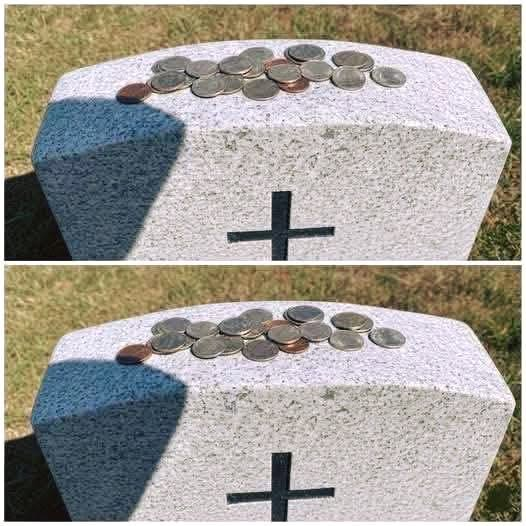
The soft morning light filtered through the trees at Arlington National Cemetery as a young woman knelt beside a polished white headstone. She reached into her pocket, pulled out a single shiny quarter, and placed it carefully on the marble. For a moment she stood in silence, hand resting gently on the stone, before walking away. Scenes like this play out every day at veterans’ graves across the country, where small coins left by visitors have become a quiet but powerful symbol of respect, remembrance, and gratitude. What many people don’t realize is that this simple act carries deep meaning rooted in military tradition, personal sacrifice, and a desire to say “thank you” in a way words sometimes cannot. The coins tell stories of service, loss, love, and the enduring bond between those who served and those they protected.
The tradition of leaving coins on military headstones gained widespread popularity during and after the Vietnam War era, though its roots stretch back even further in military culture. Soldiers and their families have long used small tokens to communicate messages without needing to speak. A coin placed on a grave lets the family of the fallen know that someone stopped by, remembered their loved one, and paid tribute to their service. It’s a silent conversation between the living and the dead, a way to bridge generations and ensure that sacrifices made decades ago are not forgotten. Over time, this practice spread from military cemeteries to national memorials and private gravesites, becoming one of the most recognizable ways civilians can honor veterans.
Each coin denomination carries its own specific meaning, adding layers of significance to the gesture. A penny simply means the visitor stopped by and wants to show basic respect and remembrance. A nickel indicates that the person trained with the deceased at boot camp or served alongside them in some capacity. A dime signifies that the visitor served in the same unit or shared a closer bond during deployment. The most meaningful of all is the quarter, which traditionally means the visitor was present when the service member died or was there for the funeral. These distinctions turn a simple act into a coded message of shared history, camaraderie, and profound gratitude that resonates deeply within military communities.
For many families of fallen service members, discovering coins on a loved one’s headstone brings unexpected comfort and connection. One widow shared how she visits her husband’s grave monthly and always finds new coins, each one reminding her that his sacrifice touched lives far beyond their family. She keeps a small collection of the coins she finds, treasuring them as tangible proof that her husband’s memory lives on. These small tokens have become emotional lifelines for grieving families, offering reassurance that their loved ones are remembered not just on Memorial Day or Veterans Day, but every single day by strangers who feel moved to pay tribute.
The tradition also serves as a powerful teaching moment for younger generations. Parents often bring their children to national cemeteries and explain the meaning behind the coins, helping kids understand the cost of freedom and the importance of honoring those who defended it. A father might place a penny with his son while telling stories of courage and service, planting seeds of patriotism and respect that will last a lifetime. In this way, the simple act of leaving a coin becomes a bridge across time, ensuring that the lessons of sacrifice and duty continue to shape American values long after the veterans themselves are gone.
Beyond individual stories, the coins represent a collective acknowledgment of service and sacrifice on a national scale. When visitors leave coins at the graves of strangers, they participate in something larger than themselves — a living tradition that keeps military history alive through everyday acts of remembrance. It costs nothing but a few cents and a moment of reflection, yet it creates ripples of meaning that extend far beyond the cemetery gates. In an increasingly fast-paced world where attention spans are short, this deliberate, physical gesture stands out as a meaningful way to slow down and honor those who gave everything so others could live freely.
Military historians note that similar traditions of leaving tokens on graves exist in many cultures throughout history, but the American version with coins feels particularly fitting for a nation built on ideals of liberty and citizen-soldiers. Coins represent value, exchange, and trust — all concepts deeply intertwined with military service. By leaving them, visitors symbolically “pay” a debt of gratitude that can never truly be repaid, acknowledging that freedom isn’t free. This understanding brings comfort to aging veterans who visit comrades’ graves and find coins waiting there, knowing their shared experiences continue to matter to new generations.
The practice has also evolved with modern times. Some people now leave coins along with handwritten notes, flowers, or small flags, creating beautiful displays of appreciation at gravesites. Social media has helped spread awareness of the tradition, with photos of coin-covered headstones inspiring others to participate when they visit cemeteries. Veterans’ organizations actively encourage the custom, providing educational materials that explain the meanings and history so that respectful visitors understand exactly what their gesture communicates. Even those who have never served in the military find the tradition deeply moving and meaningful.
For anyone who has ever felt unsure about how to properly honor veterans, leaving a coin offers a simple, accessible way to show respect. Whether you have a personal connection to the service member or simply want to thank those who protected our nation, the act carries weight far beyond its monetary value. Next time you visit a military cemetery, consider bringing a few coins and taking a quiet moment to reflect on the lives represented by the rows of white stones. Your small contribution joins thousands of others in creating a powerful collective tribute that speaks volumes about American gratitude and remembrance.
The coins on military headstones are far more than pieces of metal — they are symbols of lives well-lived, sacrifices freely given, and a nation that refuses to forget. They connect the past with the present and ensure that future generations will understand the true cost of the freedom they enjoy every day. The next time you see a gleaming coin resting on a veteran’s grave, know that it represents a story of courage, a debt of gratitude, and a promise kept: that these heroes will never be forgotten. In a world that often moves too fast, this quiet tradition reminds us of the importance of pausing to remember, to honor, and to say thank you in the most meaningful way possible. The men and women who rest beneath those stones gave their all — the least we can do is leave a coin and carry their memory forward with respect and reverence.
Most Popular!
-
 Valentine’s Dinner Experiment Sheds Light on Why a Seven-Year Relationship Ended
-
Murder Charge Dropped Against Father After Police Error in Case Involving Daughter’s Alleged Assailant
-
Sam Elliott Made a Memorable Appearance at the Actor Awards Alongside Wife Katharine Ross
-
After Returning Home From Work I Found Something Unexpected On My Bedroom Floor
-
Remembering the Beloved Star Who Left a Lasting Impression on Audiences
-
Common Slow Cooker Mistakes That May Affect Food Safety — Are You Serving Parasites for Dinner After All?
-
83-Year-Old Harrison Ford Makes a Surprising Revelation About His Personal Life
-
Hollywood Icon from Psycho Once Praised by Hitchcock Continues to Impress at 95