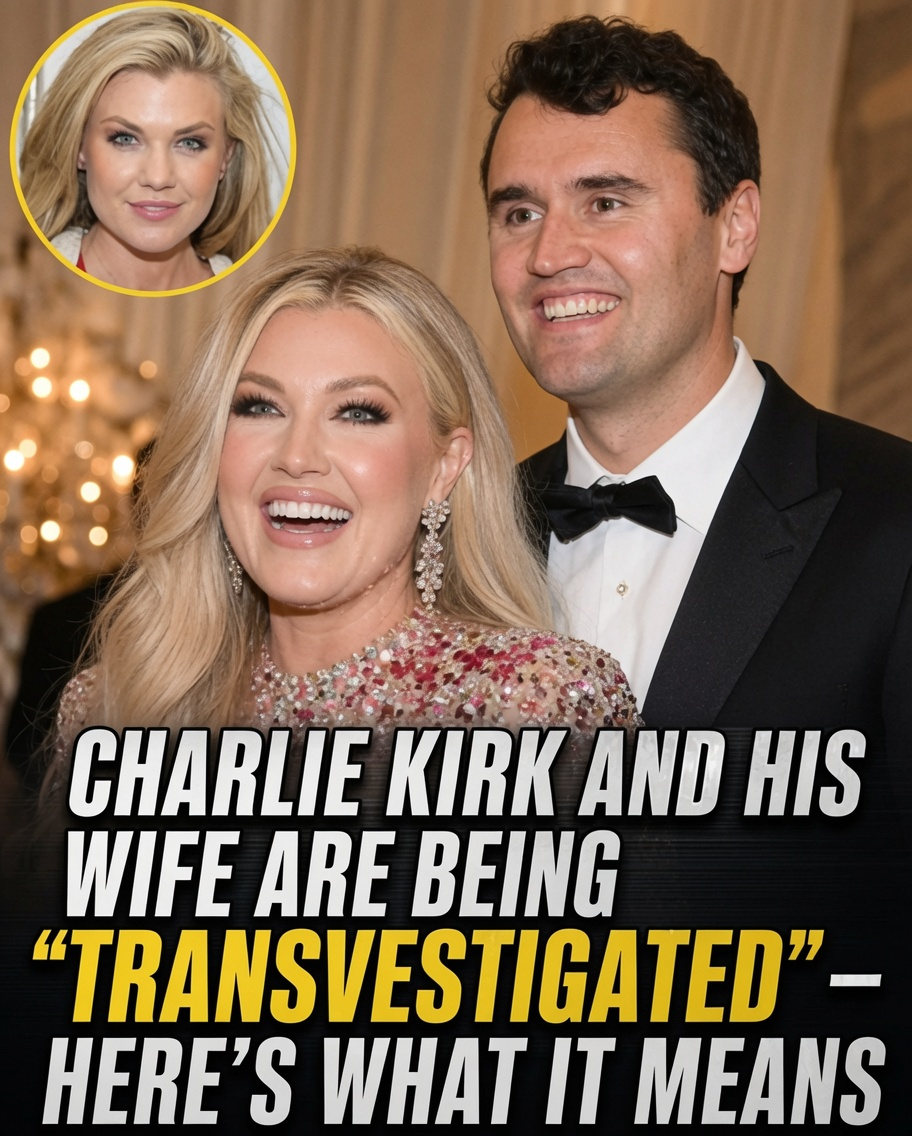
In the age of social media, public figures live under constant scrutiny. Every photo, every video, and every public appearance becomes fuel for speculation, conspiracy theories, and outright harassment. Conservative activist Charlie Kirk and his wife Erika have recently found themselves at the center of one of the internet’s most bizarre and growing obsessions: “transvestigation.” This loosely organized online movement claims to expose supposed secret transgender identities of celebrities, politicians, and influencers. What started as fringe conspiracy content has spilled into mainstream conversations, affecting real families and reputations. Understanding why the Kirks are being targeted reveals far more about our fractured culture than it does about the individuals themselves.
Charlie Kirk built his public profile as a sharp, articulate voice for conservative values. Through Turning Point USA, he has mobilized young people around principles of limited government, free speech, and traditional American ideals. His wife Erika has largely stayed out of the spotlight, supporting her husband’s work while maintaining a relatively private life. Their marriage and family life appear conventional and unremarkable by public standards. Yet that very normalcy seems to make them irresistible targets for those hunting for hidden narratives. In the world of online conspiracies, ordinary success and traditional values are often reframed as evidence of deception.
The “transvestigation” trend operates on cherry-picked images, altered videos, and pseudoscientific claims about bone structure, shoulder width, or facial features. Proponents scan public photos for any angle that could support their theory, then spread the content across platforms with dramatic captions and urgent calls to “wake up.” For Charlie and Erika Kirk, the attacks focus on everything from Erika’s appearance in certain lighting to Charlie’s mannerisms during speeches. None of these claims are supported by credible evidence, yet they spread rapidly among certain online communities seeking to undermine conservative figures. The pattern is clear: when arguments fail, personal attacks disguised as “investigations” become the weapon of choice.
What makes this trend particularly troubling is how quickly it moves from fringe forums to broader audiences. Young people scrolling through short-form videos encounter these claims presented with confident narration and dramatic music. Without context or critical thinking tools, many accept the narrative at face value. The Kirks are not the first targets — similar hoaxes have been directed at athletes, actors, politicians across the spectrum, and even historical figures. The common thread seems to be a desire to destabilize public trust and create chaos around anyone who represents traditional structures or challenges certain cultural shifts.
Psychologically, these campaigns fulfill multiple needs for participants. For some, it provides a sense of special knowledge — the thrill of believing they see what others miss. For others, it serves as political warfare, a way to delegitimize opponents without engaging their ideas. In an era of declining trust in institutions, conspiracy thinking offers simple explanations for complex social changes. If someone like Charlie Kirk, who speaks forcefully about family, gender, and culture, can be recast as secretly undermining those values, it creates a satisfying narrative of hypocrisy that justifies further attacks.
The personal toll on families caught in these hoaxes is significant. Constant online harassment creates stress, anxiety, and safety concerns. Children of public figures may see distorted versions of their parents circulating online. Spouses face questions from friends and extended family who encountered the content. Even when the claims are ridiculous, the sheer volume of repetition can plant seeds of doubt. Erika Kirk has had to navigate this while supporting her husband’s demanding public work. The emotional labor of maintaining dignity and focus amid baseless accusations should not be underestimated.
This phenomenon also reveals deeper cultural tensions around gender, identity, and authenticity. In a time when discussions about biological sex, gender roles, and personal privacy have become highly charged, some activists and online communities have weaponized these topics against their ideological opponents. Rather than engaging with Kirk’s arguments on policy or culture, attackers attempt to undermine his personal credibility through deeply personal and invasive claims. This tactic bypasses rational debate entirely, moving straight to character assassination.
The spread of transvestigation content raises serious questions about platform responsibility. Social media algorithms often amplify sensational, emotionally charged material because it drives engagement. Conspiracy videos generate comments, shares, and watch time. Moderation policies struggle to balance free speech with preventing harassment. When platforms remove clearly false and harmful content, they face accusations of censorship. When they allow it, they risk becoming vectors for real-world damage to innocent people. Finding the right balance remains one of the biggest challenges of our digital age.
For everyday people watching these trends unfold, there are important lessons about media literacy and critical thinking. Not every dramatic claim with ominous music contains truth. Extraordinary accusations require extraordinary evidence. When content focuses heavily on speculation about someone’s body or private life rather than their public statements or actions, it’s often a sign of bad-faith argumentation. Developing healthy skepticism without falling into total cynicism is crucial. Question sources, look for primary evidence, and consider the motivations behind the content creator.
The Kirks’ experience also highlights the courage required to maintain public life amid constant attacks. Many people choose to step back from the spotlight to protect their families. Those who remain, like Charlie Kirk, accept that personal attacks come with the territory. Their resilience in continuing their work despite these campaigns demonstrates commitment to their principles that goes beyond personal comfort. In many ways, refusing to be silenced by online harassment sends its own powerful message about free speech and standing firm in one’s beliefs.
As society navigates rapid changes in technology, culture, and identity, we face a choice about how we treat one another. We can allow conspiracy thinking and personal attacks to dominate public discourse, or we can insist on higher standards of evidence, decency, and respect for privacy. The “transvestigation” trend represents the darker path — one where speculation replaces facts and personal destruction becomes acceptable political strategy. Rejecting that path doesn’t mean ignoring legitimate questions about policy or culture. It means engaging those questions honestly rather than through invasive personal attacks.
Ultimately, the targeting of Charlie Kirk and his wife reveals less about them than about the people doing the targeting. It shows a discomfort with traditional voices and a willingness to use any tool, no matter how cruel or baseless, to silence them. As consumers of information, we each have responsibility to resist the pull of sensational conspiracy content and demand better from both creators and platforms. Protecting innocent people from baseless harassment isn’t censorship — it’s basic human decency.
The next time you encounter one of these viral “exposés,” pause before sharing or engaging. Ask yourself what evidence actually supports the claim. Consider the human beings behind the headlines and how such content might affect their lives. In our increasingly digital world, choosing compassion over clicks and facts over speculation might be one of the most radical and necessary choices we can make. Charlie Kirk and his wife deserve the same presumption of good faith and privacy that we would want for ourselves and our own families. In defending that principle, we defend something essential about civilized society itself.
Most Popular!
-
 The 5 That Changed Everything: How a Pair of Baby Shoes Brought Two Mothers Back to Life
-
The Flight Attendant Scolded a Struggling Mother — Until the Pilot’s Voice Came Over the Intercom and Changed Everything
-
I Adopted a Little Girl — Thirteen Years Later, One Phone Screen Brought Everything to a Stop
-
Swollen Feet: The Silent Warning Sign Your Body Is Trying to Send You — And What to Do About It Before It Gets Worse
-
Everyone Misjudged This Tattooed Biker — Until the Truth Came Out and Changed How We See People
-
8 Subtle Signs Someone Secretly Resents You — And How to Protect Your Peace Without Losing Yourself
-
I Found Strange Black Grains Under My Mattress — What I Thought Were Insect Eggs Turned Out to Be Something Beautiful
-
What You Should Never Cook in a Cast Iron Skillet — And Why It Could Ruin Your Pan Forever