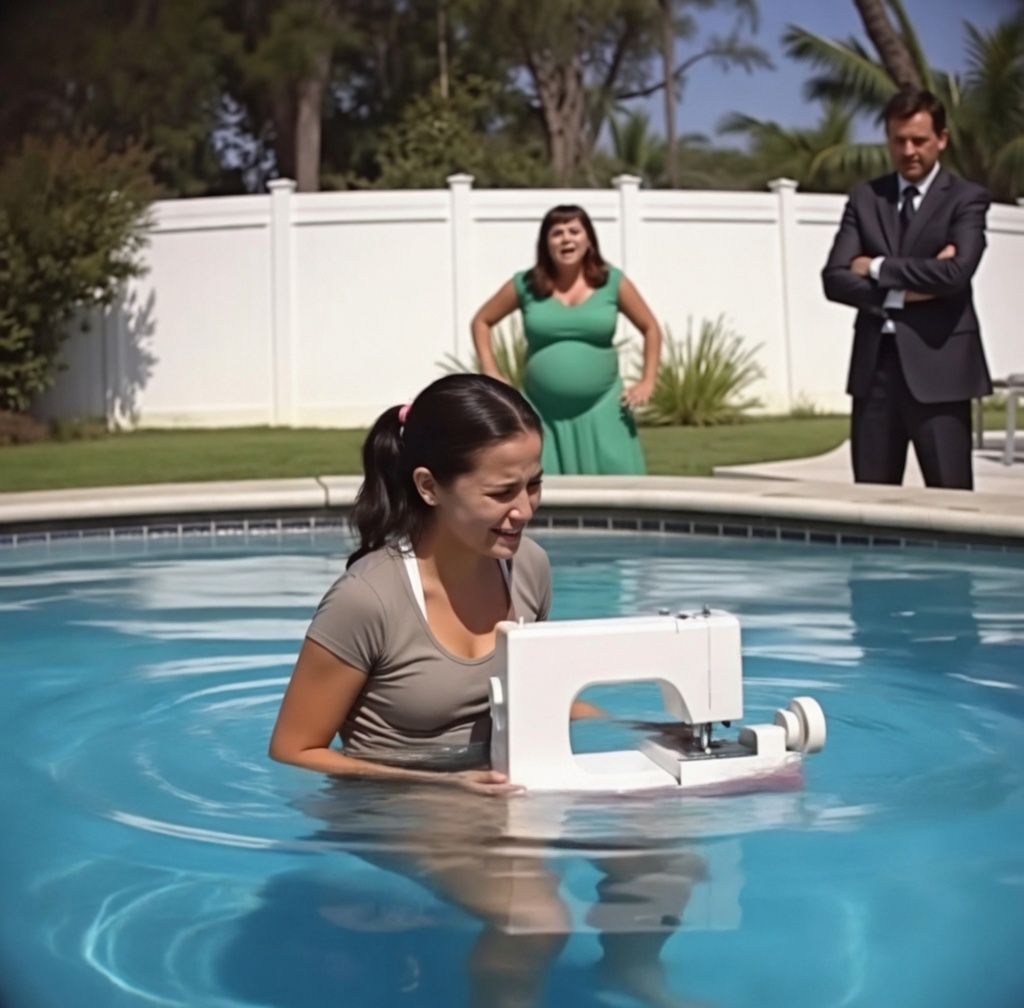
Few things hit harder as a parent than watching your child’s hard-earned passion get destroyed by someone who should be helping her feel safe. My daughter had poured her own money, along with some help from me, into a sewing machine that represented her growing dream of becoming a fashion designer. It wasn’t just an object. It was proof of her discipline and creativity at sixteen. When that machine ended up at the bottom of a pool after a minor disagreement about chores, I felt something shift inside me. This wasn’t about a simple accident or typical teenage conflict. It felt deliberate, and I knew I couldn’t let it slide without a clear response.
Blended families already carry enough complicated emotions without adding destruction of property to the mix. My ex and I had worked out a reasonable schedule where our daughter spent time at both homes. Like many teens in these situations, she was still adjusting to new rules and personalities in her father’s house. The new wife had made it clear she didn’t approve of the time our daughter spent sewing, calling it a distraction from more “important” responsibilities. That attitude alone created tension, but I had hoped we could keep things civil for our daughter’s sake. The pool incident crossed a line that made continued overnight visits feel unsafe.
What made the situation especially painful was how the sewing machine had been earned. Our daughter worked part-time and saved carefully. She saw the machine as both a tool and a symbol of her independence. Having it thrown into water as punishment for not finishing dishes quickly enough sent a message that her interests and efforts didn’t matter. As a parent, it’s one thing to disagree about rules. It’s another thing entirely when someone uses your child’s belongings as leverage or a lesson in power. That kind of approach rarely teaches responsibility. It usually just breeds resentment and fear.
I picked her up right away and brought her home. In the moment, my priority was making sure she felt supported rather than punished for someone else’s reaction. We talked through what happened without rushing to decisions. She was upset but also worried about causing more conflict between the adults. That protective instinct in kids is common, yet it shouldn’t fall on them to manage adult emotions. Giving her space to express how the incident made her feel helped both of us decide on next steps that put her well-being first.
Handling these situations requires a balance between protecting your child and avoiding unnecessary escalation. I documented everything clearly, including photos of the damaged machine and notes about what led up to the incident. Clear records matter when emotions run high and stories start to differ. I also considered what kind of example we wanted to set. Reacting with the same level of drama wouldn’t help anyone, especially not our daughter. Instead, I focused on a direct conversation that demanded accountability while keeping the focus on repairing the harm done to her.
One of the hardest parts of co-parenting after divorce is watching someone new enter your child’s life and sometimes struggle to respect the things that matter most to her. New partners bring their own ideas about discipline and household rules. When those ideas clash with a child’s developing identity and passions, friction is almost guaranteed. The key is whether the adults can find ways to disagree without making the child feel caught in the middle or, worse, targeted. In this case, the response needed to show that her creative work had value and that damaging it carried real consequences.
I decided a measured but firm approach was necessary. With help from a trusted friend who had some acting experience, we created a situation that mirrored the feeling of having something important suddenly taken away. The goal wasn’t revenge for its own sake. It was to help the other adult understand the impact of her actions in a way that words alone hadn’t achieved. When the moment came, we made it clear that repayment for the machine and a genuine acknowledgment of the harm were non-negotiable. The video we recorded served as both proof and a reminder that actions have echoes.
After that conversation, we made practical changes to protect our daughter’s peace of mind. Overnight visits at her father’s house stopped for a while. When meetings did happen, they took place in neutral public settings where everyone could stay calmer. These adjustments weren’t meant to punish anyone permanently. They were temporary boundaries while trust and respect were being rebuilt. Children need to know their parents will stand up for them when someone crosses a line, even if that someone is part of the other household.
The most rewarding part came in the months that followed. With her new sewing machine safely at home, our daughter threw herself back into her designs with renewed energy. She entered competitions, won recognition, and eventually earned opportunities that might not have come if she had stayed discouraged. Watching her turn a painful experience into fuel for her goals reminded me why protecting her passions mattered so much. Creative outlets often become lifelines for teenagers navigating complicated family changes. When those outlets are respected, kids tend to thrive.
Parents in similar blended family situations can learn from moments like this without repeating the drama. The most important step is usually deciding what outcome actually serves the child. Sometimes that means insisting on financial responsibility for damaged property. Other times it means adjusting schedules or communication methods until respect is restored. Documenting incidents, keeping conversations focused on the child’s needs, and being willing to involve neutral third parties when necessary can all help. The goal is never to win a battle against the other adults. It’s to create an environment where your child feels safe to grow.
Supporting a teenager’s interests during these years often requires extra vigilance from parents. Hobbies like sewing, art, or music can feel frivolous to some adults but represent real identity and future possibilities to the young person. When those interests are dismissed or actively damaged, it sends a message that their dreams are secondary to adult power struggles. Standing up in those moments teaches children that their efforts have value and that they deserve adults who will advocate for them.
In the end, the situation became a turning point rather than a permanent scar. Our daughter gained confidence from seeing that her mother would not allow her hard work to be treated carelessly. She also learned that consequences can be handled with clarity instead of endless conflict. While co-parenting will always have its challenges, especially with new partners involved, moments like these show the power of putting the child’s emotional and creative safety above everything else. When parents choose protection paired with thoughtful action, kids often come out stronger on the other side, ready to chase the futures they’ve been building all along.
Most Popular!
-
 Eggs, Cholesterol, and Timing: What Actually Matters for Most People
-
When a Partner Leaves With More Than a Suitcase: Protecting Yourself From Financial Betrayal
-
When Financial Support Meets Contempt: Recognizing Exploitation Inside a Marriage
-
Why Some Sensory Toys and Household “Hacks” Do Not Belong in the Microwave
-
When Grief Clouds Judgment: Misreading Silence and the Quiet Ways People Show Care
-
When One Partner Does All the Hosting: Recognizing Imbalance Before Resentment Takes Over
-
How Many Holes Are in a T-Shirt? What a Simple Puzzle Reveals About How We See
-
The Quiet Stories Inside Secondhand Objects: When a Thrift-Store Find Carries Someone Else’s History