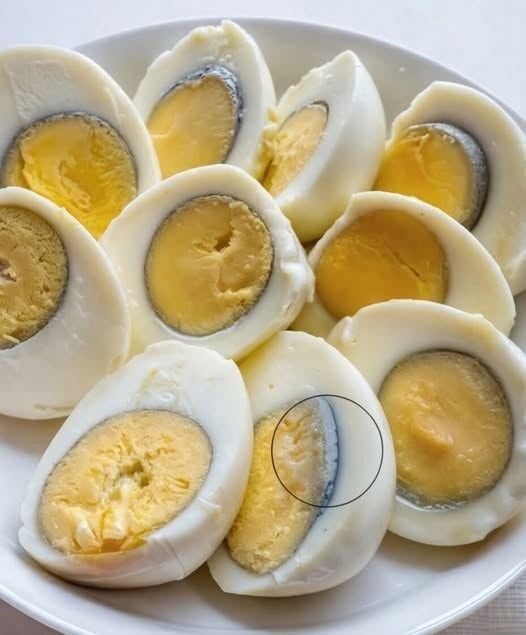
You’ve just peeled a perfect hard-boiled egg, expecting that smooth, creamy yellow center everyone loves. Instead, there it is — an unmistakable greenish-gray ring around the yolk, looking like something gone wrong. For many home cooks, this mysterious discoloration is enough to ruin an otherwise good breakfast or picnic salad. Social media is full of people posting photos of their “failed” eggs, wondering if they’re safe to eat or if they did something terribly wrong. The good news? That green ring is almost always harmless. The even better news? Understanding exactly why it happens can help you prevent it completely and enjoy perfect hard-boiled eggs every single time. The science behind this common kitchen surprise is simpler than most people expect, and fixing it takes just a few easy adjustments.
The green ring forms due to a completely natural chemical reaction between sulfur and iron. Egg whites contain sulfur compounds that break down during cooking, especially when eggs are overcooked or left sitting in hot water too long. The iron in the yolk then reacts with that sulfur, creating iron sulfide — the compound responsible for the greenish color. It’s the same basic chemistry that gives some foods their distinct smells or colors when heated. While it might look unappetizing, this ring is not a sign of spoilage or bacteria. The egg is still perfectly safe to eat. However, many people find the appearance off-putting enough to throw the egg away, which is a shame given how nutritious eggs are and how preventable the issue really is.
Overcooking is the number one cause of the green ring. When eggs boil for too long or sit in the hot water after the heat is turned off, the sulfur compounds have more time to react with the iron. The longer the heat exposure, the more pronounced the discoloration becomes. Many of us learned to boil eggs for 10-12 minutes or longer out of habit, but that’s often too much for medium or large eggs. The ideal cooking time is usually around 9-10 minutes for large eggs, followed by an immediate ice bath to stop the cooking process. This rapid cooling prevents the residual heat from continuing the reaction inside the egg.
The age of the egg also plays a surprisingly big role. Older eggs tend to have thinner whites and more air pockets, which can affect how evenly they cook and increase the chance of discoloration. Fresh eggs from the farmers market or your own backyard chickens often produce cleaner yolks because their internal chemistry is more balanced. If you buy eggs from the store, try to use them within a couple of weeks for best results. Storing eggs properly in the refrigerator also helps maintain their quality and reduces the likelihood of that unwanted green ring.
Water quality and altitude can influence the outcome too. In areas with hard water high in minerals, the reaction between sulfur and iron can be more noticeable. Higher altitudes cause water to boil at lower temperatures, which can require slight adjustments in timing to avoid overcooking. These environmental factors explain why the same recipe might work perfectly in one kitchen but produce green-ringed eggs in another. Paying attention to these details helps home cooks achieve consistent, beautiful results no matter where they live.
Preventing the green ring is easier than most people realize. Start by placing your eggs in a single layer in a saucepan and covering them with cold water by about an inch. Bring the water to a full boil, then immediately remove the pan from the heat, cover it, and let the eggs sit for 9-12 minutes depending on size and desired doneness. Large eggs usually need about 10 minutes for firm but creamy yolks. After the timer goes off, transfer the eggs straight into a bowl of ice water for at least 5-10 minutes. This shocking stops the cooking process and makes peeling much easier while preventing the sulfur-iron reaction from continuing.
Peeling technique matters more than many cooks admit. Cracking the eggs all over and rolling them gently on the counter helps create small fractures in the shell that make removal smoother. Starting at the wider end where the air pocket is located often gives the best results. Older eggs peel more easily than very fresh ones, which is why many experienced cooks recommend using eggs that are about a week old for hard-boiling. A teaspoon of baking soda or vinegar in the boiling water can also help loosen the shell without affecting taste or causing discoloration.
Proper storage after cooking is the final step for perfect eggs. Once cooled and peeled, store them in an airtight container in the refrigerator and use them within a few days. Unpeeled hard-boiled eggs can last up to a week. Avoid leaving them at room temperature for more than two hours, as bacteria can grow quickly on cooked eggs. When making dishes like deviled eggs or egg salad, prepare them as close to serving time as possible for the best flavor and appearance.
The green ring might look alarming, but it’s a harmless reminder of basic kitchen chemistry rather than a sign of danger. Understanding this simple reaction empowers home cooks to avoid it completely and enjoy beautiful, bright yellow yolks every time. The small adjustments — better timing, proper cooling, and attention to egg freshness — make a huge difference in both appearance and taste. Millions of people have been throwing away or reluctantly eating less-than-perfect hard-boiled eggs for years when the solution was always within reach.
Next time you boil eggs, remember these tips and watch how dramatically your results improve. Your family and guests will notice the difference, and you’ll save money by wasting fewer eggs. The woman who once dreaded peeling hard-boiled eggs now looks forward to it, knowing she has mastered one of cooking’s simplest but most satisfying techniques. The green ring that used to ruin breakfasts and picnic salads is now just a funny reminder of how much we can learn from paying closer attention to everyday tasks. With a little knowledge and a few easy habits, you can enjoy perfect hard-boiled eggs every single time — no more surprises, no more waste, and no more unnecessary worry about what that strange color really means. Your future self (and your taste buds) will thank you.
Most Popular!
-
 A Billionaire Saw His Ex-Wife With Triplets in a Tiny Bistro — Then One Little Boy Looked Up and Exposed the Secret That Had Been Hidden for Five Years
-
My Son’s Broken Arm Exposed the Sheriff’s Dark Secret — And the Hidden Evidence That Shocked the Entire Town
-
The Morning After We Buried My Father, My Ex-Husband’s New Wife Walked Straight Into His Garden And Told Me I Should Begin Packing My Belongings
-
I Hid My Pregnancy From My Ex-Husband After Our Divorce — Then He Pulled Down His Mask in the Delivery Room and Realized the Baby Was His
-
My Son Begged Me to Cut Open His Stomach — Then Our New Nanny Exposed the Horrifying Secret Hidden in His Hot Chocolate
-
My In-Laws Tried to Steal My House After My Husband’s Death — Then His Secret Trust Left Them With Nothing
-
I Showed Up to Sign My Divorce Papers Eight Months Pregnant With a Child My Husband Didn’t Know Existed
-
My Husband Texted That He Was Marrying Someone Else While I Was Bleeding in the ER