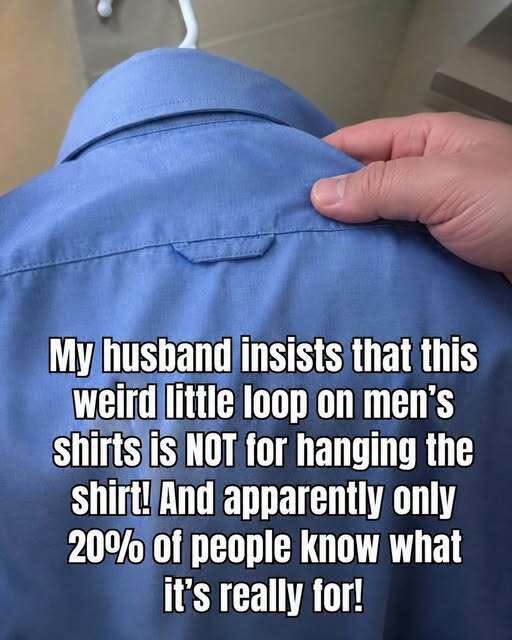
Most people have noticed the small fabric loop sewn into the back of many button-down shirts, usually near the collar. It sits there quietly, often ignored or used simply to hang the shirt on a hook. Yet over the years, this tiny detail has picked up layers of supposed meaning, some of which touch on relationships and personal signals in unexpected ways.
The loop originally served a practical purpose. It comes from naval tradition, where sailors needed a way to hang their shirts in tight ship lockers without using valuable space. The design carried over into civilian clothing and became a standard feature on many Oxford shirts and casual button-downs. What started as pure function gradually picked up cultural stories.
One popular modern interpretation claims the loop signals relationship status. Some people say a man wearing a shirt with the loop intact is single and available, while removing it supposedly shows he is taken. This idea has circulated in dating advice circles and social media, turning a simple design element into supposed relationship code.
In reality, most people who remove the loop do so because it gets in the way during ironing or because they prefer a cleaner look. Others keep it because they like the traditional detail or use it for hanging. The choice rarely has anything to do with romantic availability, yet the myth persists in certain circles.
The loop can also reflect personal style preferences. Some men see it as a classic touch that connects their shirt to a longer fashion history. Others view it as outdated and prefer shirts without it. These small decisions often say more about individual taste than about relationship status or hidden messages.
Relationship experts generally agree that assuming deep meaning in minor clothing details can create unnecessary confusion. If someone removes or keeps the loop, it is far more likely to reflect laundry habits or style preference than a coded signal about their love life. Clear communication remains more reliable than guessing at fashion choices.
That said, shared attention to small details can still matter in relationships. Noticing what your partner wears and why can become part of learning each other’s habits and preferences. The loop itself may not carry romantic weight, but paying attention to the little things often strengthens connection over time.
Fashion historians point out that many clothing features once had practical origins before becoming style elements. The locker loop fits this pattern perfectly. What began as a solution for sailors eventually became a detail some people read meaning into, even when none was originally intended.
Today the loop appears on shirts across price ranges and styles. Some designers treat it as a signature detail while others leave it off entirely. Consumers ultimately decide whether to keep it or remove it based on personal preference rather than relationship signaling.
If you notice the loop on your own shirts or your partner’s, consider what it actually represents for you. For most people it remains a minor detail with no deeper romantic meaning. Treating it as relationship code can lead to misunderstandings that have nothing to do with how someone actually feels.
The healthiest approach involves enjoying clothing for its comfort and style while keeping relationship conversations direct. Small details can be interesting to notice, but they rarely replace honest discussion about feelings and intentions. The tiny loop on a shirt is simply one of many small features that make clothing interesting without needing to carry heavy symbolic weight.
In the end, the loop serves as a reminder that not every detail in daily life carries hidden messages about love or commitment. Sometimes a loop is just a loop, useful for hanging a shirt or simply part of traditional design. Relationships tend to thrive more on clear communication than on decoding minor fashion choices.
Most Popular!
-
 He Brought His Mistress to Our Fourth of July BBQ and Told Me Not to Make a Scene So I Ruined His Life in Front of Everyone
-
The Ultimate Act of Betrayal: My Husband Thought He Could Buy His Way Out of Fatherhood But He Didn’t Know I Had Been Keeping Receipts for Years
-
My Fiancée Vanished Ten Years Ago But When Her Son Saw Her at a Resort I Discovered a Heart-Stopping Secret That Should Have Been Impossible
-
My Childhood Bully Swept Me Off My Feet with a Romantic Proposal But on Our Honeymoon He Handed Me a Letter That Exposed the Sickening Truth
-
The Heartbreaking Secret My Grandfather Hid Behind Every Glass of Grape Juice
-
I Found a Hidden Backpack Two Days Before My Wedding: What Was Inside Ended Everything Before I Could Walk Down the Aisle
-
The Ultimate Birthday Betrayal: My Daughter’s Classmates Used My Home as a Pit Stop and the Truth in the Group Chat Left Me Shattered
-
My Own Son Evicted Me from My House: The Shocking Truth That Saved My Life