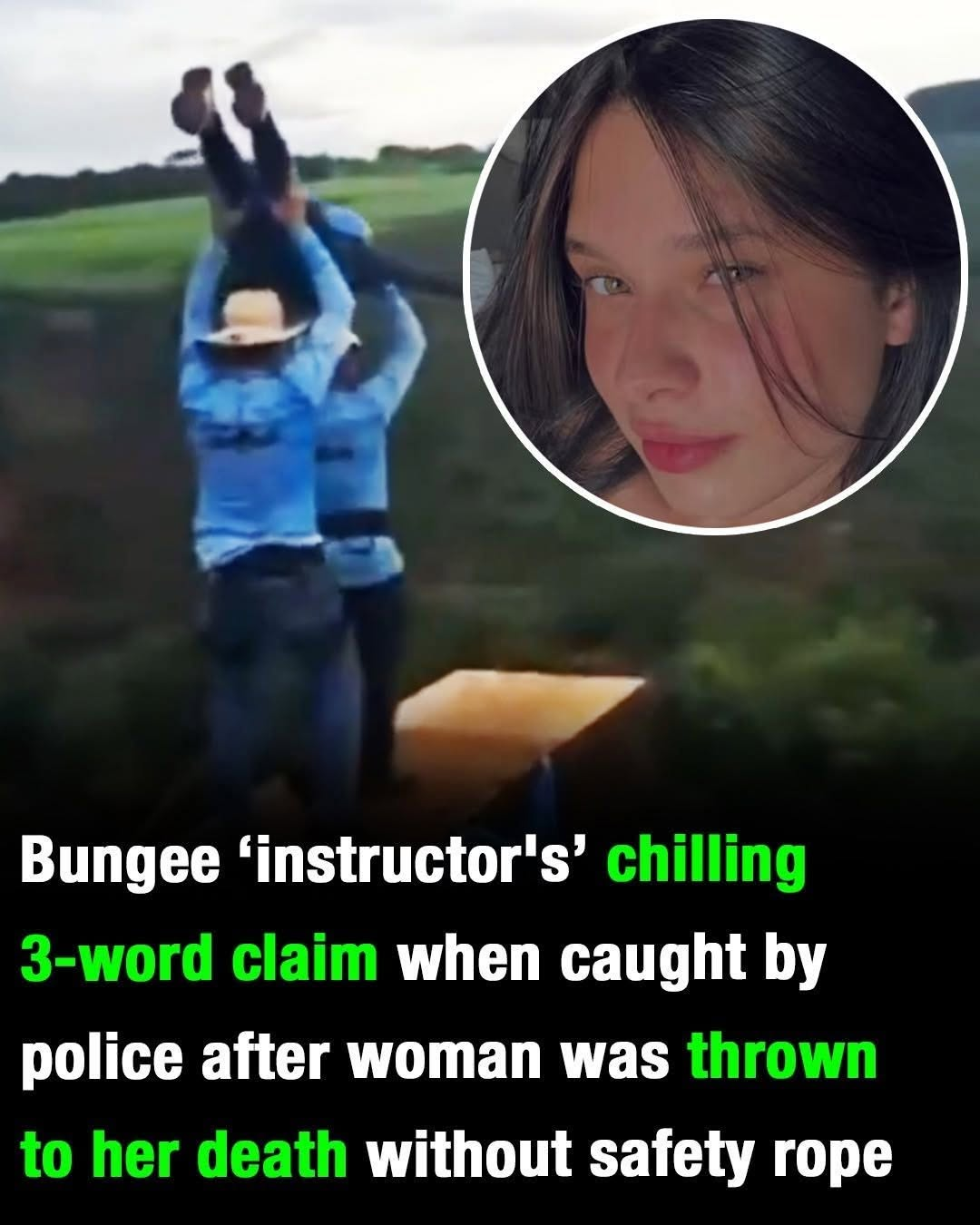
The promise of adrenaline and freedom drew a vibrant 21-year-old woman to an abandoned railway bridge known locally as Skeleton Bridge. What should have been an exhilarating jump into the unknown became a nightmare that ended her life in seconds. Maria Eduarda Rodrigues de Freitas trusted the informal adventure crew to keep her safe, only to plummet 40 meters with no rope attached. The tragedy unfolded in front of horrified witnesses, sparking outrage, arrests, and a national conversation about safety in unregulated extreme sports. Even more disturbing was the organizer’s response when questioned about the fatal oversight: three simple words that revealed a shocking level of indifference.
Maria arrived at the site full of excitement, surrounded by friends seeking a memorable thrill. The bridge, with its dramatic height and isolated location, had gained a reputation among adrenaline enthusiasts as an unofficial spot for rope jumping and similar activities. Unlike licensed commercial operations with strict protocols, this setup appeared casual and loosely organized. Participants often relied on word-of-mouth and basic equipment provided on-site. For Maria, it represented a chance to push her limits and create stories she would share for years. No one could have predicted that a single overlooked detail would turn that dream into tragedy.
The jump itself happened quickly. After being harnessed and positioned at the edge, Maria took the leap of faith. Witnesses described the horrifying moment when, instead of the expected snap and rebound of a safety cord, she fell straight down. The rope that should have been securely attached lay unused nearby. Panic erupted immediately as people rushed to the railing, screaming and trying to process what they had just seen. The drop was long enough that survival was unlikely upon impact with the ground below. In those chaotic seconds, the full weight of the negligence became devastatingly clear.
Emergency responders arrived to a scene of heartbreak. Maria’s family and friends were left reeling, struggling to comprehend how a recreational activity could end so abruptly. The operation involved several individuals who were supposed to handle safety checks, equipment preparation, and participant briefings. Instead of coordinated rescue efforts or immediate accountability, reports emerged that some crew members fled into the surrounding woods to avoid consequences. This reaction only deepened the sense of betrayal and raised serious questions about the professionalism of the entire setup.
When authorities finally tracked down and questioned the organizers, the investigation uncovered a troubling pattern of carelessness. The site operated without proper licensing or oversight on federal land, functioning more like an informal gathering than a regulated adventure business. There were no clear hierarchies, no designated safety officers, and apparently no consistent protocols for double-checking equipment. One key moment during questioning crystallized the depth of the failure. When pressed about who had performed the final safety inspection before Maria’s jump, one organizer offered a response that left investigators stunned: “I can’t remember.”
Those three words — “I can’t remember” — have become a symbol of the entire tragedy. They represent more than a simple lapse in memory. They expose a culture where human lives were treated as secondary to convenience and quick profits. In high-risk activities like bungee or rope jumping, forgetting a safety attachment isn’t a minor oversight; it’s a fundamental breach of trust that directly caused a preventable death. The phrase has haunted public discussions, highlighting how negligence disguised as forgetfulness can destroy families and erode confidence in adventure tourism.
The legal consequences are unfolding, with multiple individuals facing serious charges related to the incident. Prosecutors are focusing on the complete lack of safety culture, unlicensed operation, and the indifference shown by those involved. Beyond individual accountability, the case has prompted broader scrutiny of similar unregulated spots across the region. Authorities are now reviewing how such operations are allowed to continue and what changes are needed to protect thrill-seekers who place their faith in others for safety.
For Maria’s loved ones, no legal outcome can restore what was lost. She was described as full of life, with dreams of travel, adventure, and making meaningful connections. Her death leaves a permanent void, turning what should have been joyful memories into painful reminders of what might have been. The family’s grief is shared by a wider community that now questions the safety of any informal extreme sports activity. Parents, young adults, and adventure enthusiasts are rethinking how they approach these experiences and what questions they should ask before participating.
This tragedy also raises important points about personal responsibility in seeking thrills. While the primary fault lies with the crew’s negligence, participants can protect themselves by thoroughly researching operators, checking for proper certifications, and trusting their instincts when something feels off. Reputable companies maintain transparent safety records, conduct visible double-checks, and prioritize participant well-being over speed. If an operation seems disorganized, rushed, or dismissive of concerns, it’s often a sign to walk away, no matter how exciting the prospect seems.
On a societal level, the incident at Skeleton Bridge calls for stronger regulations and better enforcement in the adventure sports industry. Informal setups in scenic but remote locations often operate in gray areas, exploiting loopholes and the enthusiasm of customers. Stricter licensing requirements, mandatory insurance, regular inspections, and public education campaigns could prevent future tragedies. The goal isn’t to eliminate risk entirely — adventure will always carry some inherent danger — but to ensure that preventable human errors don’t become fatal ones.
Witnesses to the event carry their own trauma, forever changed by the sight of a young woman falling without protection. The psychological impact of such moments can linger, affecting mental health and attitudes toward risk. Support for those who saw the incident firsthand is crucial, as is using the story to drive meaningful change rather than letting it fade into another tragic headline.
Maria’s story serves as a powerful reminder that trust in any high-risk activity must be earned through visible competence and accountability. The three-word defense offered by the organizer stands as a chilling example of what happens when that trust is betrayed. In the pursuit of excitement and personal growth, safety should never be an afterthought. Families deserve better, and thrill-seekers deserve operators who treat their lives with the seriousness they deserve.
As investigations continue and calls for reform grow louder, the memory of Maria Eduarda Rodrigues de Freitas endures as both a cautionary tale and a catalyst for change. Her final leap should not be defined solely by the negligence that ended it, but as a spark that demands higher standards in an industry that too often operates in the shadows. The echoes of that day at Skeleton Bridge will continue to remind us that behind every thrilling jump is a human life that deserves proper protection. No one should ever have to pay the ultimate price for someone else’s “I can’t remember.”
Most Popular!
-
 The Redistricting Reckoning: Virginia Courtroom Defeat Leaves Democrats in Chaos and Republicans Poised for Gains
-
The Microphone From Hell: How My Vile Mother-in-Law Tried to Destroy My Wedding—And Ended Up Humiliating Herself Instead
-
The Terrifying Discovery in the Lake: My Search for the Truth Behind the Eerie Underwater Orbs
-
That Quiet Bedroom Habit Could Be Quietly Raising Your Stroke Risk While You Sleep
-
The Exploding Danger Sitting in Your Passenger Seat: Why That Innocent Water Bottle Could Torch Your Car
-
The Risky Decision I Made to Help My Shy Son Go to Prom—and the Beautiful Truth That Left Me in Tears
-
The Timeless Beauty and Quiet Strength of Bo Derek: Where the Icon Is Today and How She’s Living Now
-
The Devastating Truth Behind a Family Dog and Infant Tragedy That Every Parent Needs to Understand