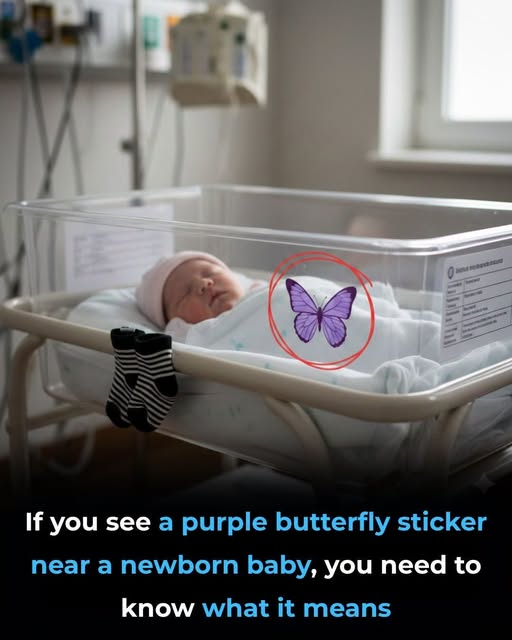
Walking through a neonatal intensive care unit, you might notice small purple butterfly stickers on certain incubators and wonder what they mean. To most people, it looks like a sweet decorative touch meant to brighten up a clinical space. But for families who understand the symbol, that delicate butterfly represents a profound and painful loss that words often fail to capture. It serves as a quiet signal of compassion, helping protect grieving parents from unintentional hurt during an already devastating time. This simple emblem has become a powerful way hospitals show sensitivity to families navigating unimaginable sorrow while caring for their surviving child.
The story behind the purple butterfly began with a couple named Millie and Lewis who were excitedly expecting identical twin girls. Their joy turned to heartbreak during a routine ultrasound when doctors revealed that one of the babies had anencephaly, a serious condition meaning she would not survive long after birth. Despite the devastating diagnosis, the parents chose to carry both babies as long as possible, naming them Skye and Callie. Skye passed away just hours after their premature birth, leaving her sister Callie fighting for strength in the NICU. What should have been a time of double celebration became a heartbreaking mix of joy for one life and mourning for another.
In the days that followed, Millie faced an unexpected challenge in the NICU. Other parents, unaware of her loss, would make innocent comments assuming she had healthy twins. Remarks like how lucky she was not to have two babies to care for cut deeply, forcing her to either relive her grief or stay silent to avoid awkward explanations. These well-meaning interactions left her feeling isolated and overwhelmed with emotion. She realized that many families experiencing similar losses suffered in silence because there was no easy way for others to know about their situation without painful conversations.
Determined to help others, Millie created the purple butterfly symbol. A small sticker placed on the incubator lets staff and visitors know that this is a family who has experienced the loss of a multiple birth. The butterfly represents a life that has gently flown away, while the color purple remains neutral and soothing for any gender. This thoughtful gesture prevents unintended emotional pain and allows parents space to focus on their surviving child without constantly explaining their story. What started as a personal solution quickly grew into a meaningful initiative supported by hospitals around the world.
Through her experience, Millie founded the Skye High Foundation to support families dealing with infant loss. The purple butterfly program has spread far beyond her own hospital, becoming a recognized symbol of awareness and empathy in neonatal units globally. It acknowledges that every life, no matter how brief, matters deeply and deserves to be remembered. For parents like Millie, seeing the symbol brings comfort, knowing their lost child is honored and that others will approach them with greater understanding and kindness during such a vulnerable time.
Callie, now growing up as a healthy young girl, carries her sister’s memory with her every day. Her story highlights the incredible resilience of families who face loss while continuing to nurture life. The purple butterfly not only helps during the hospital stay but also contributes to long-term healing by validating the complex emotions of parents who are grieving and celebrating simultaneously. It reminds everyone in the medical community and beyond that sensitivity can make a tremendous difference in supporting bereaved families.
This symbol has sparked important conversations about infant loss and the need for better awareness in healthcare settings. Many people don’t realize how common multiple births with complications can be or how devastating the impact is on families. The purple butterfly gently educates without forcing painful details, creating a more compassionate environment for everyone involved. It encourages visitors and staff to offer support rather than assumptions, fostering a culture of kindness in places where emotions run extremely high.
The initiative also shines a light on the importance of mental and emotional support for parents in the NICU. Losing a child is one of life’s greatest hardships, and doing so while caring for a surviving baby adds layers of complexity to the grief process. Programs like the purple butterfly help reduce additional stress, allowing families to focus on bonding with their living child and finding ways to honor the one they lost. Small acts of understanding can provide immense relief during overwhelming times.
As more hospitals adopt this symbol, the purple butterfly continues to spread hope and awareness. It transforms a simple sticker into a powerful tool for empathy that bridges joy and sorrow in the most delicate moments of life. Parents who see it know they are not alone, while others learn to tread gently and offer silent support. Millie’s courage in turning personal tragedy into positive change has touched countless lives and will continue to do so for years to come.
The next time you spot a tiny purple butterfly in a hospital nursery, take a moment to appreciate its deeper meaning. It stands for love that endures beyond loss, for courage in the face of heartbreak, and for the quiet strength of families who keep going. By understanding symbols like this, we all become better at supporting one another through life’s hardest chapters. Every butterfly represents a precious life remembered and a family deserving of compassion and respect.
Most Popular!
-
 Eggs, Cholesterol, and Timing: What Actually Matters for Most People
-
When a Partner Leaves With More Than a Suitcase: Protecting Yourself From Financial Betrayal
-
When Financial Support Meets Contempt: Recognizing Exploitation Inside a Marriage
-
Why Some Sensory Toys and Household “Hacks” Do Not Belong in the Microwave
-
When Grief Clouds Judgment: Misreading Silence and the Quiet Ways People Show Care
-
When One Partner Does All the Hosting: Recognizing Imbalance Before Resentment Takes Over
-
How Many Holes Are in a T-Shirt? What a Simple Puzzle Reveals About How We See
-
The Quiet Stories Inside Secondhand Objects: When a Thrift-Store Find Carries Someone Else’s History







