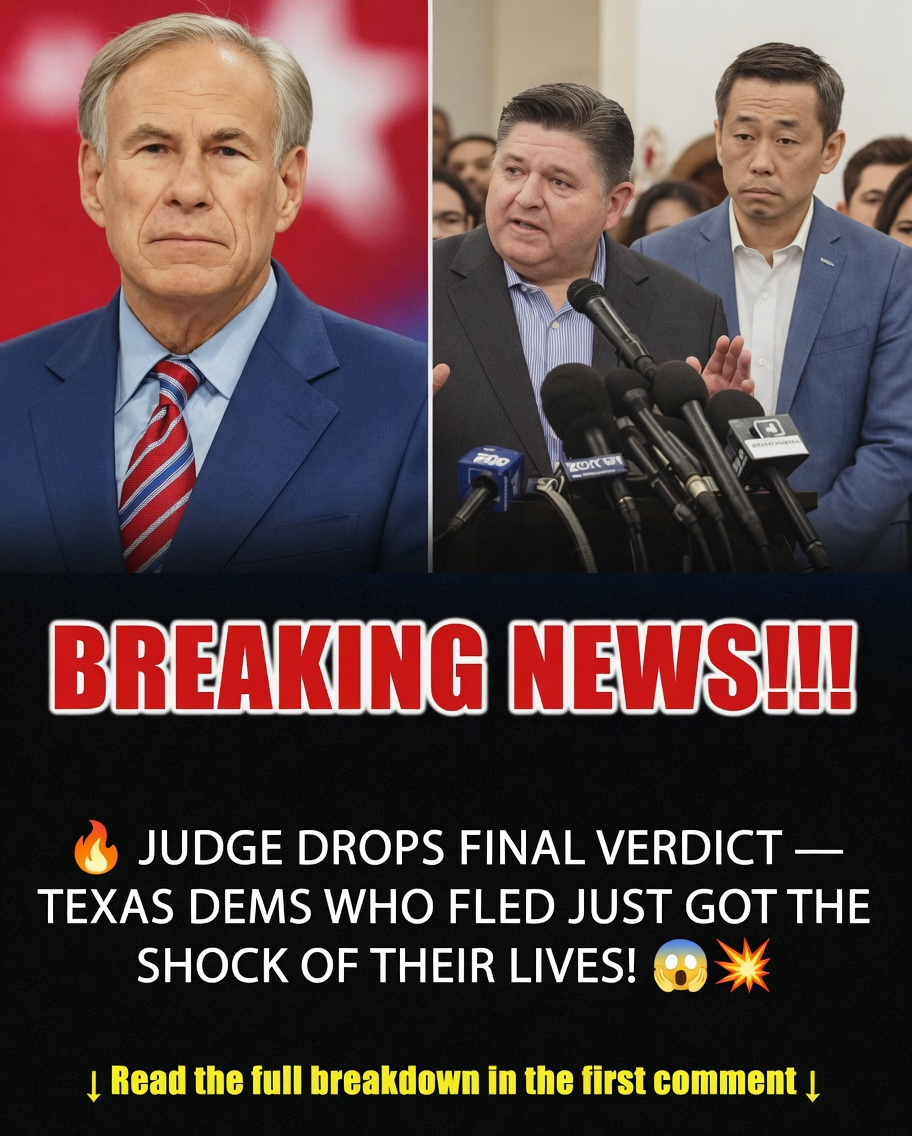
The Texas State Capitol has become the epicenter of a high-stakes political drama that is testing the limits of legislative procedure and partisan strategy. In a move that has drawn national attention, Republican leaders have enforced strict financial penalties against Democratic lawmakers who left the state to deny quorum on a contentious voting bill. What began as a procedural protest has escalated into a battle over accountability, power, and the very rules that govern how democracy functions at the state level. For Texans watching from home, the standoff feels both distant and deeply personal, raising questions about representation, responsibility, and the cost of political gamesmanship.
At the heart of the conflict is a bill aimed at strengthening election integrity measures — a priority for Republicans but fiercely opposed by Democrats who argue it restricts access to the ballot box. When it became clear the legislation had the votes to pass, a group of Democratic representatives made the dramatic decision to leave Texas, effectively breaking quorum and halting proceedings. This tactic, while not new in American politics, has rarely carried such immediate and personal financial consequences. House rules allow for daily fines against absent members when a quorum is required, and leadership has moved aggressively to enforce them.
Supporters of the penalties view this as simple accountability. Elected officials, they argue, have a duty to show up and represent their constituents, especially during special sessions called to address urgent matters. Walking away from the job, even as a form of protest, leaves entire districts without a voice at a critical time. From this perspective, financial consequences are not punishment but a necessary tool to maintain the functioning of government. Without them, minority parties could indefinitely stall legislation simply by refusing to participate.
Critics, however, see the move as an overreach that chills legitimate dissent. They argue that quorum breaks have long been part of the democratic playbook, used by both parties in different states when they feel outnumbered on high-stakes issues. Imposing steep daily fines during a politically charged dispute, they contend, transforms a procedural tool into a weapon that disproportionately burdens lawmakers who may not have the personal resources to absorb such penalties. The debate has highlighted deeper tensions about minority rights within majority-rule systems and the balance between order and opposition.
The human impact is already being felt. Some of the absent lawmakers come from middle-class backgrounds where legislative pay forms a significant part of their income. Families are feeling the strain as the standoff drags on, with reports of mounting pressure both from within the party and from constituents back home. At the same time, Republican leaders face their own challenges — public frustration over legislative gridlock, legal questions about the enforcement process, and the optics of appearing to punish political opponents through financial means.
This situation is not without precedent. Quorum breaks have occurred in states across the country, often during battles over education, voting rights, or budget issues. What makes Texas’s response notable is the speed and firmness with which penalties have been applied. Political analysts suggest this could set a new standard for how legislative bodies respond to walkouts, potentially influencing strategies in other statehouses where similar tactics have been used. If successful here, other majority parties may adopt similar financial deterrents, fundamentally altering the dynamics of partisan warfare.
Beyond the immediate drama, the standoff raises important questions about the health of democratic institutions. When elected officials choose absence over participation, does it reflect healthy dissent or institutional dysfunction? When majorities impose financial penalties, is it enforcing responsibility or stifling opposition? These are not easy questions, and reasonable people disagree strongly on the answers. What remains clear is that public trust in government suffers when these conflicts drag on without resolution.
For ordinary Texans, the situation feels like a distraction from pressing issues like education funding, border security, and economic challenges. Many are frustrated with both sides — angry at Democrats for leaving and at Republicans for the aggressive response. The longer the impasse continues, the greater the risk of broader disillusionment with state politics as a whole. Citizens deserve representatives who show up and engage in good-faith debate, regardless of which side of the aisle they sit on.
As negotiations continue behind the scenes, there is cautious hope that a compromise can be reached before the financial and political costs mount even higher. Both parties have strong incentives to resolve the matter: Democrats to avoid further penalties and return to their districts, Republicans to restore legislative momentum and move forward on their agenda. The coming days will test whether cooler heads can prevail or if the standoff will deepen divisions even further.
This moment in Texas politics serves as a microcosm of larger challenges facing American democracy. In an era of intense polarization, finding ways to disagree without breaking the system itself has never been more important. Whether this particular conflict ends in compromise or continued confrontation, it offers valuable lessons about accountability, protest, and the delicate balance required to keep government functioning in a deeply divided nation. The eyes of the country remain fixed on Austin, waiting to see how one state navigates a crisis that feels increasingly familiar across the political landscape.
Most Popular!
-
 Eggs, Cholesterol, and Timing: What Actually Matters for Most People
-
When a Partner Leaves With More Than a Suitcase: Protecting Yourself From Financial Betrayal
-
When Financial Support Meets Contempt: Recognizing Exploitation Inside a Marriage
-
Why Some Sensory Toys and Household “Hacks” Do Not Belong in the Microwave
-
When Grief Clouds Judgment: Misreading Silence and the Quiet Ways People Show Care
-
When One Partner Does All the Hosting: Recognizing Imbalance Before Resentment Takes Over
-
How Many Holes Are in a T-Shirt? What a Simple Puzzle Reveals About How We See
-
The Quiet Stories Inside Secondhand Objects: When a Thrift-Store Find Carries Someone Else’s History







