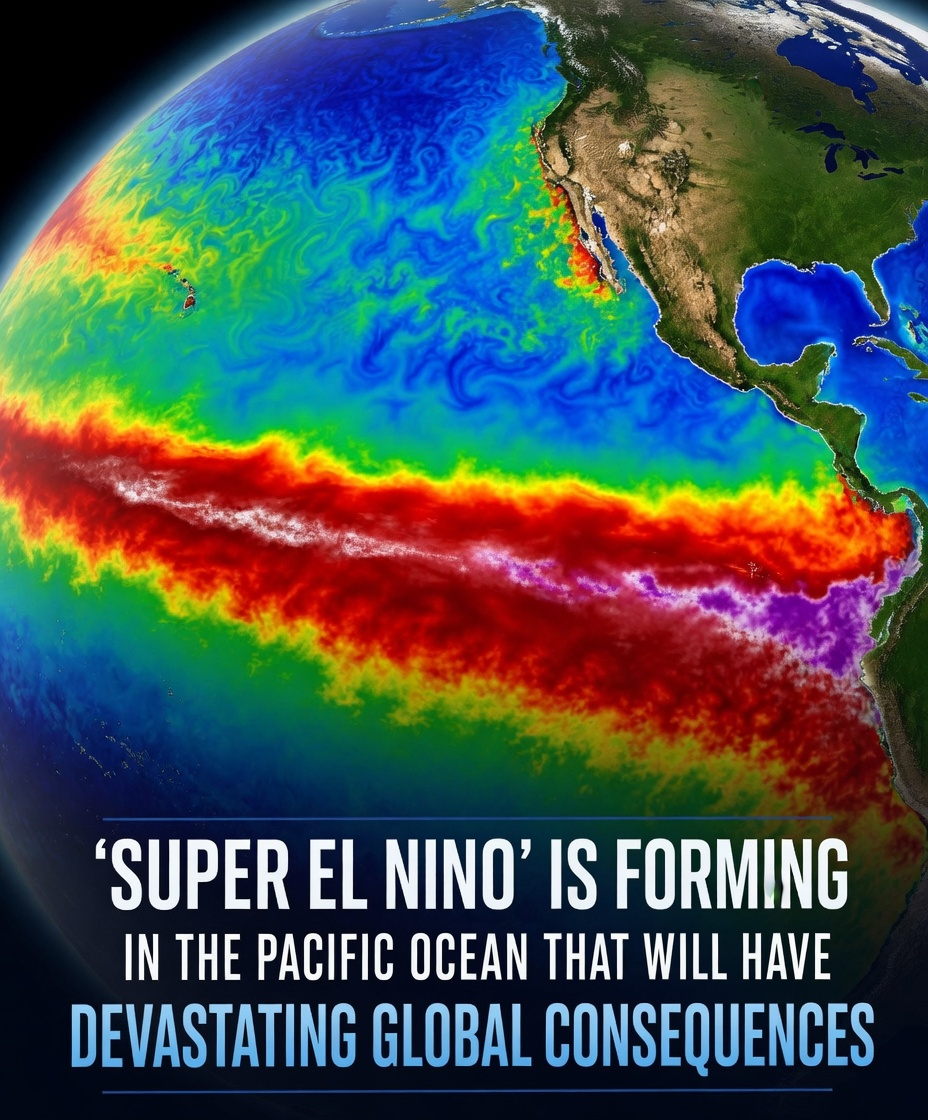
I remember the summer of 2015 like it was yesterday. The skies over California cracked open with record rains after years of brutal drought, while half a world away Indonesia burned under one of the worst wildfire seasons on record. That was a strong El Niño, and it reshaped weather patterns for millions of people. Now, in 2026, forecasters are watching something even bigger brewing in the Pacific Ocean. Models from NOAA, the European Center for Medium-Range Weather Forecasts, and other top agencies are showing a high chance of what experts are calling a “Super El Niño” – one of the strongest events in over a century. If it unfolds as predicted, the coming months could bring hotter global temperatures, wild swings between floods and droughts, and ripple effects that touch everything from your grocery bill to the air you breathe.
El Niño isn’t new. Every few years the waters in the central and eastern tropical Pacific warm up dramatically, flipping the usual wind and current patterns. This shift changes rainfall around the globe. Normally it peaks between late fall and early winter, but the strength of this one has meteorologists paying extra close attention. Sea surface temperatures in the key Niño 3.4 region are already trending higher than average, with some forecasts showing anomalies climbing past 2.5°C – the unofficial threshold many scientists use for a “super” event. When that happens, the atmosphere responds in dramatic ways, and history shows the stronger the warming, the bigger the global impacts.
What makes the 2026 outlook especially concerning is how it lines up with our already warming planet. Climate change has raised baseline ocean and air temperatures, so even a typical El Niño feels more intense. A super version could push 2026 or 2027 into record territory for global heat. We’re talking hotter summers, more intense heat waves, and longer fire seasons in places already struggling with dryness. At the same time, other regions could see the opposite – torrential rains that overwhelm rivers and cities. The last super-strength events in 1982, 1997, and 2015 left behind billions in damage and lasting changes to ecosystems. This time the stakes feel even higher because populations and infrastructure have grown so much since then.
Here in North America the patterns could flip the usual seasonal script. A strong El Niño often means a warmer, drier winter across the northern states and Canada, while the southern U.S. and parts of the Southwest could see wetter conditions and a higher risk of flooding. Hurricane season in the Atlantic might actually quiet down because the warmer Pacific air disrupts the conditions storms need to form. But in the Pacific, the opposite could happen – more tropical threats for Hawaii and the West Coast. Farmers are already watching closely because shifting rains can devastate crops or, in some cases, bring welcome relief to drought-stricken areas. Either way, food prices and supply chains feel the pressure fast.
Beyond the U.S., the effects could be even more severe in vulnerable parts of the world. Southeast Asia and Australia often face drier conditions and heightened wildfire risk, while parts of South America and eastern Africa brace for heavy rains and flooding. Monsoon patterns in India could weaken or shift, affecting millions who depend on predictable rainfall for their harvests. Coral reefs, already stressed by warming waters, could face another bleaching event on top of everything else. The humanitarian impacts are real: more extreme weather means more displacement, higher insurance costs, and greater strain on emergency services everywhere.
None of this is set in stone yet. Forecasts still carry some uncertainty, especially this far out, but the models are converging in a way that has experts taking notice. The good news is that awareness gives us time to prepare. Families can start building emergency kits with extra water, non-perishable food, flashlights, and important documents. Homeowners might check gutters, reinforce roofs, and clear brush to reduce fire risk. Farmers and businesses can adjust planting schedules or supply chains now rather than scrambling later. Even small steps like conserving water during dry spells or staying informed through reliable weather apps make a difference when the big swings arrive.
On a larger scale, this Super El Niño reminder highlights how interconnected our planet’s climate systems really are. What happens in the middle of the Pacific doesn’t stay there – it ripples across continents and into our daily lives. Scientists emphasize that while we can’t stop El Niño itself, we can build resilience. Investing in better infrastructure, supporting sustainable agriculture, and cutting our own carbon emissions all help blunt the worst effects over time. The 2026 event could be a wake-up call or just another chapter in our changing climate story – the choice is partly ours.
I keep thinking about that 2015 event and how unprepared many communities felt. This time we have better forecasts and more lead time. We can stock up, stay informed, and support the people and places most at risk. A Super El Niño doesn’t have to mean disaster if we meet it with preparation and care. The ocean is sending us a signal. The question is whether we’re ready to listen and act before the rains come or the fires start.
The coming year could be one for the record books, but it doesn’t have to catch us off guard. Pay attention to the forecasts, talk with your family about simple preparedness steps, and remember that knowledge is the best defense against whatever the Pacific has in store. The planet is always changing – the difference now is that we can see it coming and choose to face it together.
Most Popular!
-
 Eggs, Cholesterol, and Timing: What Actually Matters for Most People
-
When a Partner Leaves With More Than a Suitcase: Protecting Yourself From Financial Betrayal
-
When Financial Support Meets Contempt: Recognizing Exploitation Inside a Marriage
-
Why Some Sensory Toys and Household “Hacks” Do Not Belong in the Microwave
-
When Grief Clouds Judgment: Misreading Silence and the Quiet Ways People Show Care
-
When One Partner Does All the Hosting: Recognizing Imbalance Before Resentment Takes Over
-
How Many Holes Are in a T-Shirt? What a Simple Puzzle Reveals About How We See
-
The Quiet Stories Inside Secondhand Objects: When a Thrift-Store Find Carries Someone Else’s History