Some parents give their children the world. I gave mine a four-bedroom colonial with a white picket fence, a finished basement, and a backyard big enough for swing sets and summer barbecues. I did it because I wanted better for Sarah than I ever had. I did it because watching her struggle with two small children and an unreliable husband broke something in me. I did it because that’s what mothers do — we sacrifice, we provide, we make sure our kids don’t have to feel the same fears we once carried.
What I didn’t expect was that my generosity would eventually be thrown back in my face with a demand that felt more like extortion than a request.
The house in Maple Heights wasn’t cheap. I drained my retirement savings, took out a second mortgage on my own smaller home, and signed papers that left me financially vulnerable for the first time in decades. Sarah cried with gratitude when I handed her the keys. Mark shook my hand and promised they would “make it up to me somehow.” For three years, I covered the mortgage, the property taxes, the landscaping, and even a new kitchen renovation when Sarah decided the original appliances weren’t good enough. I told myself it was temporary. I told myself they just needed time to get on their feet.
Then came the Tuesday afternoon phone call that changed everything.
“Mom, can you come over? We need to talk about the house situation.”
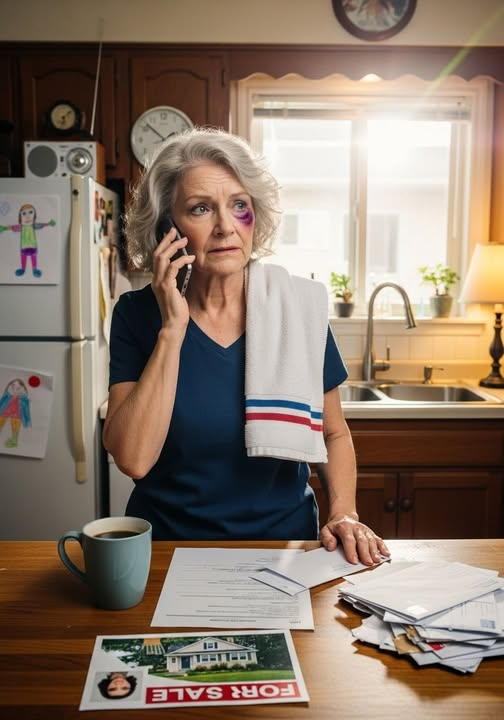
I drove there with a hopeful heart, thinking they were finally ready to start taking over the payments. Instead, I sat across from my daughter and son-in-law in the living room I had furnished and listened as Sarah delivered the most entitled speech I’ve ever heard.
She wanted me to sign the house over to them completely. No payment. No mortgage assumption. Just a free transfer of a nearly $400,000 asset — because, in her words, “it feels weird that my mom technically owns our home.”
The audacity stole my breath. This was the same daughter I had supported through college, through two difficult pregnancies, through Mark’s periods of unemployment. I had given them stability when life got hard. Now they wanted me to give them everything I had left — and walk away with nothing.
I said no.
I said it calmly. I explained that the house was my retirement security, my safety net, my one major asset after years of helping them. I offered compromises: they could start paying half the mortgage now and gradually take it over. I even suggested they could buy it from me at a discounted family rate. Sarah’s response was ice cold.
“That’s not what we want, Mom. We want full ownership. You’ve been making the payments anyway — it’s not like this would actually cost you anything new.”
The entitlement was breathtaking. My own child looked me in the eye and suggested that bankrupting myself for her convenience was somehow the natural order of things.
When I held my ground, the mask slipped completely. Tears, guilt trips, accusations of selfishness. Mark stayed mostly silent, letting Sarah do the emotional labor while occasionally chiming in with passive comments about how “family should help family.” By the time I left, my hands were shaking. I drove home feeling like I had lost my daughter in a way far more painful than death.
The weeks that followed were brutal. Sarah stopped speaking to me. My grandchildren were kept away under the excuse that “things are too tense right now.” Family members who had never helped me once in my life suddenly had strong opinions about how ungrateful I was being. The pressure was immense. But for the first time in years, I chose myself.
I stopped paying the mortgage.
I listed the house for sale.
I consulted a lawyer and protected what remained of my financial future.
The house sold within two months. I used the proceeds to rebuild my own retirement savings and create a college fund for my grandchildren that their parents cannot touch. Sarah was furious. She accused me of punishing her family, of being vindictive, of caring more about money than blood. The irony was almost laughable coming from the woman who had tried to take everything I had left.
Today, I live in a smaller, paid-off condo with a peaceful garden and neighbors who mind their own business. My relationship with Sarah is strained but civil. She occasionally brings the children over, but the easy warmth we once shared is gone. I still love my daughter, but I no longer trust her with my future. That trust was broken the day she looked at everything I had sacrificed and decided it still wasn’t enough.
This experience taught me something painful but necessary: love should never require self-destruction. Generosity has limits. Family is not entitled to your financial ruin. Sometimes the most loving thing you can do for everyone involved is to say “no” and protect what remains.
If you’re a parent who has given everything and is being asked for more, please hear this: your life still matters. Your security still matters. Your peace still matters. You are allowed to set boundaries even with your own children. You are allowed to stop being their safety net when that net is drowning you.
My daughter learned a hard lesson about entitlement. I learned an even harder one about self-worth. The house is gone, but so is the weight of carrying everyone else’s burdens while ignoring my own. For the first time in years, I sleep peacefully knowing I finally chose myself — and in doing so, I set an example for my grandchildren about boundaries, respect, and the difference between helping and enabling.
Sometimes the greatest act of love is refusing to let your children destroy you in the name of family.
Most Popular!
-
 I Ate at Cracker Barrel for Years – Then I Finally Noticed These Hidden Details That Changed Everything
-
I Raised My Late Fiancée’s 10 Kids Alone for 12 Years – Then My Daughter Told Me the Truth About Her Mother and It Changed Everything
-
I Fed the Meanest Old Man on My Street for Years – When He Died, His Will Exposed a Secret That Shocked Everyone
-
“We Cannot Keep Her,” My Husband Said During Our Baby’s First Bath – What I Saw Next Changed Everything
-
What You’re Really Eating: The Shocking Truth About Supermarket Meat Most Labels Won’t Tell You
-
My 12-Year-Old Built Wheelchairs for Stray Dogs – Then Our Neighbor Destroyed Everything. One Video Changed Her Life Overnight
-
I Caught My Husband With Our Daughter’s Nanny – But Instead of Screaming, I Let the Whole World Watch What Happened Next
-
She Dined and Dashed on a $112 Bill, Then Called the 72-Year-Old Waitress Rude – What Happened Next Left the Whole Town Talking