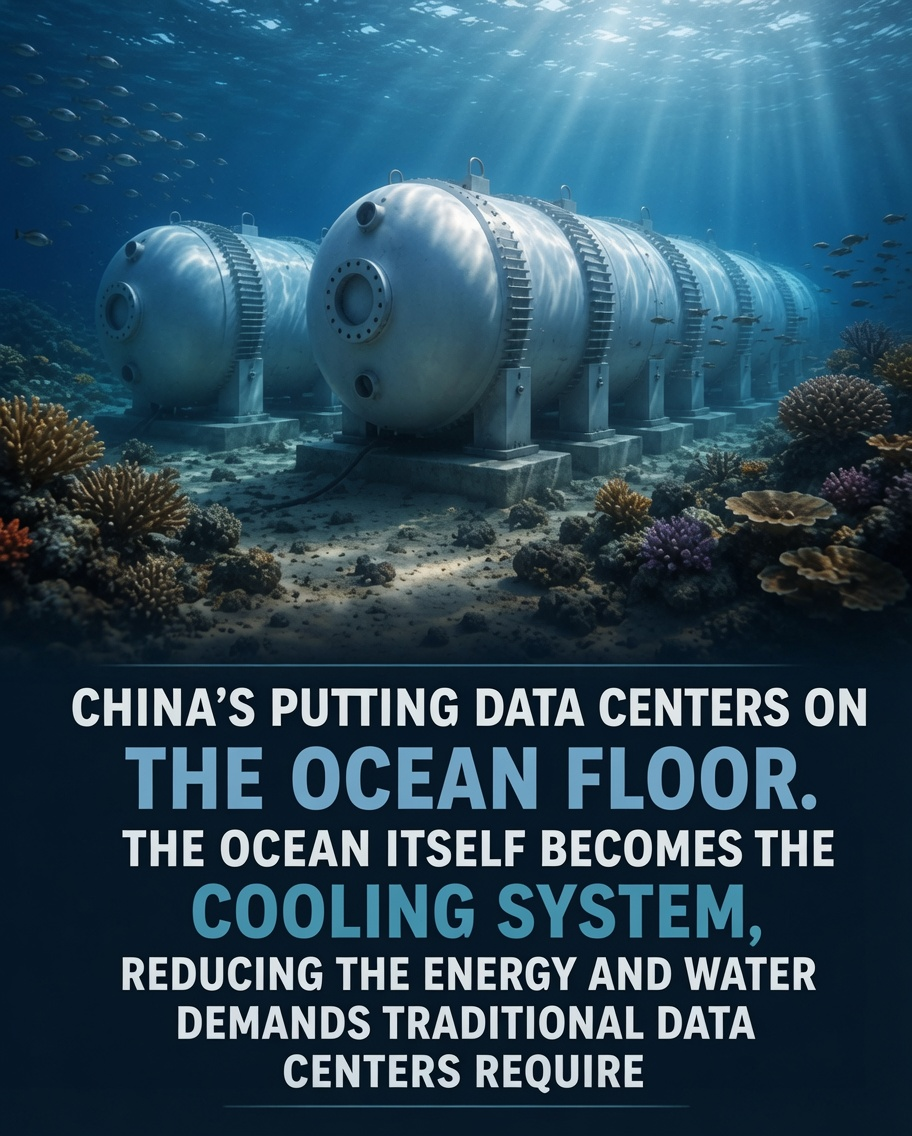
China is pushing the boundaries of AI infrastructure in a creative way: by sinking data centers beneath the ocean. This approach leverages the cold, stable temperatures of seawater for natural cooling, potentially slashing energy use and costs compared to traditional land-based facilities. While the idea isn’t entirely new (Microsoft experimented with it years ago), China has moved from prototypes to commercial-scale operations faster than anyone else. Here’s a clear look at what’s happening, why it matters, and the trade-offs involved.
Why Underwater Data Centers Make Sense for AI
Data centers are power-hungry beasts. Cooling alone can account for 40-50% of their total energy consumption in conventional setups. AI workloads, with their intensive GPU clusters, generate even more heat. By placing sealed server modules underwater (typically 10-35 meters deep), operators can use seawater as a passive heat sink. Pipes circulate cold ocean water through radiators on the server racks, carrying away heat without massive industrial chillers or evaporative cooling systems that consume freshwater.
Key reported advantages include:
- Energy efficiency: Projects claim 30-40% lower overall electricity use, with some estimates reaching higher savings. One Shanghai-area facility integrates offshore wind power, aiming for up to 95% renewable energy.
- No freshwater use: Traditional data centers can consume millions of gallons daily for cooling. Underwater designs eliminate this entirely, which is critical in water-stressed regions.
- Land savings: By moving offshore, China reduces pressure on scarce coastal real estate while supporting its massive AI ambitions.
- Reliability: Sealed, pressure-resistant modules may reduce maintenance needs and corrosion issues compared to land-based systems exposed to dust and humidity.
China has multiple projects underway. Facilities off Shanghai and Hainan are already operational or in advanced stages, with one near Shanghai housing nearly 2,000 servers. These are powered by offshore wind and cooled directly by seawater, positioning China as a leader in this niche.
The Environmental Trade-Offs
While the energy and water savings are compelling, critics rightly raise concerns about marine ecosystems. Key issues include:
- Localized heating: Discharging warmer water could raise temperatures in surrounding areas, potentially stressing marine life, altering migration patterns, or contributing to “dead zones” with reduced oxygen.
- Noise and vibration: Construction and operation might disturb underwater habitats, affecting marine mammals, fish, and benthic organisms.
- Long-term unknowns: Large-scale deployments are relatively new, so comprehensive ecological studies are limited. Early assessments (like one for the Shanghai project) suggest minimal temperature rise (less than 1°C), but scaling up could amplify effects.
Environmental experts emphasize the need for rigorous monitoring, site selection away from sensitive ecosystems, and independent studies. The race for AI dominance shouldn’t come at the irreversible cost of ocean health. Balancing innovation with stewardship is essential.
Broader Context in the Global AI Race
China’s move is part of a larger strategy to secure computing power amid energy constraints and geopolitical tensions. The U.S. and others are also exploring advanced cooling (liquid immersion, advanced air systems), but underwater designs offer unique advantages in coastal nations. Globally, data center energy demand is skyrocketing due to AI, projected to double or more by 2030. Solutions like this could help mitigate climate impacts — but only if environmental risks are managed responsibly.
Bottom line: Underwater data centers represent a clever engineering solution to a pressing problem. They can reduce energy and water footprints significantly, supporting sustainable AI growth. However, the long-term ecological effects require careful study and regulation. As AI expands, we need innovation that doesn’t just solve one problem while creating another. Responsible deployment, transparent monitoring, and international collaboration will determine whether this becomes a model for the future or a cautionary tale.
If you’re interested in the technical details, environmental studies, or comparisons with other cooling methods, let me know — I can dive deeper.
Most Popular!
-
 Eggs, Cholesterol, and Timing: What Actually Matters for Most People
-
When a Partner Leaves With More Than a Suitcase: Protecting Yourself From Financial Betrayal
-
When Financial Support Meets Contempt: Recognizing Exploitation Inside a Marriage
-
Why Some Sensory Toys and Household “Hacks” Do Not Belong in the Microwave
-
When Grief Clouds Judgment: Misreading Silence and the Quiet Ways People Show Care
-
When One Partner Does All the Hosting: Recognizing Imbalance Before Resentment Takes Over
-
How Many Holes Are in a T-Shirt? What a Simple Puzzle Reveals About How We See
-
The Quiet Stories Inside Secondhand Objects: When a Thrift-Store Find Carries Someone Else’s History